
Petty Cash Rules for Historical Societies
A practical, data-backed guide to controlling costs and automating expense workflows.
As the owner or office manager of a small museum or historical society, effectively managing petty cash is essential for maintaining financial integrity and ensuring smooth day-to-day operations. Utilizing small museums or historical societies expense management software can also help streamline the process and reduce errors. For a complete overview, see our expense management guide.
Petty Cash Fund Setup and Management
Petty cash is a small amount of physical currency kept on hand by organizations to cover minor, everyday expenses that are too small or urgent to process through standard payment systems.
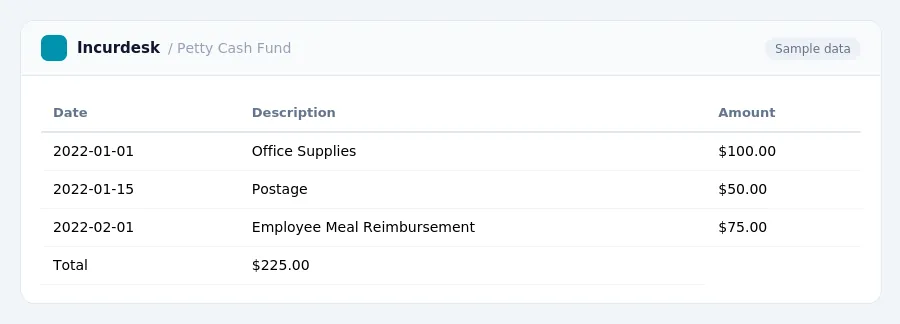
Examples of petty cash expenses include office supplies, postage, minor repairs, or employee meal reimbursements for business-related events.
- Set up a separate petty cash fund account to track the fund's balance and transactions.
- Designate a custodian to be responsible for managing the petty cash fund.
- Limit access to the fund to the designated custodian.
- Establish a fixed amount for the petty cash fund, which should be sufficient to cover typical expenses but not so large that it poses a risk of misappropriation or fraud.
Internal Controls and Security Measures
-
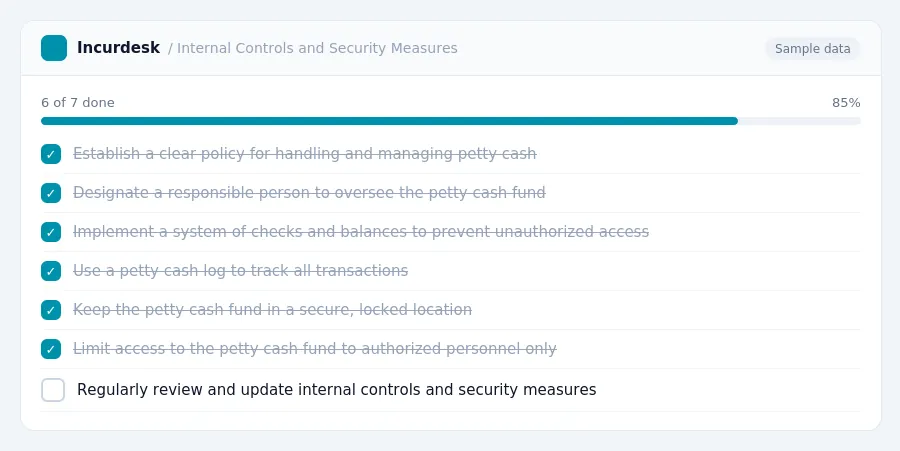
- Establish a clear policy for handling and managing petty cash.
- Designate a responsible person to oversee the petty cash fund.
- Implement a system of checks and balances to prevent unauthorized access.
- Every disbursement from the petty cash fund requires a voucher or paper record detailing the date, amount, requester, and reason for the expense.
- Use a petty cash log to track all transactions, including receipts and disbursements.
- Keep the petty cash fund in a secure, locked location, such as a safe or a locked cabinet.
- Limit access to the petty cash fund to authorized personnel only.
- Regularly review and update internal controls and security measures to ensure compliance with regulations.
Reconciling and Replenishing the Petty Cash Fund
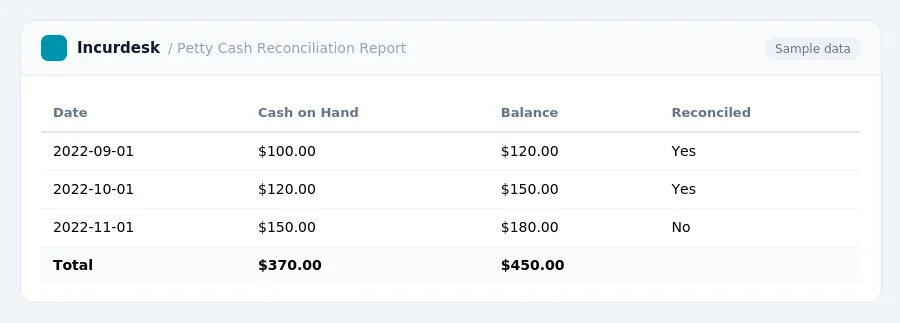
The petty cash fund should be reconciled and replenished regularly to maintain its integrity and ensure accurate financial records.
- Reconcile the petty cash fund at least once a month.
- Count the cash on hand and compare it to the balance shown on the petty cash register or ledger.
- Verify that all receipts and invoices for expenses paid from the petty cash fund are accurate and properly documented.
When replenishing the petty cash fund, follow these steps:
- Check the balance in the petty cash register or ledger to determine the amount needed to bring the fund up to the approved level.
- Compare the current cash balance to the approved balance to ensure the fund is not over- or under-funded.
- Use a secure method to deposit additional funds into the petty cash box, such as a locked drawer or filing cabinet.
- Count the new cash and add it to the existing balance in the petty cash register or ledger.
The petty cash fund should be replenished at least once a month to maintain a sufficient balance.
Expense Tracking and Record-Keeping
- Keep accurate and detailed records of all petty cash transactions, including receipts, invoices, and vouchers.
- Use a standardized system to track and categorize expenses, such as by type (e.g. supplies, travel, events) or department.
- Reconcile the petty cash account regularly, comparing the physical cash on hand with the recorded expenses and vouchers.
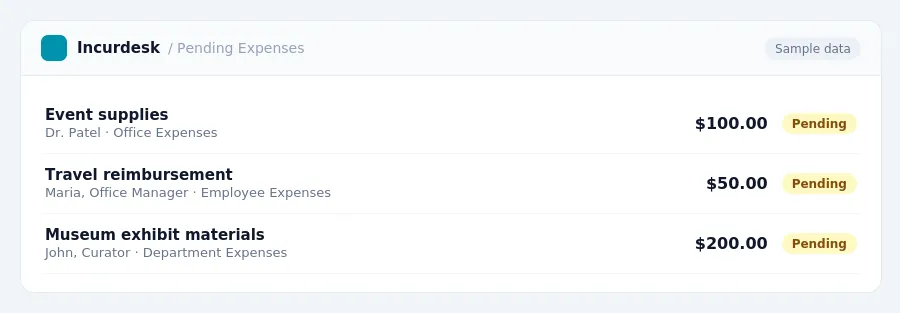
- Ensure that all expenses are properly authorized and approved, with receipts and supporting documentation on file.
- Consider implementing a centralized system for tracking and approving expenses, to improve transparency and accountability.
For example, you may use a spreadsheet or table to track expenses, with columns for date, description, amount, and category. This will help you to quickly identify trends and patterns in your spending.
Best Practices and Compliance Considerations
- Consistent bookkeeping practices are essential. Ensure that all financial transactions, including those related to petty cash, are accurately recorded and reconciled in a timely manner.
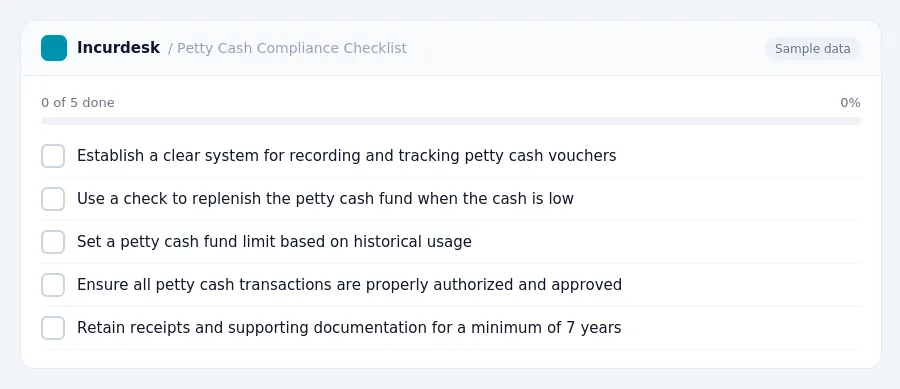
- Establish a clear and consistent system for recording and tracking petty cash vouchers, including the date, amount, and purpose of each transaction.
- Use a check to replenish the petty cash fund when the cash in the box is low. This check should be for the total amount of the vouchers.
- Consider implementing a petty cash fund limit, which should be reviewed and updated as needed. This limit should be based on the historical usage of the fund and should be sufficient to cover the anticipated expenses.
- Ensure that all petty cash transactions are properly authorized and approved, and that all receipts and supporting documentation are retained for a minimum of 7 years.
- Regularly review and reconcile the petty cash fund to ensure accuracy and compliance with financial regulations.
Keeping this simple: Incurdesk keeps receipts and approvals in one place, which makes a written policy easier to follow. It is built for small small museum historical society teams. Try it free.
Stop losing 4+ hours a week
30-day free trial · No credit card · Setup in 15 minutes