
Petty Cash Rules for Property Management Offices
A practical, data-backed guide to controlling costs and automating expense workflows.
As property management offices in small real estate businesses, you are responsible for managing petty cash funds that can account for up to $10 per user per year. To ensure financial integrity and compliance, it is essential to establish and maintain clear rules and guidelines for managing petty cash. With the current rules, limits, and best practices, you can establish a comprehensive petty cash management system that meets your business needs. For the bigger picture, see our guide to real estate expense management for under $10/user (2026). For a complete overview, see our expense management guide.

Petty Cash Fund Establishment
A petty cash fund is a current asset on a business's balance sheet, allowing for easy and transparent management of small payments without the need for checks. For most small businesses, a petty cash fund typically ranges from $100 to $500, depending on specific needs and monthly spending patterns.
Typically, a petty cash fund is established and managed by the office manager or owner, who is responsible for setting the fund amount and creating a system for tracking and reconciling transactions. The office manager should also establish clear guidelines for what constitutes a petty cash transaction, including what types of expenses are allowed and who is authorized to make purchases.
It is generally recommended to start with a smaller amount and reassess as needed.
To establish a petty cash fund, the office manager should:
- Determine the desired amount and create a budget
- Set up a system for tracking and reconciling transactions
- Designate a specific person or committee to manage the petty cash fund
Petty Cash Fund Management and Reconciliation
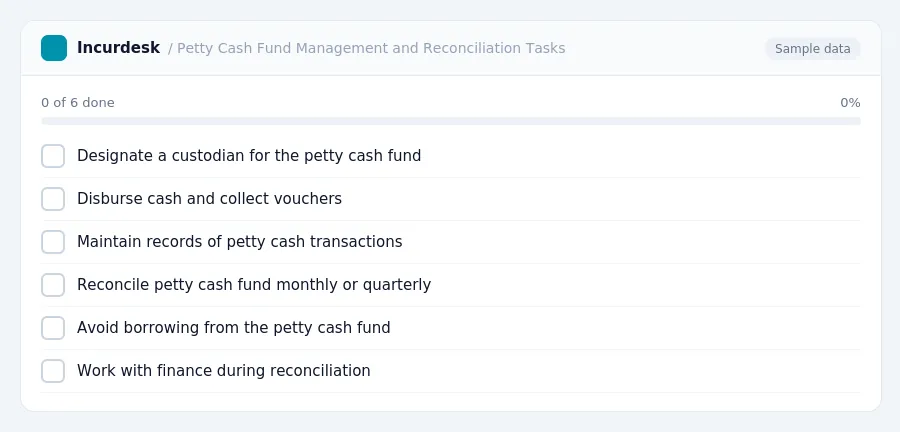
A designated custodian is responsible for managing the petty cash fund, disbursing cash, collecting vouchers, maintaining records, and working with finance during reconciliation. The custodian should not audit the fund. Petty cash funds should be reconciled monthly or quarterly to ensure all expenditures are documented and any discrepancies are addressed promptly.
Some recommend reconciliation at least weekly, depending on the fund's usage. Reconciliation frequency is not specified, but it is generally recommended to reconcile regularly to ensure accurate tracking of expenditures.
Borrowing from the petty cash fund, even with the intention to repay, disrupts reconciliation and should be avoided. This is because the custodian is responsible for managing the fund, and disbursements are not authorized until the funds are reconciled.
To maintain accurate records, the petty cash custodian should maintain a log of all vouchers submitted and accounted for.
In the event of a discrepancy or error, the custodian should notify the finance team immediately. The finance team should then investigate and correct any errors or discrepancies.
Petty Cash Fund Allowable Expenses
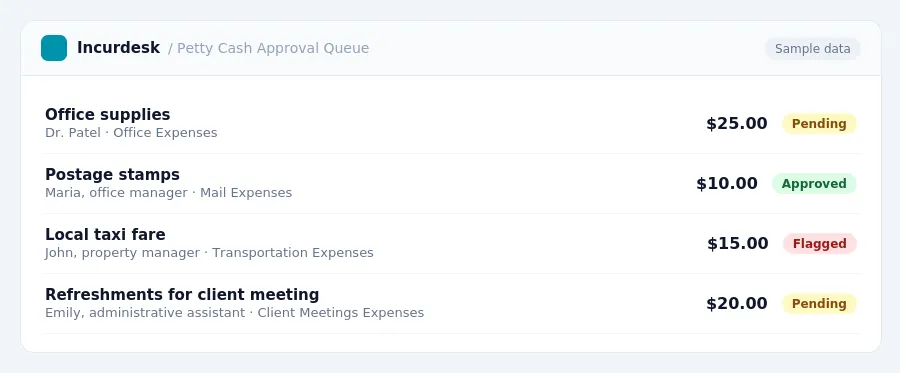
Petty cash is used for minor, day-to-day expenses where using a credit card or check is impractical, such as office supplies, postage stamps, local taxi fares, or refreshments for client meetings. Receipts are required for all expenses paid from petty cash. These receipts should be attached to a voucher slip or logged accordingly.
Expenses under this amount may be substantiated with detailed written records alone, without receipts. However, lodging expenses always require receipts, regardless of the amount. The imprest system is commonly used for petty cash, where the fund is kept at a fixed amount and replenished to the original level after each round of expenses.
For example, if a property manager needs to purchase a new stapler, the expense would be recorded in the petty cash fund and a voucher would be created to record the receipt. The manager would also keep a copy of the receipt for their personal records. Any expenditure exceeding the petty cash balance would need to be approved by the property management office.
The petty cash fund is strictly for business expenses, and personal use is not permitted. The imprest system is used to track expenses and ensure that only business-related expenses are recorded in the petty cash fund.
Petty Cash Fund Documentation Requirements
As a small real estate business, maintaining accurate and compliant petty cash records is crucial for financial integrity and regulatory compliance. The Financial Crimes Enforcement Network (FinCEN) Real Estate Reporting Rule requires reporting for non-traditionally financed transfers of residential property when the buyer is a legal entity or trust. However, the rule is currently not being enforced, but its status is subject to change.
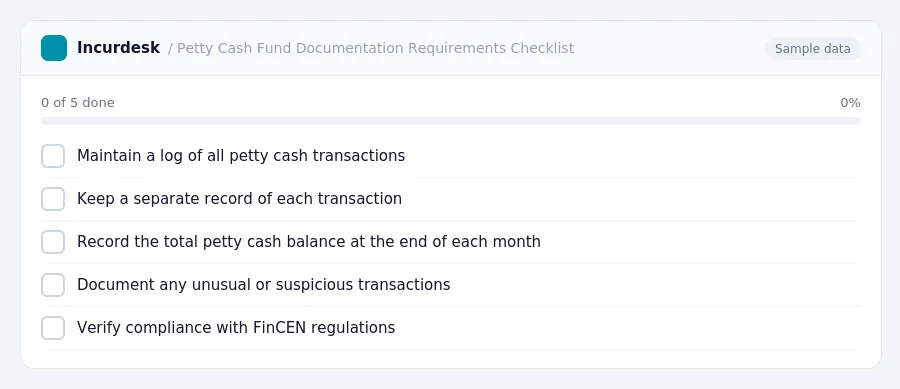
To comply with FinCEN regulations, property management offices must maintain accurate and detailed records of petty cash transactions. This includes:
- A log of all petty cash transactions, including receipts, invoices, and payments
- A separate record of each transaction, including the date, amount, and description of the transaction
- A record of the total petty cash balance at the end of each month
- A record of any unusual or suspicious transactions
- A record of all changes to the petty cash balance
Property management offices must also maintain records of the following:
- The identity of the person or entity making each payment
- The purpose of each payment
- The date and amount of each payment
- The source of each payment (e.g. vendor, bank, etc.)
- Any other relevant details that could impact the accuracy of the records
It is essential to keep accurate and detailed records throughout the year, as well as at the end of each month.
The American Institute of Real Estate (AIRE) recommends that property management offices:
- Review and update their petty cash procedures annually
- Conduct regular audits of their petty cash records to ensure accuracy and compliance
- Provide training to employees on the proper use and maintenance of petty cash records
By following these guidelines and best practices, property management offices can ensure that their petty cash records are accurate, compliant, and meet the regulatory requirements of FinCEN and other relevant laws and regulations.
Common Pitfalls and Best Practices
As a small real estate business owner or office manager, it's essential to establish and manage a petty cash fund effectively. While there is no specific dollar limit for petty cash funds, the appropriate amount is determined by the business's needs and spending patterns. A common pitfall is creating multiple petty cash funds, which can lead to confusion and duplication of expenses.
It's also crucial to establish a clear fund management process, including assigning a responsible person to oversee the fund, tracking expenses, and reconciling the account regularly. This helps to ensure that the funds are accurately accounted for and that no unauthorized transactions occur.
To avoid common pitfalls, it's essential to establish a petty cash fund with a low initial amount (typically $10-$20 per person) and to regularly review and update the fund's contents. This includes monitoring spending patterns, reviewing receipts, and ensuring that expenses are reasonable and necessary.
This helps to prevent errors, disputes, and potential financial losses.
In terms of documentation requirements, petty cash funds must be properly reconciled and reported to the business on a regular basis. This includes submitting a monthly report to the business owner or management, which should include a detailed breakdown of expenses, receipts, and reconciliations.
Tax rules, limits and rates change. Confirm current figures with the IRS or your accountant before you file.
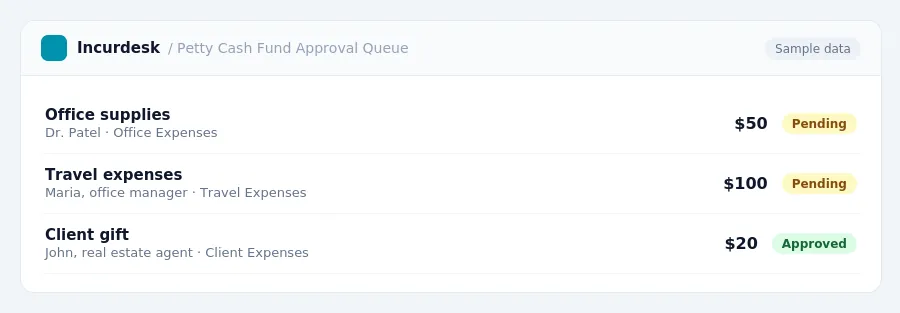
Keeping this simple: Incurdesk keeps receipts and approvals in one place, which makes a written policy easier to follow. It is built for small real estate teams. Try it free.
Stop losing 4+ hours a week
30-day free trial · No credit card · Setup in 15 minutes