
Property Manager Mileage Between Properties
A practical, data-backed guide to controlling costs and automating expense workflows.
For small property management businesses with 5-50 employees, accurately reimbursing property managers for mileage between properties is crucial for expense management for property management. To ensure compliance with IRS guidelines, it's essential to understand the rules and regulations surrounding mileage reimbursement. For a complete overview, see our expense management guide.
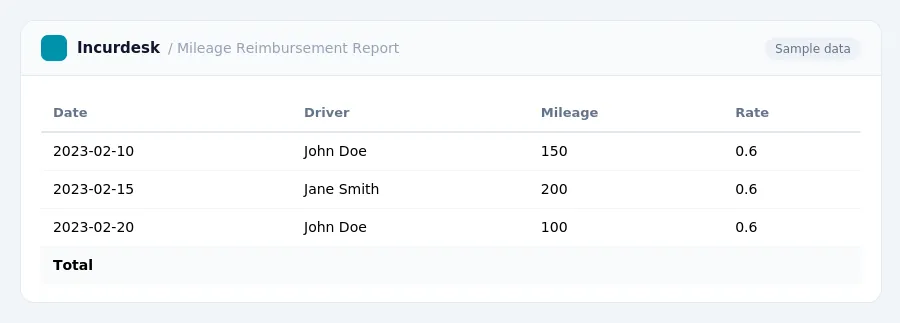
Understanding IRS Guidelines for Business Mileage Reimbursement
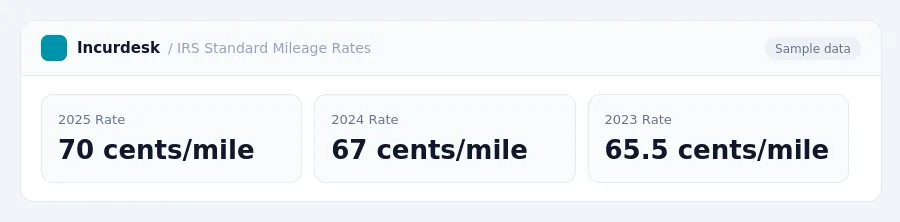
The IRS sets the standard mileage rate for business mileage reimbursement, which changes annually. To stay compliant, property managers need to be aware of these rates. For comparison, the 2025 rate was 70 cents per mile, while the 2024 rate was 67 cents per mile, and the 2023 rate was 65.5 cents per mile.
It's essential to note that these rates are subject to change, so property managers should check the IRS website for updates. The IRS does not provide a specific date for when these rates are announced, but they are usually available in December or January for the upcoming year.
When calculating business mileage reimbursement, property managers can use these standard mileage rates. For example, if a property manager drives 100 miles for business purposes in July 2026, they would be eligible for a reimbursement of 76 cents per mile, totaling $76.
Property managers should keep accurate records of their business mileage, including the date, starting and ending points, and the total miles driven. This will help ensure compliance with IRS guidelines and facilitate reimbursement.
Calculating Business Mileage Reimbursement
To calculate business mileage reimbursement, you'll need to keep track of the miles driven for work-related purposes. This rate applies to the actual miles driven for business use, not the total miles driven.
- Keep a log of business miles driven, including dates, destinations, and miles driven.
- Use a calculator or spreadsheet to calculate the total business miles driven.
For example:
Business miles driven: 50 + 75 = 125 miles
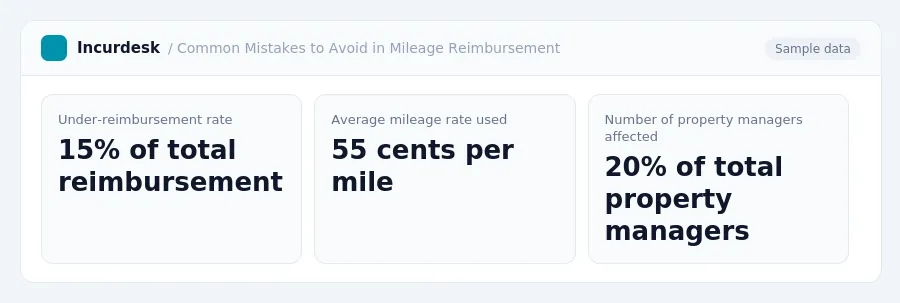
Common Mistakes to Avoid in Mileage Reimbursement
When it comes to mileage reimbursement for property managers, there are several common mistakes to avoid. Here are a few:
1. Failing to keep accurate records. Property managers should keep a log of all business miles driven, including the date, starting and ending odometer readings, and the business purpose of the trip. This log should be kept for at least three years in case of an audit.
- Not keeping track of business miles can lead to under-reimbursement or even denial of reimbursement claims.
2. Using the wrong mileage rate.
3. Not accounting for depreciation. If a property manager uses their personal vehicle for business, they may be able to depreciate the vehicle's value over time. However, this requires careful record-keeping and may require the services of a tax professional.
4. Not claiming mileage for all eligible business trips. Property managers should claim mileage for all trips related to business, including trips to and from properties, meetings with clients, and other business-related activities.
5. Not submitting reimbursement claims in a timely manner. Reimbursement claims should be submitted as soon as possible after the expense is incurred, and no later than the end of the year.
State and Yearly Variations in Business Mileage Rates
The standard mileage rate applies to cars, vans, pickup trucks, and panel trucks, including electric and hybrid vehicles. The rate is adjusted annually by the IRS.
It's essential to note that these rates may change from year to year. If you're unsure about the current rate, you can check the IRS website for the most up-to-date information.
Here's a table of the standard mileage rates for the past few years:
When calculating business mileage reimbursement, be sure to use the rate in effect for the year the mileage was incurred.
Maintaining Accurate Mileage Logs for Reimbursement
To ensure accurate reimbursement for business mileage, property managers must maintain detailed mileage logs. These logs should include:
- Date of the trip
- Mileage driven
- Purpose of the trip
- Destination of the trip
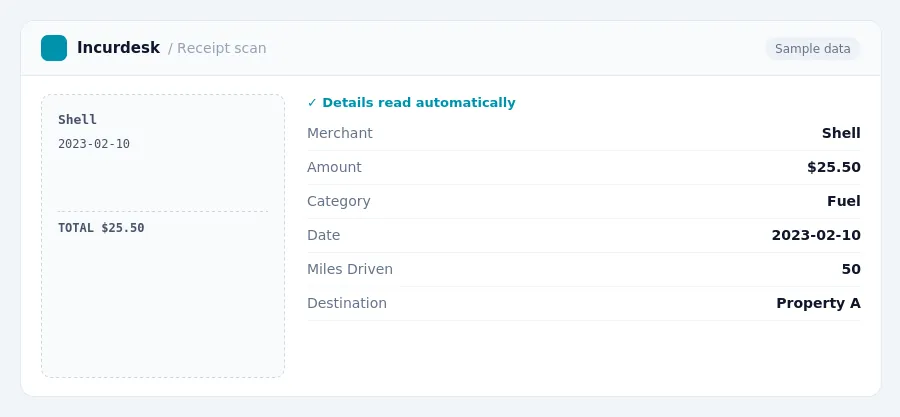
For example, a property manager might record the following information for a trip to inspect a property:
Property managers should keep these logs organized and easily accessible, as they will be needed to substantiate deductions or reimbursements. Keeping accurate mileage logs will help ensure that property managers receive the reimbursement they are entitled to.
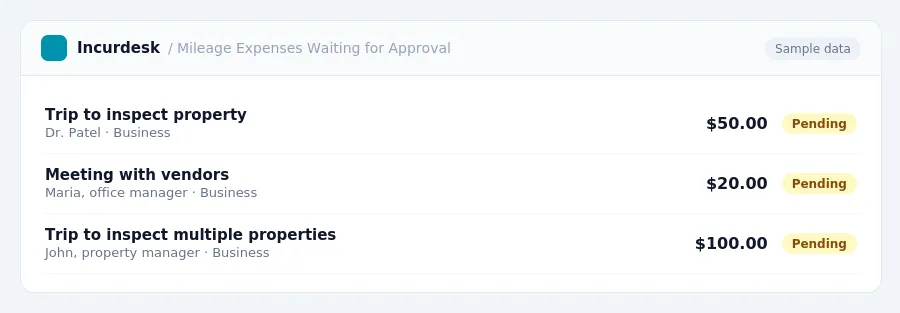
Keeping this simple: Incurdesk keeps receipts and approvals together, so you know exactly what to reimburse. It is built for small property management teams. Try it free.
Stop losing 4+ hours a week
30-day free trial · No credit card · Setup in 15 minutes