Receipt Rules for Dental Office Petty Cash
A practical, data-backed guide to controlling costs and automating expense workflows.
To achieve effective expense management for dental practice, you must keep accurate records of all receipts, including date, amount, and a clear description of the expense. For a complete overview, see our expense management guide.
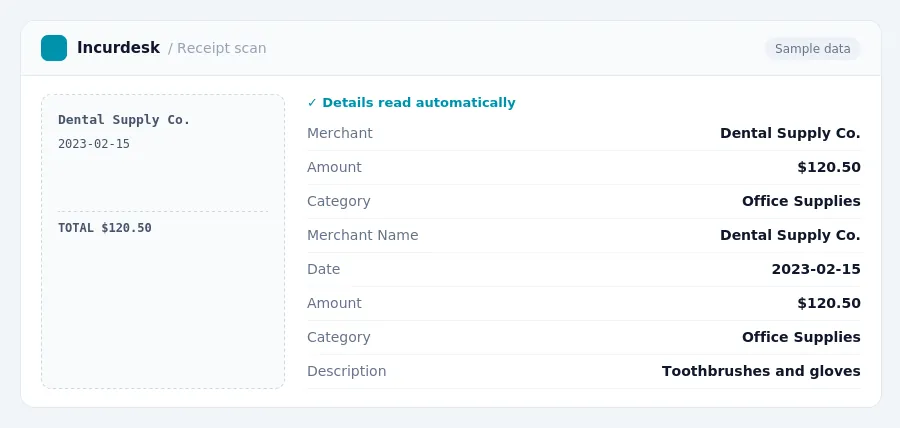
Receipt Requirements for Deductibility
Here are the key requirements:
- Supporting documents for expenses include:
- Canceled checks
- Cash register tape receipts
- Account statements
- Credit card receipts and statements
- invoices
- Receipt requirements include:
- A receipt must be obtained for each cash payment over $75
- A receipt must be obtained for each credit card payment
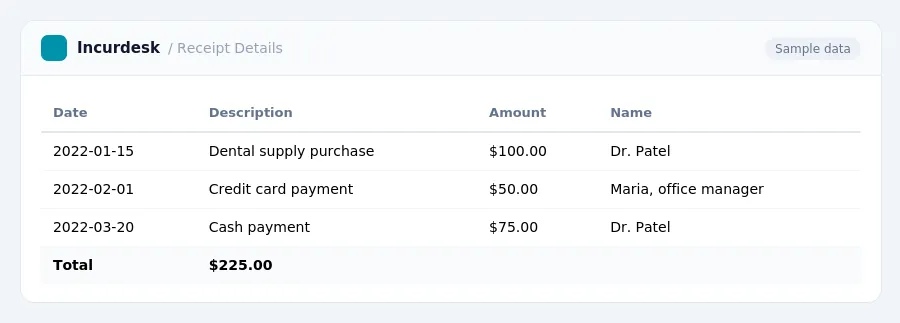
- Receipt details should include:
- Date of purchase
- Description of goods or services purchased
- Amount of purchase
- Name of person making the purchase (if different from the person receiving the goods or services)
- Record retention is essential:
- Keep receipts for a minimum of 3 years
- Extend record retention to 6 years if gross income is underreported by more than 25%
The rules in this guide
| Amount | Required | In Incurdesk |
|---|---|---|
| Above $50 | Itemised receipt | Checked on every expense |
| Above $150 | Written business purpose | Checked on every expense |
| Above $250 | Names of attendees | Checked on every expense |
| Above $2,500 | Senior sign-off; never auto-approved | Checked on every expense |
Each rule is checked on every expense by Incurdesk’s approval agent.
Receipt Record Retention and Storage
- However, if your practice's gross income is underreported by more than 25%, record retention extends to 6 years.
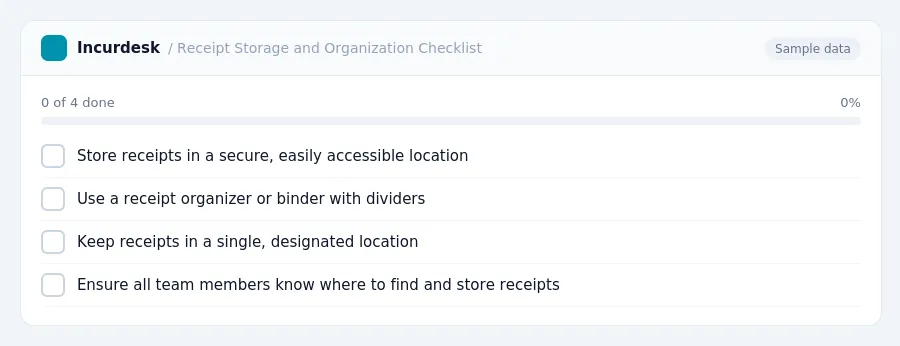
- Store receipts in a secure, easily accessible location, such as a locked cabinet or a fireproof safe.
- Consider using a receipt organizer or binder with dividers to categorize and keep receipts organized by date or type of expense.
- Keep receipts in a single, designated location to prevent loss or misfiling.
- Make sure all team members know where to find and how to store receipts.
- Petty Cash Receipt Pitfalls:
- Not maintaining ordinary and necessary records of receipts, as they are a common and accepted practice in the dental field.
- Failing to properly document receipts, including the date, amount, and description of the expense.
- Not storing receipts in a secure location, making them vulnerable to loss or damage.
- IRS Triggers:
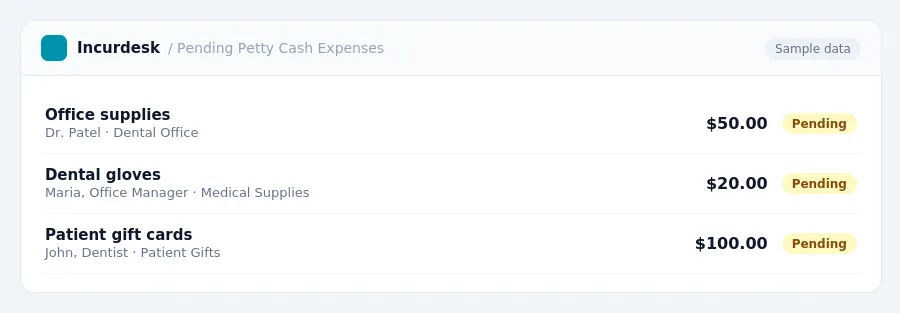
Receipt Documentation Best Practices
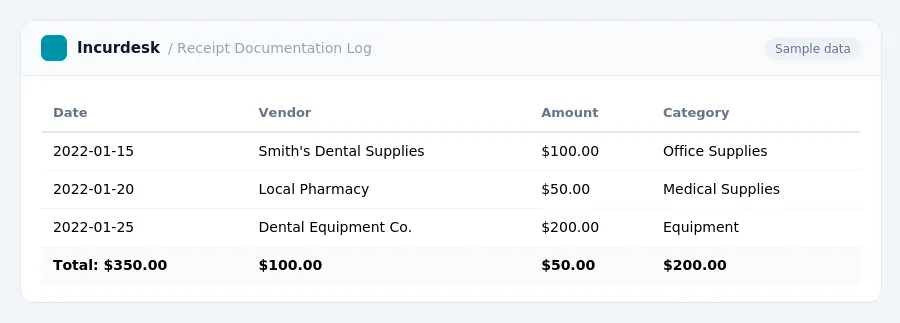
Receipt documentation is a crucial aspect of maintaining accurate and compliant petty cash records. To ensure proper documentation, follow these best practices:
- Clearly label receiptsBe sure to include the name of the vendor or supplier.
- Attach receipts to a petty cash log or ledger, and ensure all receipts are easily accessible.
- Organize receipts by date or category to facilitate audits and record-keeping.
- Consider implementing a standardized receipt numbering system to avoid confusion and ensure accurate tracking.
- Keep all receipts in a secure location, such as a locked cabinet or file drawer, to prevent loss or tampering.
- Consider scanning receipts and storing them digitally, either on a computer or cloud storage service, to reduce physical storage space and improve accessibility.
Receipt Management and Auditing
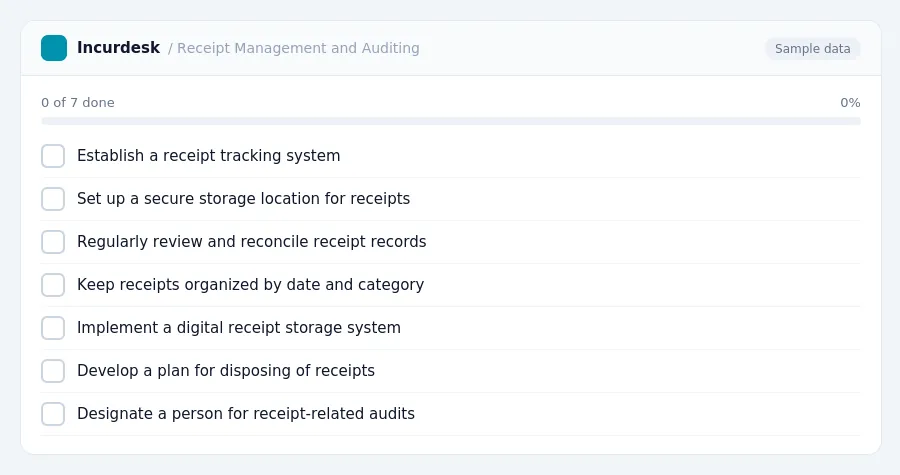
Here's a checklist of steps to follow:
- Establish a receipt tracking system that includes a designated person responsible for collecting and recording receipts.
- Set up a secure and accessible storage location for all receipts, both physical and digital.
- Regularly review and reconcile receipt records to ensure accuracy and completeness.
- Keep receipts organized by date and category to facilitate easy retrieval and auditing.
- Consider implementing a digital receipt storage system to improve accessibility and reduce storage space.
- Develop a plan for disposing of receipts that are no longer needed, such as shredding or securely deleting digital copies.
- Designate a person to handle receipt-related audits and ensure they have the necessary training and resources.
- Keep records of receipt-related audits and use them to improve receipt management processes.
When it comes to auditing, be prepared to provide:
- Original receipts or accurate digital copies
- Receipt records that show date, amount, and category
- Documentation of business use for each receipt
Remember, maintaining accurate and organized receipt records is essential for successful receipt management and auditing.
Keeping this simple: Incurdesk lets your team snap a photo of a receipt and fills in the details for you. It is built for small dental practice teams. Try it free.
AI expense management for finance teams and whoever keeps the books. It checks every expense against your rules, approves the routine ones and chases missing receipts for you.
Try it free for 30 days →Stop losing 4+ hours a week
30-day free trial · No credit card · Setup in 15 minutes