
Recovering Client Out-of-Pocket Costs at Accounting Firms
A practical, data-backed guide to controlling costs and automating expense workflows.
Recovering client out-of-pocket costs is a crucial aspect of accounting expense management for under $10/user (2026) in small accounting businesses. To do this effectively, you need to consider the IRS treatment of advanced client costs as loans, capitalization requirements, deductibility rules, and the proper handling of reimbursements and trust accounts. By understanding these key considerations, you can ensure accurate billing and record-keeping, maintain client trust, and comply with relevant regulations.
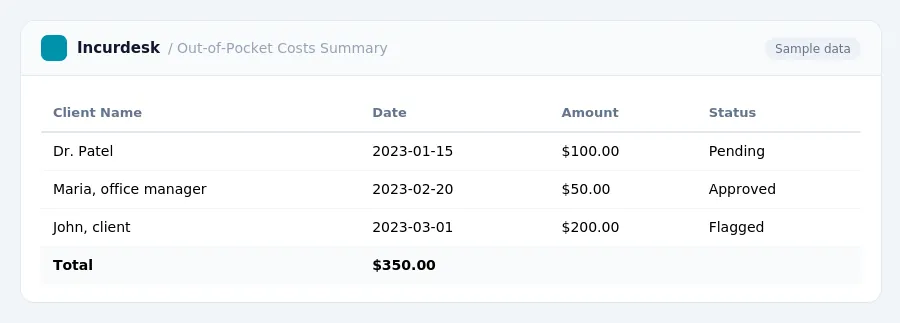
Understanding Advanced Client Costs as Loans
- Advanced client costs, such as filing fees, expert witness fees, and travel expenses, are considered loans to clients by the IRS, not business expenses.
- These costs should be treated as "Other Current Assets" on the firm's balance sheet.
- Under IRC 263, advanced costs with a right of repayment must be capitalized as an asset (a receivable) on the firm's balance sheet, not expensed on the income statement.
- Capitalized costs cannot be deducted as an expense until it's clear the client will not repay them.
- When costs are treated as loans, the reimbursement received from the client is not considered taxable income to the firm, as it's simply a repayment of the loan.
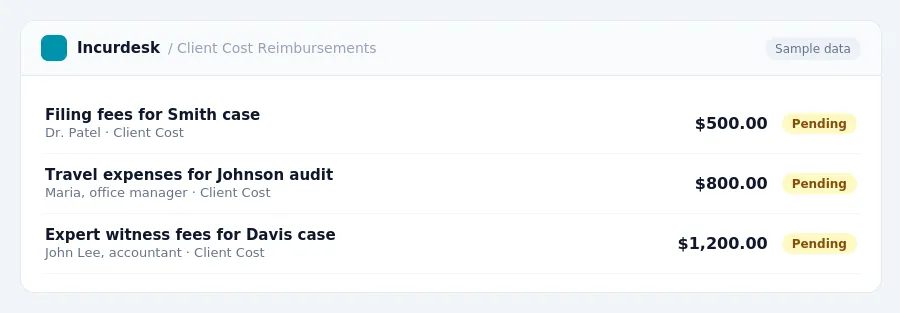
Capitalization Requirements and Deductibility Rules
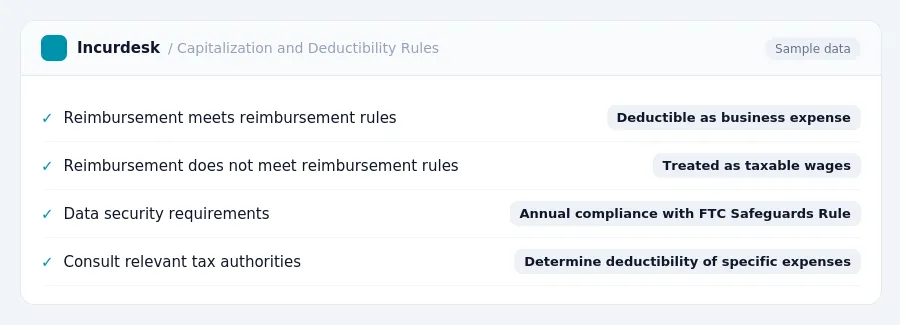
- Understand that reimbursements that do not meet the reimbursement rules are generally treated as taxable wages and reported on Form W-2, subject to various payroll taxes.
- Consult the Non-Accountable Plans rules to ensure compliance with reimbursement requirements.
- Take note that data security requirements for accounting firms can be impacted by new regulations, such as the stricter enforcement of the FTC Safeguards Rule, which requires annual compliance.
- Review your current practices to ensure compliance with the following rules:
- Reimbursements that meet the reimbursement rules are deductible as business expenses.
- Consult the relevant tax authorities to determine the deductibility of specific expenses.
Reimbursement and Trust Account Best Practices
When dealing with client trust accounts (IOLTA), it's essential to follow specific guidelines to ensure accurate reimbursement and maintain client trust.
- Costs paid from a client's trust account are treated as direct expenses.
- Direct expenses are fully deductible on your tax return.
- Reimbursements from clients should be recorded and documented in your accounting system.
- Keep accurate records of all trust account transactions, including dates, amounts, and purposes.
- Ensure timely reconciliation of trust accounts to prevent commingling of funds.
For IOLTA accounts, you must:
- Segregate client funds from your firm's operating funds.
- Label and identify client funds clearly in your accounting system.
- Use a separate bank account or trust account for client funds.
When preparing for an audit or examination, be prepared to:
- Provide detailed documentation of all trust account transactions.
- Explain the purpose and nature of each transaction.
- Show clear segregation of client funds from firm funds.
Keep in mind that state tax laws and regulations regarding IOLTA accounts may vary. Consult your state's specific regulations for guidance.
Compliance with Engagement Letters and IRS Reporting
- Engagement Letters: Ensure your engagement letters clearly outline the terms and conditions of client services, including reimbursement policies and accountable plan requirements.
- IRS Reporting: Keep accurate records of client reimbursements and business expenses, including mileage logs and receipts, to ensure compliance with IRS reporting requirements.
- Mileage Rates:
- Accountable Plan Requirements: For reimbursements to be tax-free for employees and deductible for the business, they must be paid under an IRS accountable plan.
- FTC Safeguards Rule: Stay up-to-date on evolving regulations, including the FTC Safeguards Rule, which brings stricter compliance expectations in 2026, including more rigorous review cycles.
- Record-Keeping: Maintain accurate and detailed records of client reimbursements, business expenses, and engagement letter terms to ensure compliance with IRS reporting requirements and to avoid potential penalties.
Avoiding Common Mistakes and Ensuring Accurate Billing
- Accurately classify expenses as either client out-of-pocket costs or firm expenses to avoid misclassification.
- Ensure proper documentation for all client out-of-pocket costs, including receipts, invoices, and trust account records.
- Separate client trust accounts from firm accounts to avoid commingling funds.
- Keep accurate records of mileage, including the date, time, and mileage, to ensure proper reimbursement.
- Use the standard mileage rate to calculate reimbursement for client business use of personal vehicles.
- Report 1099-NEC payments to clients by January 31st of each year.
- Comply with the accountable plan requirements to avoid IRS scrutiny.
- Review and update engagement letters regularly to ensure they include the necessary terms and conditions for client out-of-pocket costs.
Keeping this simple: Incurdesk turns submitted expenses into clean expense reports. It is built for small accounting teams. Try it free.
Stop losing 4+ hours a week
30-day free trial · No credit card · Setup in 15 minutes