
Reimbursing CPA License and Society Dues
A practical, data-backed guide to controlling costs and automating expense workflows.
As a small accounting business owner or office manager, it's essential to understand the rules and costs associated with reimbursing your employees for CPA license fees and professional society dues. The IRS allows employers to reimburse employees for these expenses, but it's crucial to follow specific guidelines to avoid tax implications. To ensure compliance and provide a valuable benefit to your staff, consider accounting expense management for under $10/user (2026) that can help you track and reimburse these expenses accurately.
Reimbursing CPA License Fees
CPA staff members typically need to pay fees to maintain their professional licenses, including the cost of taking the CPA exam and membership fees to professional societies like the American Institute of Certified Public Accountants (AICPA). As of July 4, 2026, the National Association of State Boards of Accountancy (NASBA) fee per CPA exam section is $268.59, which can change. You can check with NASBA for the most up-to-date information.
If you choose to reimburse your staff for these fees, you can deduct the remaining amount as a business expense.
To reimburse your staff for CPA license fees, consider the following steps:
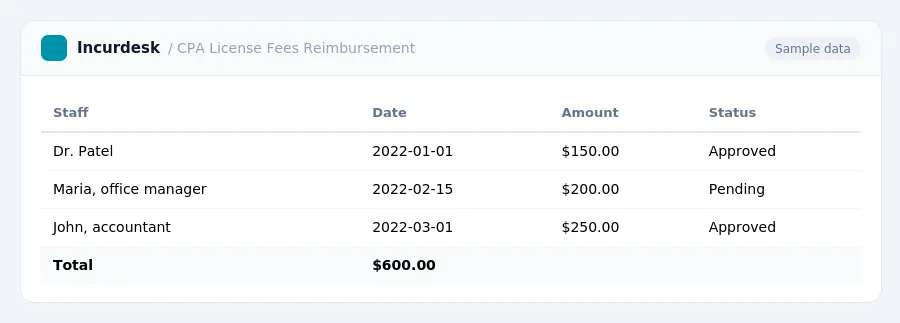
- Keep accurate records of your staff's license fees, including receipts and invoices.
- Determine the amount of the reimbursement and ensure it is fair and reasonable.
- Consider implementing an IRS-compliant plan to structure your reimbursements, which we will discuss in a later section.
By reimbursing your staff for CPA license fees, you can help offset the costs of maintaining their professional licenses and show your support for their ongoing education and development.
Understanding Professional Society Dues
AICPA membership dues vary by membership tier, but for the period of August 1, 2025, to July 31, 2026, the exact amount is not specified here. You can check the AICPA website for the most up-to-date information.
As a business expense, AICPA dues are deductible, but not as a charitable contribution.
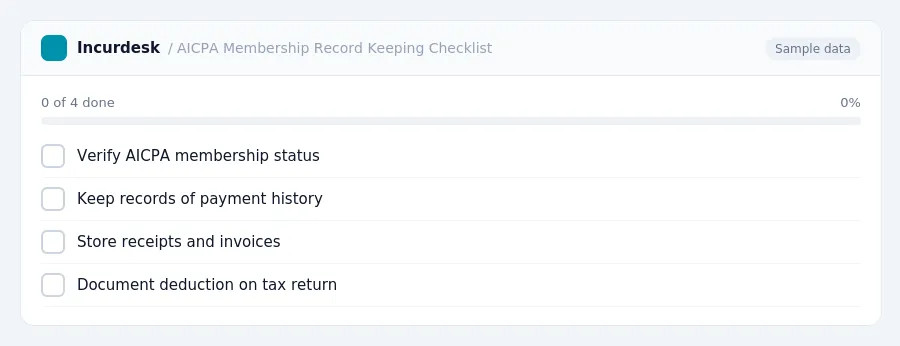
To take advantage of the deduction, be sure to keep accurate records of your AICPA membership and payment history. This will help you accurately report the deduction on your tax return.
State-Specific Requirements for License Renewal and CPE
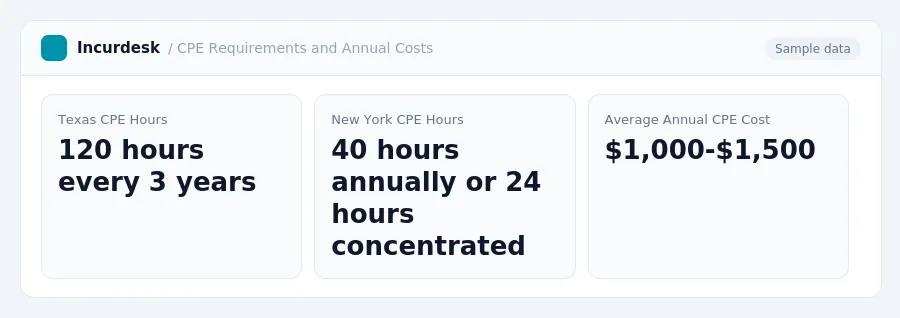
CPA license renewal and continuing professional education (CPE) requirements vary by state. For example, Texas CPAs must complete 120 CPE hours every three years, with a minimum of 20 hours per year.
- New York: 40 hours of CPE annually for public accountants, or 24 hours concentrated in one subject area.
Annual CPE costs can range from $500 to $2,000. It's essential to check with your state's accountancy board for specific requirements, as they may change over time.
When tracking CPE hours, ensure that you have documentation to prove completion. This may include certificates of completion, transcripts, or other records. Keep these records on file in case of an audit.
As a general rule, CPE courses should be completed within the specified reporting period. Failure to meet state requirements can result in penalties, fines, or even license revocation.
Compliance and Tax Implications for Employers
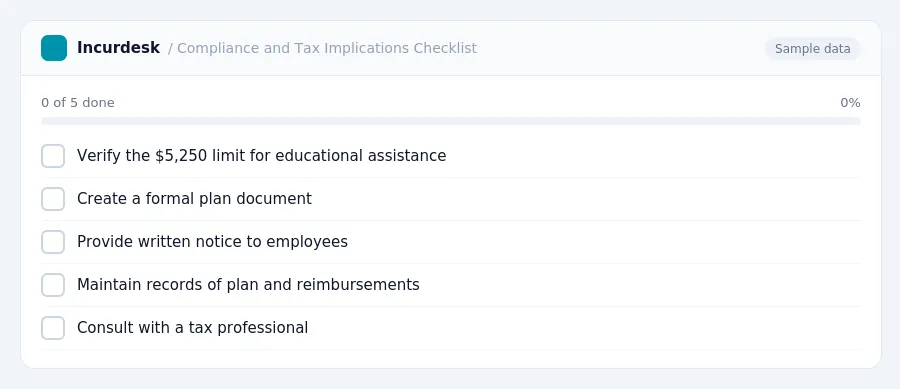
Employers can reimburse up to $5,250 per calendar year for educational assistance, including tuition, fees, books, and supplies, tax-free to the employee under Internal Revenue Code Section 127.
This limit applies to reimbursements for both CPA license fees and professional society dues. The $5,250 limit is permanent, but it is indexed for inflation after 2027.
When structuring reimbursements, consider the following:
- Reimbursements are considered tax-free educational assistance if the employer has a formal plan in place that meets IRS requirements.
- Employers must obtain a written plan document and provide written notice to employees before making any reimbursements.
- The employer must also maintain records of the plan and reimbursements made.
Employers should consult with a tax professional to ensure compliance with IRS requirements and to determine the best approach for their business.
Structuring Reimbursements through IRS-Compliant Plans
To ensure that reimbursements for CPA license fees and professional society dues are tax-free for employees and deductible for the business, you must structure them through an IRS-compliant "accountable plan." This means that your business must have a clear policy in place for reimbursing employees, and employees must substantiate their expenses with receipts and documentation.
- Establish a reimbursement policy that outlines the types of expenses eligible for reimbursement, the documentation required, and the procedure for submitting claims.
- Require employees to submit receipts and documentation for all reimbursed expenses within a reasonable timeframe, such as 30 days.
- Verify that employees have actually paid the expenses before reimbursing them.
- Keep accurate records of all reimbursed expenses, including receipts and documentation.
For example, if an employee pays $500 for AICPA dues, they can submit a receipt to their employer for reimbursement. If the employer reimburses the full amount, the employee does not have to report the reimbursement as income, and the employer can deduct the reimbursement as a business expense.
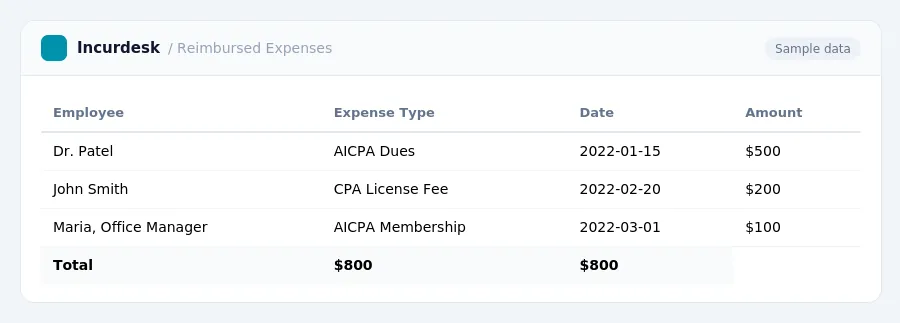
Keeping this simple: Incurdesk keeps receipts and approvals together, so you know exactly what to reimburse. It is built for small accounting teams. Try it free.
Stop losing 4+ hours a week
30-day free trial · No credit card · Setup in 15 minutes