
Reimbursing Onsite Staff for Supplies
A practical, data-backed guide to controlling costs and automating expense workflows.
As a small property management business owner or office manager, you need to understand the rules and best practices for reimbursing onsite staff for supplies they purchase for work. This includes knowing what expenses are considered legitimate, how to set up a compliant reimbursement plan, and what documentation is required to ensure tax-free reimbursements for employees and tax deductions for the business. Effective expense management for property management requires a clear and fair reimbursement policy to avoid potential tax implications and maintain employee satisfaction. For a complete overview, see our expense management guide.
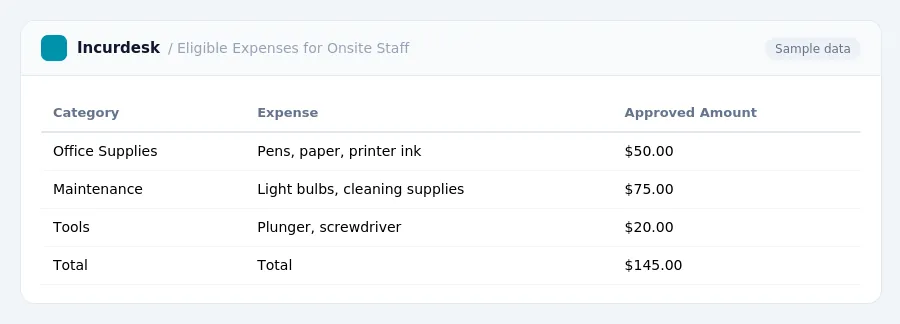
Determining Eligible Expenses for Onsite Staff
When determining eligible expenses for onsite staff, property management businesses must consider the federal minimum wage and what expenses are ordinary and necessary for the business. According to the Fair Labor Standards Act, employers are generally only required to reimburse expenses if those costs reduce an employee's effective hourly pay below $7.25 per hour.
To qualify as an eligible expense, a cost must be both ordinary and necessary. An expense is considered ordinary if it's common and accepted in the industry, and necessary if it's appropriate and helpful for the business. For example, a property manager may be reimbursed for the cost of a specific type of paper or a particular brand of cleaning solution that's widely used in the industry.
For onsite staff, eligible expenses may include:
- Paper, ink, and toner for printers and copiers
- Office supplies, such as pens, staplers, and folders
- Cleaning supplies, such as paper towels and disinfectant
- Tools and equipment specific to the job, such as a laptop or a tablet
It's essential to keep records of all expenses, including receipts and invoices, to support reimbursement requests. Property management businesses should also establish clear policies and procedures for requesting and approving expenses to ensure compliance with federal regulations.
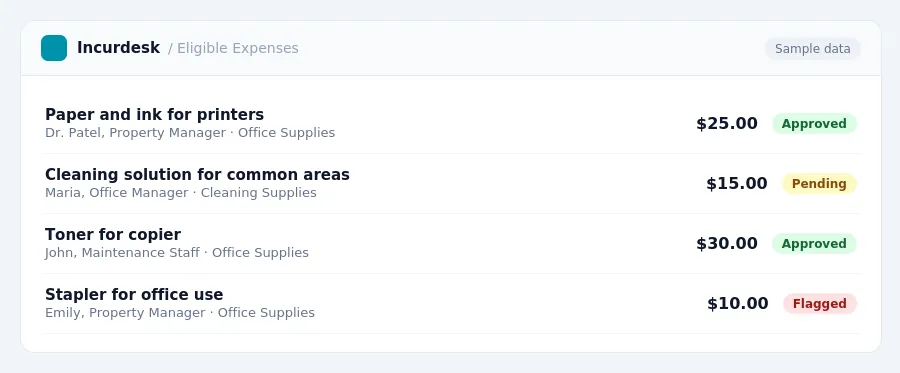
Setting Up a Compliant Reimbursement Plan
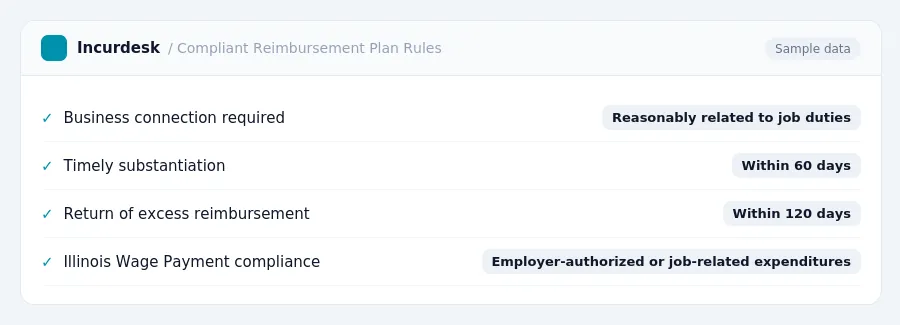
When setting up a reimbursement plan for onsite staff, it's essential to establish a compliant plan that meets IRS requirements. To ensure tax-free reimbursements for employees and deductible expenses for the business, employers must use an IRS-compliant accountable plan. This plan requires a business connection for the expense, timely substantiation within 60 days, and the return of any excess reimbursement within 120 days.
Under an accountable plan, the business connection for the expense must be clearly established. This means that the expense must be reasonably related to the employee's job duties and within the scope of their employment. Illinois employers must also comply with the Illinois Wage Payment and Collection Act, which requires reimbursement for necessary expenditures that are employer-authorized or reasonably job-related.
To set up a compliant reimbursement plan, consider the following steps:
- Establish clear guidelines for what expenses are eligible for reimbursement.
- Require employees to provide timely substantiation for all expenses, usually within 60 days.
- Implement a process for returning excess reimbursements, usually within 120 days.
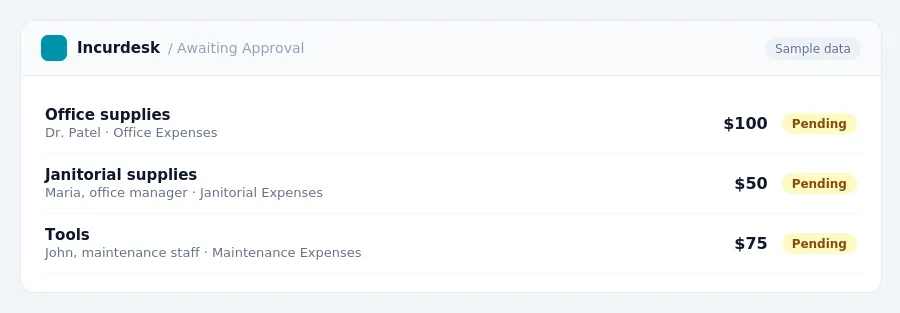
Documenting and Submitting Expenses for Reimbursement
When an onsite staff member needs to be reimbursed for supplies they purchased for work, it's essential to document and submit the expenses correctly to ensure tax-free reimbursements for the employee and tax deductions for the business.
Here are the steps to follow:
- Keep accurate records of all expenses, including receipts, invoices, and bank statements.
- When submitting expenses for reimbursement, include the following information:
- Date and description of the expense
- Amount of the expense
- Business purpose of the expense
- If an employee receives an advance or reimbursement exceeding actual expenses, they must return the excess within 120 days.
It's also essential to note that states like California, Illinois, Montana, North Dakota, South Dakota, and Washington D.C. may require reimbursement for all necessary business expenses regardless of wage level.
Managing Excess Reimbursements and Tax Compliance
When reimbursing onsite staff for supplies, it's essential to consider the impact on their personal tax returns and your business's tax obligations.
For 2026, the unreimbursed employee expense deduction on personal tax returns has been permanently eliminated.
This means that if an employee is reimbursed for expenses, they will no longer be able to deduct those expenses on their personal tax return.
However, employees may still need to report the reimbursement as income on their tax return, unless it's a de minimis expense (typically under $10 per month).
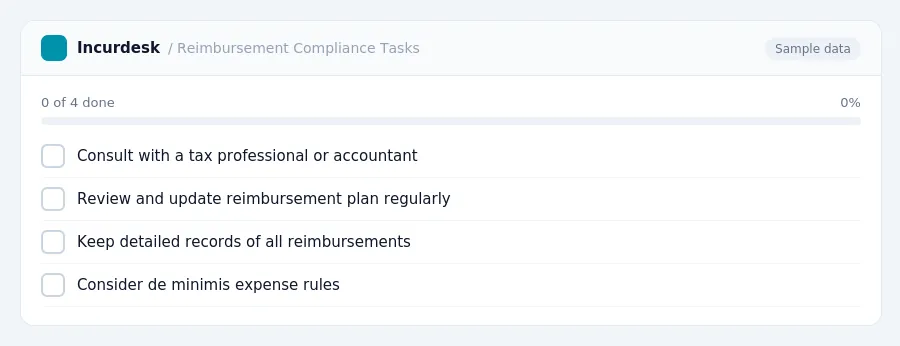
To ensure compliance, keep detailed records of all reimbursements, including dates, amounts, and descriptions of expenses.
Also, consider the following:
- Consult with a tax professional or accountant to ensure your reimbursement plan is compliant with all applicable tax laws.
- Review and update your reimbursement plan regularly to ensure it remains compliant with changing tax laws.
By managing excess reimbursements and staying on top of tax compliance, you can help minimize potential tax liabilities and avoid penalties.
State-Specific Reimbursement Requirements and Best Practices
When it comes to reimbursing onsite staff for supplies, state-specific requirements can vary significantly. Several states have broader reimbursement requirements than federal law, so it's essential to familiarize yourself with the rules in your area. Here are some key considerations:
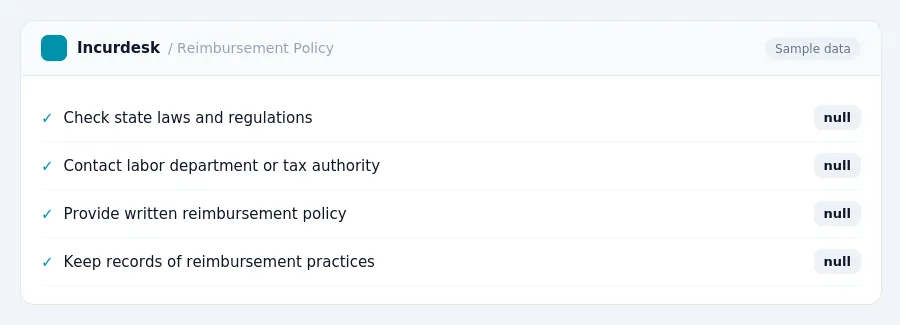
- Check your state's laws and regulations regarding reimbursement for business expenses.
- Contact your state's labor department or tax authority to confirm specific requirements.
- Some states, such as California, require employers to reimburse employees for expenses related to the use of personal vehicles for business purposes.
- In New York, employers must provide a written reimbursement policy to employees.
- Other states, like Texas, have specific rules regarding the types of expenses that can be reimbursed.
It's also essential to keep records of your reimbursement practices, including:
Be sure to review your state's specific requirements and adjust your reimbursement plan accordingly to avoid any potential penalties or non-compliance issues.
Keeping this simple: Incurdesk keeps receipts and approvals together, so you know exactly what to reimburse. It is built for small property management teams. Try it free.
Stop losing 4+ hours a week
30-day free trial · No credit card · Setup in 15 minutes