
Retainage and Its Effect on Cash Flow
A practical, data-backed guide to controlling costs and automating expense workflows.
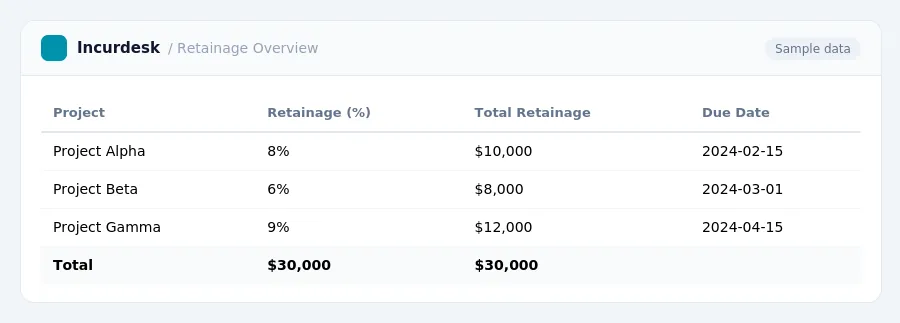
Retainage, also known as retention or holdback, is a portion of a contractor's payment withheld by the project owner or general contractor until project completion. This practice can significantly impact cash flow and financial planning for small construction businesses, where a stable cash flow is crucial for construction expense management for under $10/user (2026). Retainage typically ranges from 5% to 10% of each progress payment.
Understanding California's New Retainage Cap
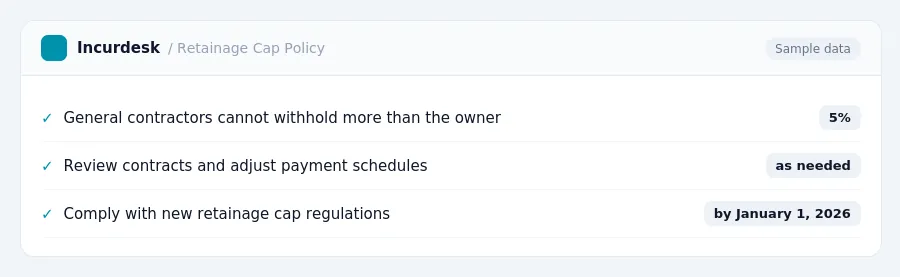
California's new retainage cap, effective for contracts entered into on or after January 1, 2026, aims to provide more financial stability to contractors and subcontractors. This cap applies to private projects, and it's essential to understand its implications on your business.
In California, a general contractor cannot withhold more from subcontractors than the owner withholds from the direct contractor. This means that if the owner is withholding 5% of each progress payment, the general contractor cannot withhold more than 5% from the subcontractor.
To comply with this new cap, review your contracts and ensure that you're not withholding more than 5% from subcontractors.
If you have existing contracts, you may need to negotiate new terms or adjust your payment schedules to comply with the new law.
Keeping this simple: Incurdesk turns submitted expenses into clean expense reports. It is built for small construction teams. Try it free.
New York's Retainage Cap and Its Implications
When working on private projects in New York, contractors must be aware of the state's new retainage cap. Contractors should review their contracts to ensure compliance with this new rule.
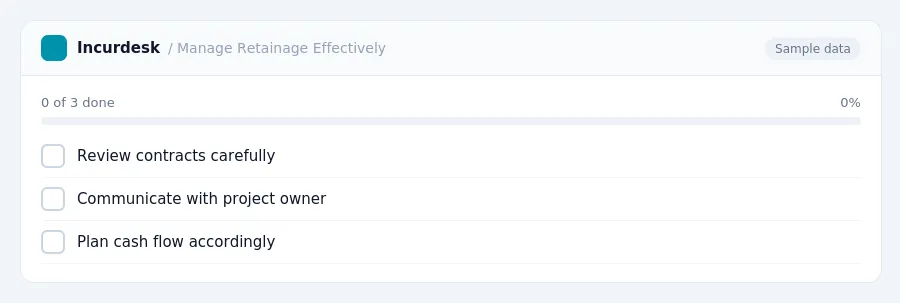
To manage retainage effectively, contractors should:
- Review their contracts carefully to understand the retainage terms and any applicable caps.
- Communicate with the project owner or general contractor to confirm the retainage amount and schedule.
- Plan their cash flow accordingly, taking into account the reduced retainage amount and the potential for earlier payments.
By understanding and managing retainage effectively, contractors can minimize the impact on their cash flow and ensure a smoother financial performance.
What is Retainage and How Does It Affect Cash Flow
This amount is typically a percentage of each progress payment, ranging from 5% to 10% of the payment.
The purpose of retainage is to ensure the contractor completes the project to the owner's satisfaction. Retainage is typically released after substantial completion of the project, which includes completing punch lists, final inspections, and providing lien waivers. However, the timeline for receiving retainage can be lengthy. Subcontractors may wait an average of 167 days to receive retainage after completing their scope.
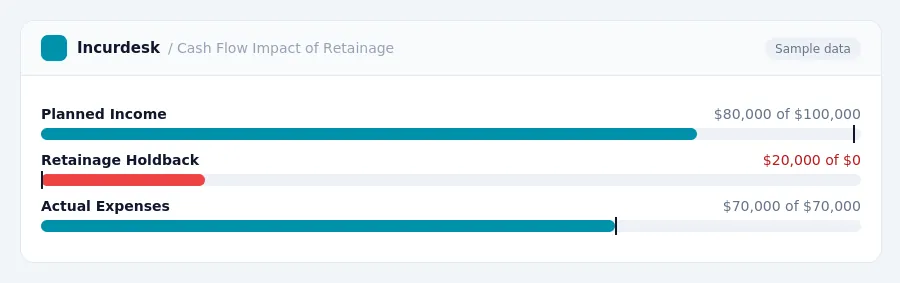
This delayed payment can significantly impact a contractor's cash flow. Contractors must manage their finances carefully to meet their short-term obligations while waiting for retainage. To minimize the impact, contractors can:
- Plan ahead and factor in the delayed payment when creating their project schedules and budgets.
- Communicate regularly with their clients and general contractors to ensure timely release of retainage.
- Monitor their cash flow closely and adjust their financial strategies as needed.
Retainage Laws and Regulations by State
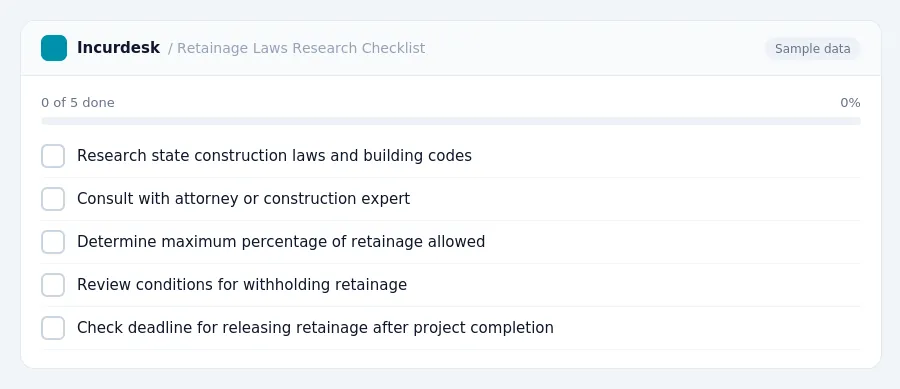
Retainage laws and regulations vary by state, so it's essential to understand the specific rules that apply to your projects. The first step is to research the laws in your state and any states where you plan to work.
Start by checking the state's construction laws or building codes, which typically outline the retainage rules and regulations. You can also consult with an attorney or a construction expert who is familiar with the laws in your state.
When reviewing the laws, pay attention to the following:
- The maximum percentage of retainage allowed
- The frequency of retainage payments
- The conditions under which retainage can be withheld
- The deadline for releasing retainage after project completion
For example, some states may require that retainage be released within a certain timeframe, such as 30 or 60 days, after project completion. Others may have specific requirements for when retainage can be withheld, such as when a contractor fails to meet certain quality or safety standards.
It's also important to note that some states may have different retainage rules for public and private projects, so be sure to research the specific laws that apply to your projects.
Managing Retainage and Cash Flow in Small Construction Businesses
When dealing with retainage, managing cash flow is crucial for small construction businesses. To minimize its impact, consider the following steps:
1. Review your contracts carefully to understand the retainage percentage and payment terms.
- Check if the retainage percentage is negotiable, and if so, try to negotiate a lower rate.
- Understand the payment schedule and ensure you have enough working capital to cover expenses during the project.
2. Plan for cash flow fluctuations:
- Set aside a portion of each payment for retainage to avoid cash flow shocks.
- Monitor your accounts receivable and payable to ensure timely payments from clients and suppliers.
3. Communicate with clients and project managers:
- Regularly review project progress and ensure you're meeting the required milestones.
- Request payment releases or reductions in retainage when possible.
4. Consider alternative payment methods:
- Look into using a letter of credit or other security arrangements to reduce retainage.
- Explore options for early payment discounts or reduced retainage rates.
By following these steps, you can better manage retainage and maintain a healthy cash flow in your small construction business.
Stop losing 4+ hours a week
30-day free trial · No credit card · Setup in 15 minutes