
Safety Gear and PPE Expense Policy
A practical, data-backed guide to controlling costs and automating expense workflows.
As a small construction business owner or office manager, it's essential to understand your responsibilities regarding Personal Protective Equipment (PPE) to ensure worker safety, maintain compliance with OSHA regulations, and optimize business expenses. By following clear guidelines on PPE costs and tax implications, you can make informed decisions to support your business and your employees. For the bigger picture, see our guide to construction expense management for under $10/user (2026). For a complete overview, see our expense management guide.
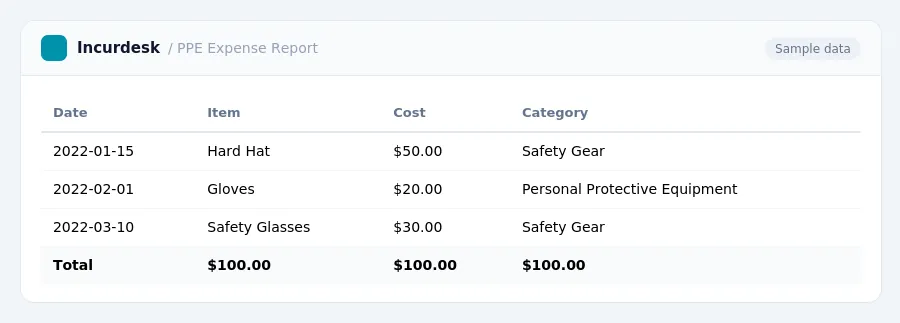
Understanding OSHA's PPE Requirements for Construction
The primary OSHA standard for PPE in construction is 29 CFR 1926 Subpart E. As of January 13, 2025, OSHA requires that all PPE provided to construction workers must properly fit each individual employee. This means that workers must be able to comfortably wear the PPE without any adjustments or modifications.
Before allowing workers to perform tasks that require PPE, employers must provide training on the following:
- When PPE is necessary
- How to use PPE
- The limitations of PPE
- The care and maintenance of PPE
Retraining is necessary if conditions change, new PPE is introduced, or understanding is lacking. Failure to comply with OSHA PPE standards can result in significant penalties. For willful violations, fines can reach up to $165,514 per incident. Fines can multiply per worker, so it's essential to ensure compliance.
Some common PPE required for construction work includes hard hats, safety glasses, gloves, hearing protection, respirators, coveralls, vests, and harnesses. For concrete operations, specific PPE like P100 respirators, safety glasses with side shields, cut-resistant gloves, chemical-resistant gloves, steel-toe boots with metatarsal protection, and hearing protection may be required.
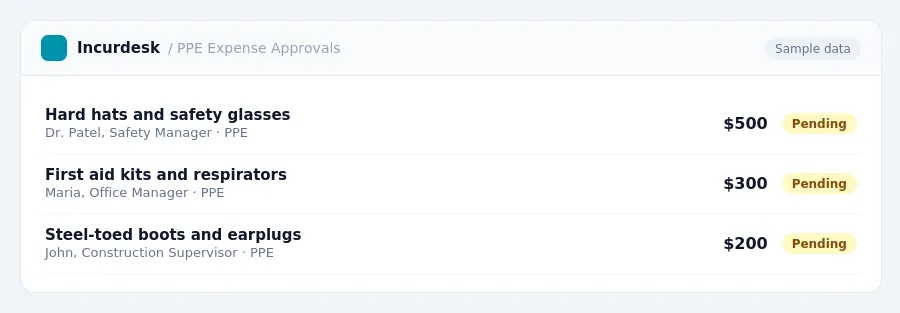
Selecting and Providing Appropriate PPE for Workers
When selecting and providing PPE for workers, follow these guidelines:
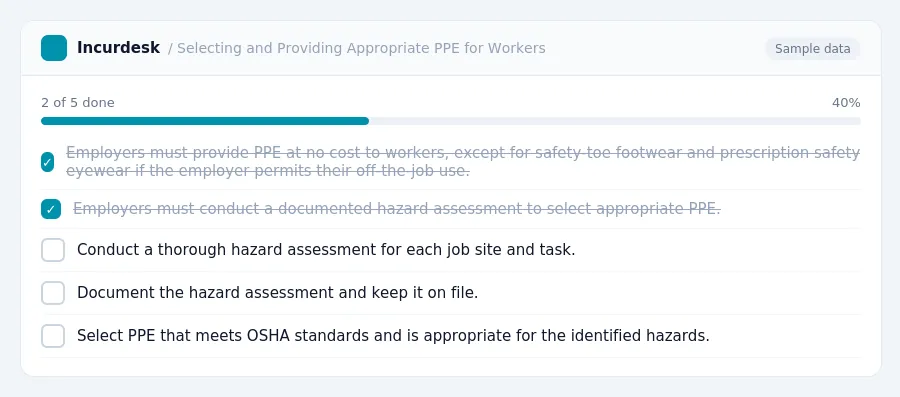
Employers must provide PPE at no cost to workers, except for safety-toe footwear and prescription safety eyewear if the employer permits their off-the-job use. For example, if a worker needs safety glasses for a job, the employer must provide them at no cost to the worker.
Employers must conduct a documented hazard assessment to select appropriate PPE. This assessment should identify potential hazards and determine the necessary PPE to mitigate those hazards. The assessment should be documented and kept on file.
To ensure compliance, consider the following steps:
- Conduct a thorough hazard assessment for each job site and task.
- Document the hazard assessment and keep it on file.
- Select PPE that meets OSHA standards and is appropriate for the identified hazards.
Conducting Hazard Assessments and Training Workers
Conducting hazard assessments and training workers are crucial steps in ensuring a safe working environment for construction workers. This process involves identifying potential hazards and providing workers with the necessary knowledge and skills to use PPE correctly.
To conduct a hazard assessment, you should:
- Walk through the work site to identify potential hazards, such as falling objects, electrical hazards, and chemical exposure.
- Document the hazards you find and the PPE needed to mitigate them.
- Review the PPE fit rule, which acknowledges that construction workers have diverse body types and manufacturers are expanding size ranges to accommodate this.
When selecting PPE, consider the following:
- Ensure PPE fits properly, as ill-fitting PPE can lead to increased risks, discomfort, and discouragement of use.
- Choose PPE that is comfortable and easy to use, as this will encourage workers to wear it consistently.
To train workers, you should:
- Provide regular training sessions on the use and maintenance of PPE.
- Ensure workers understand how to properly use PPE, including how to put it on and take it off, and how to inspect it regularly.
- Encourage workers to report any issues with PPE to management.
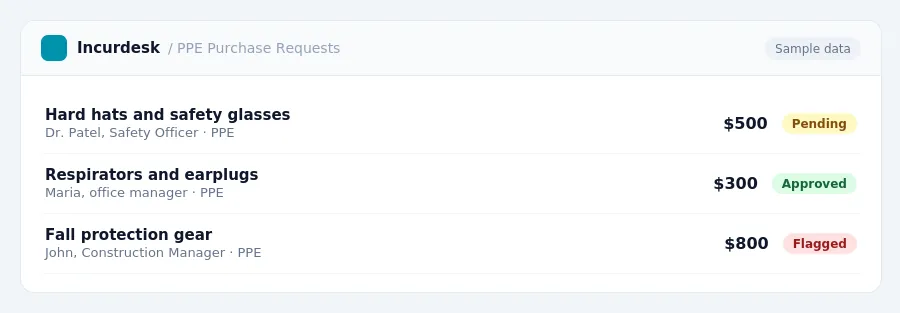
Managing PPE Expenses and Tax Implications
When it comes to managing PPE expenses and tax implications, small construction businesses need to understand the tax benefits of purchasing safety equipment. According to the IRS, safety equipment required for a job is generally tax-deductible as an ordinary and necessary business expense. This includes items like hard hats, steel-toe boots, safety glasses, and high-visibility vests.
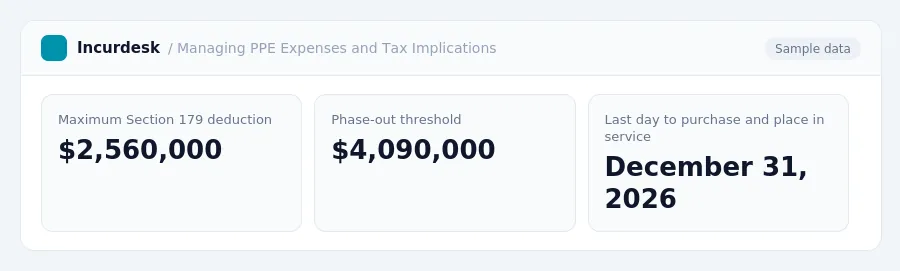
Businesses can use the Section 179 deduction to deduct the full purchase price of qualifying new or used equipment in the year it's placed in service. For tax years beginning in 2026, the maximum deduction is $2,560,000, with a phase-out beginning above $4,090,000 in total qualifying purchases. To qualify for this deduction, equipment must be purchased and placed in service by December 31, 2026.
It's essential to note that tax-related limits, such as those for Section 179 deductions, are often adjusted annually for inflation. For specific figures, consult the IRS website or contact a tax professional.
Avoiding Penalties and Ensuring Compliance
Ensuring compliance with OSHA's PPE requirements is crucial to avoid penalties and maintain a safe work environment. While federal OSHA sets the baseline, some states operate their own OSHA-approved State Plans, which may have slightly different or more stringent requirements.
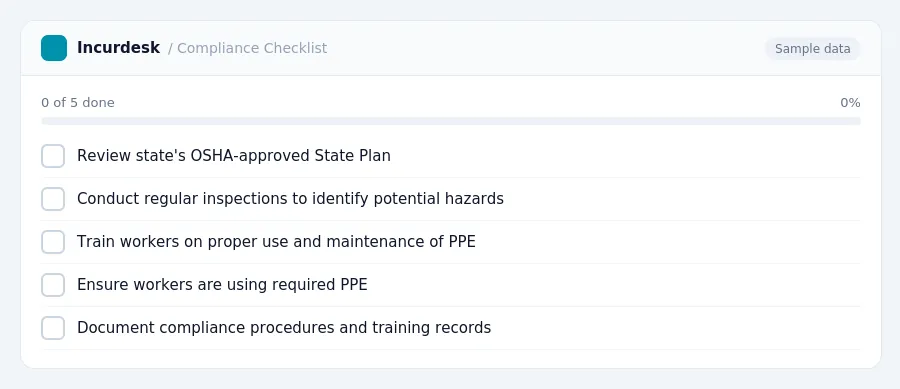
- Review your state's OSHA-approved State Plan to ensure compliance with specific PPE requirements.
- Conduct regular inspections to identify potential hazards and ensure that workers are using the required PPE.
- Train workers on the proper use and maintenance of PPE, as well as the potential consequences of non-compliance.
To avoid penalties, ensure that:
By staying informed and taking proactive steps, you can ensure compliance with OSHA's PPE requirements and maintain a safe work environment.
Keeping this simple: Incurdesk keeps receipts and approvals in one place, which makes a written policy easier to follow. It is built for small construction teams. Try it free.
Stop losing 4+ hours a week
30-day free trial · No credit card · Setup in 15 minutes