
Staff Pet Care Discounts: Expense or Benefit?
A practical, data-backed guide to controlling costs and automating expense workflows.
Staff pet care discounts can be a valuable employee benefit for small veterinary businesses, but their accounting and tax implications can be complex. To navigate expense management for veterinary clinics, it's essential to understand the IRS rules governing qualified employee discounts, which can help you determine whether these discounts are deductible business expenses or taxable employee benefits. By following these guidelines, you can ensure that your staff pet care discounts are compliant with tax laws and regulations. For a complete overview, see our expense management guide.
IRS Qualified Employee Discount Rules
The IRS allows veterinary businesses to offer tax-free discounts to employees on services and merchandise, but there are specific rules to follow.
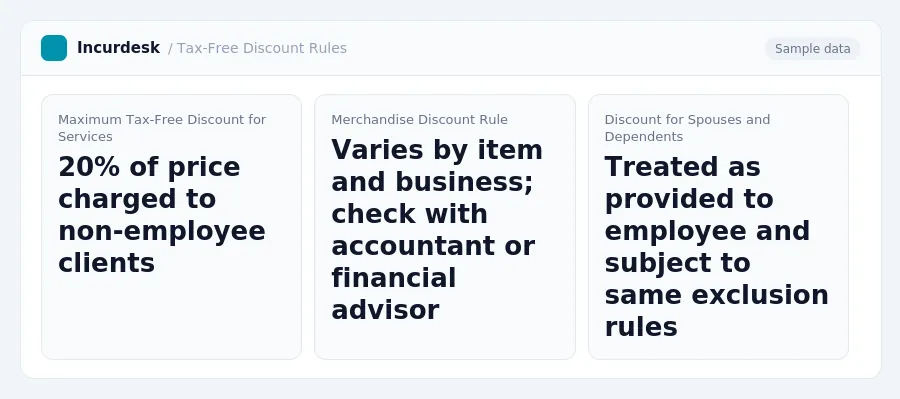
- For services, the discount is tax-free up to 20% of the price charged to non-employee clients.
- Merchandise discounts are subject to the gross profit percentage, which varies by item and business. Check with your accountant or financial advisor for the specific gross profit percentage for your business.
Discounts provided to an employee's spouse or dependent child are treated as provided to the employee and fall within the same exclusion rules.
| Discount Type | Maximum Tax-Free Discount |
|---|---|
| Services | 20% of price charged to non-employee clients |
| Merchandise | Varies by item and business; check with your accountant or financial advisor |
Tax Implications of Exceeding Limits
When providing staff pet care discounts, it's essential to understand the tax implications of exceeding the IRS-allowed limits.
- Services:If the discount exceeds this limit, the excess is taxable to the employee and must be reported on a Form W-2.
- Merchandise: The gross profit percentage varies depending on the type of merchandise and the business's pricing strategy.
If the business provides discounts exceeding the IRS limits, the employer must keep accurate records to support the discount amounts and ensure compliance with IRS regulations.
| Discount Type | Limit | Action if Exceeded |
|---|---|---|
| Services | 20% of price charged to non-employee clients | Report excess on Form W-2 |
| Merchandise | Varies by gross profit percentage | Report excess on Form W-2 |
Keep in mind that these limits and requirements are subject to change, so it's essential to consult the IRS guidelines and seek professional advice if needed.
Tax Treatment of Free Care and Discounts for Dependents
Here are some key guidelines to keep in mind:
- For products like food or medications, the discount is tax-free up to the practice's gross profit percentage of the customer price.
- Discounts on merchandise are tax-free up to your practice's gross profit percentage.
- Offering completely free care is generally not tax-free under the "no-additional-cost service" rule, as forgone revenue is considered a cost.
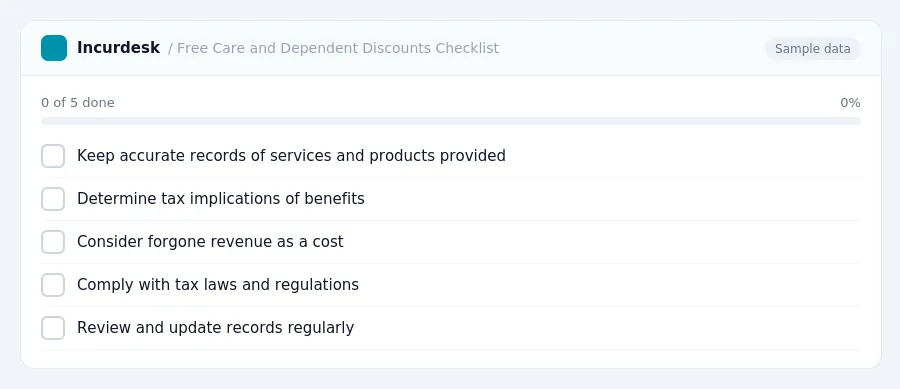
When providing free care or discounts for dependents, it's crucial to keep accurate records of the services or products provided and the amount of the discount. This will help you determine the tax implications of these benefits and ensure compliance with tax laws.
However, if you provide completely free care, you may need to consider the forgone revenue as a cost and potentially pay taxes on it.
Record Keeping and Written Policies
It's essential to maintain accurate records and establish clear written policies to ensure compliance with tax laws and avoid potential disputes. Keep detailed records of:
- Each employee's name, date, and type of pet care provided
- The amount of the discount given
- The total amount of discounts provided to each employee
- The total amount of discounts provided to all employees
Establish a written policy that outlines:
- The criteria for eligibility (e.g., length of service, job title)
- The types of pet care services eligible for discounts
- Any limitations or restrictions (e.g., dependent care, multiple pets)
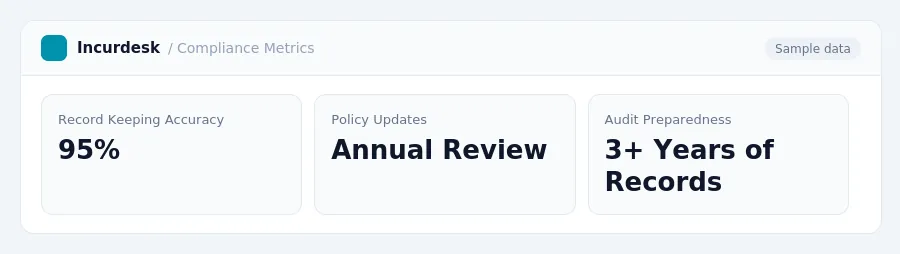
Review and update your written policy annually to ensure compliance with tax laws and regulations. Maintain accurate records for at least three years in case of an audit.
Keep in mind that state and local regulations may vary, so it's essential to check with your local authorities for specific requirements.
Employer-Sponsored Pet Insurance and FMLA Considerations
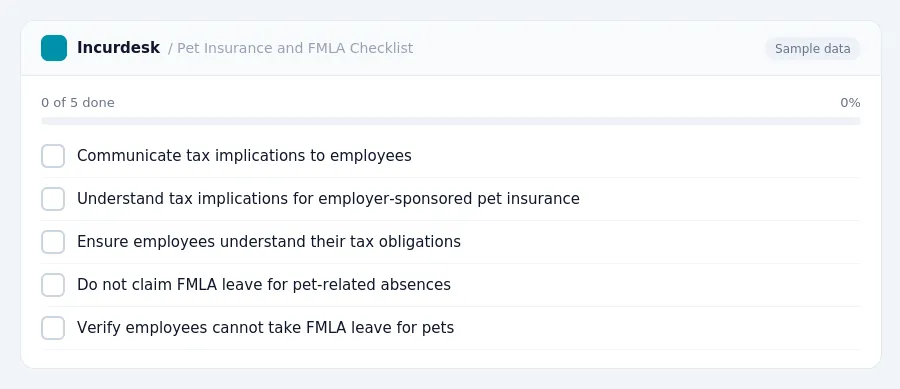
When considering employer-sponsored pet insurance, it's essential to understand the tax implications. Generally, employer-sponsored pet insurance is considered a taxable benefit for the employee, and premiums paid by the employer are added to the employee's W-2 wages. This means the employee must report the benefit as income and pay taxes on it.
However, the cost of pet insurance premiums paid by the employer can be deducted as a business expense under Section 162 of the IRS code.
The Family and Medical Leave Act (FMLA) does not provide leave for employees to care for a sick or deceased pet. This means that employees cannot take FMLA leave to care for their pets, and your business should not claim FMLA leave for pet-related absences.
When implementing employer-sponsored pet insurance, be sure to communicate the tax implications to your employees and ensure they understand their tax obligations. It's also essential to review and update your business's policies and procedures to reflect the tax treatment of employer-sponsored pet insurance.
For example:
| Scenario | Tax Implication |
|---|---|
| Premiums are added to the employee's W-2 wages as a taxable benefit | |
Keeping this simple: Incurdesk lets your team snap a photo of a receipt and fills in the details for you. It is built for small veterinary teams. Try it free.
Stop losing 4+ hours a week
30-day free trial · No credit card · Setup in 15 minutes