
Tenant Turnover Expense Checklist
A practical, data-backed guide to controlling costs and automating expense workflows.
As a small real estate business owner or office manager, accurately budgeting for tenant turnover expenses is crucial for maintaining profitability. Tenant turnover can be a significant real estate expense, with costs including cleaning, repairs, lost rent, and administrative tasks. By using real estate expense management tools for under $10/user (2026) and following a comprehensive checklist, you can minimize costly mistakes and stay on top of your expenses. For the bigger picture, see our guide to real estate expense management for under $10/user (2026). For a complete overview, see our expense management guide.
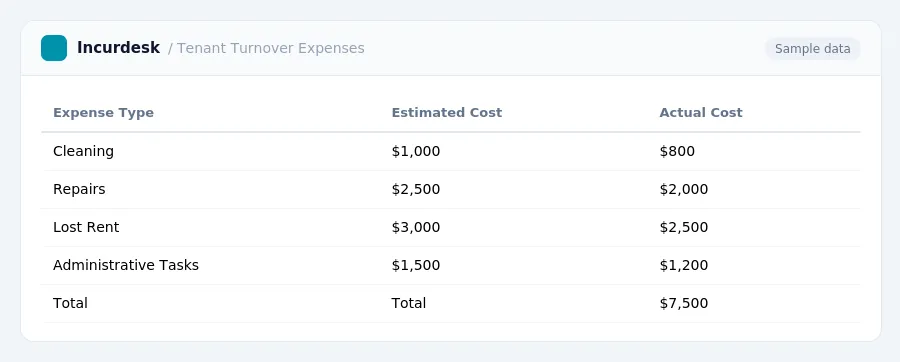
Tenant Turnover Expenses to Budget For
- Calculate the average tenant turnover cost per unit, which can be around $4,000, covering lost rent, concessions, and maintenance.
- Estimate minor repair costs after a tenant leaves, ranging from $100 to $400 per unit.
- Review these rates, effective October 1, 2024, and adjust your budget accordingly.
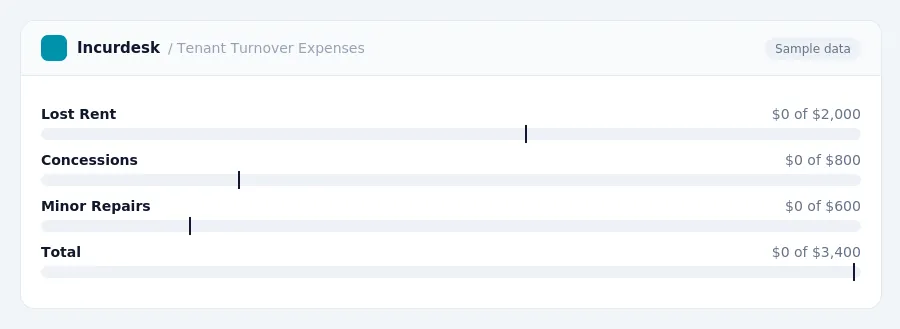
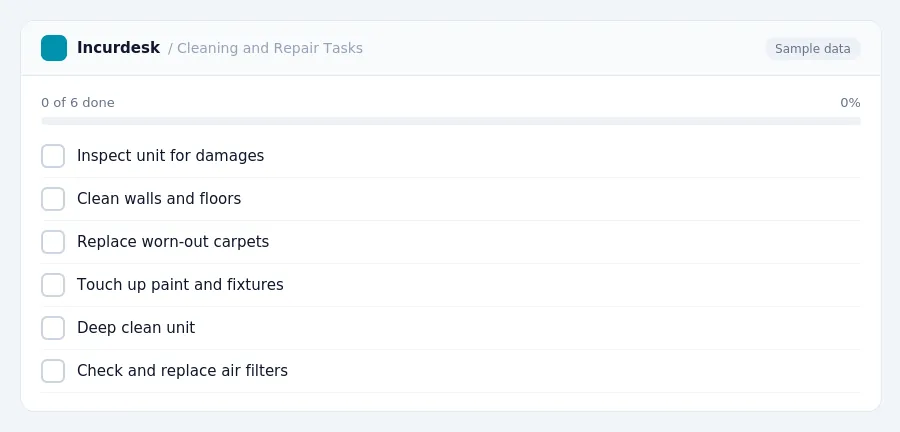
Cleaning and Repair Costs for Vacant Units
- Average Vacancy Period: Rental units averaged 34 days of vacancy at the end of 2024.
- Move-out Cleaning Costs: The average cost for move-out cleaning ranges from $90 to $390, depending on property size, location, and services required.
- Deep Cleaning Costs: A deep cleaning can range from $200 to $400.
- Move-out Cleaning Maximum Cost: A move-out cleaning can cost up to $500.
- Carpet Cleaning Costs: Professional carpet cleaning typically ranges from $75 to $200, depending on the space and stain severity.
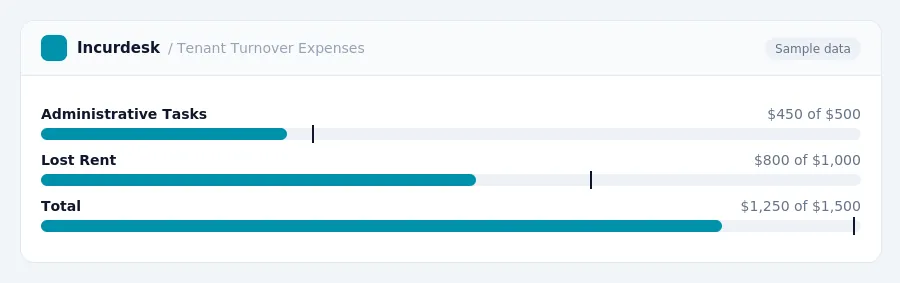
Administrative Tasks and Lost Rent Calculations
- Calculate administrative tasks and lost rent as part of your tenant turnover expenses.
- Track the time spent on administrative tasks such as:
- Preparing and serving notice to vacate
- Processing security deposit refunds
- Advertising and showing vacant units
- Estimate the lost rent by:
- Determining the average monthly rent for the unit
- Calculating the remaining lease term
- Applying the state's security deposit limit (e.g., Kansas limits security deposit to one month's rent, while California generally limits most landlords to one month's rent as of July 1, 2024)
- Multiplying the remaining lease term by the average monthly rent
- Consider the following when calculating lost rent:
- Whether the tenant is responsible for any remaining rent
- The time of year and potential seasonality in rent
- Document all administrative tasks and lost rent calculations for future reference.
Common Mistakes to Avoid in Tenant Turnover
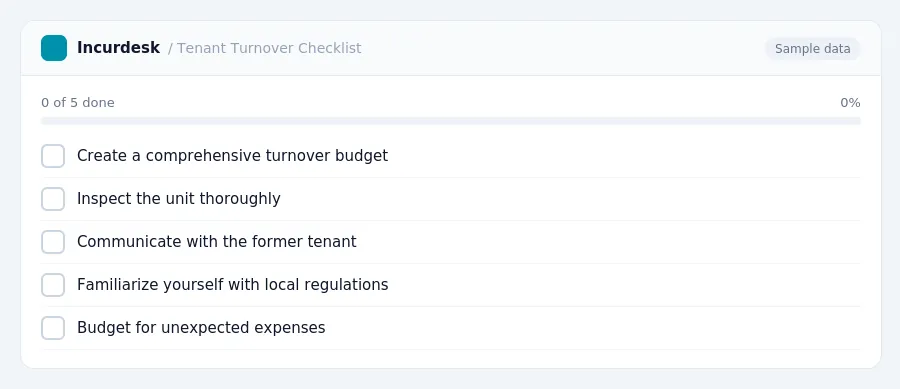
- Fail to create a comprehensive turnover budget: Make sure to account for all potential expenses, including cleaning, repairs, and administrative tasks, to avoid underestimating costs and ensure profitability.
- Not inspecting the unit thoroughly: Conduct a thorough inspection of the vacant unit to identify all necessary repairs and cleaning tasks to avoid overlooking essential work.
- Not communicating with the former tenant: Keep records of any communications with the former tenant, including notice periods and any outstanding issues, to avoid disputes and ensure a smooth turnover process.
- Not adhering to local regulations: Familiarize yourself with local regulations and laws regarding tenant turnover, such as notice periods and security deposit handling, to avoid non-compliance and potential fines.
- Not budgeting for unexpected expenses: Set aside a contingency fund to cover unexpected expenses, such as repairs or cleaning, to avoid financial shocks and ensure a smooth turnover process.
- Not reviewing and updating the turnover process: Regularly review and update your turnover process to ensure it remains efficient and effective, and to identify areas for improvement.
Frequently Asked Questions and Legal Requirements
- What is considered a vacant unit in terms of tenant turnover expenses?
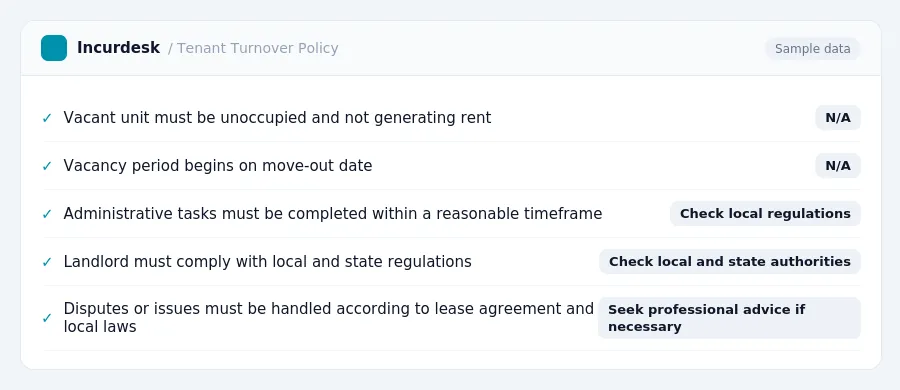
- A unit is considered vacant if it is unoccupied and not generating any rent income.
- How do I determine the length of a vacancy period?
- The vacancy period begins on the date the tenant moves out and ends on the date a new tenant moves in.
- Are there any specific deadlines for completing administrative tasks during a tenant turnover?
- What are the typical legal requirements for tenant turnover in the US?
- Check with local and state authorities for specific regulations regarding tenant turnover, including any necessary notices or inspections.
- How do I handle disputes or issues that arise during a tenant turnover?
- Review your lease agreement and local laws to understand your obligations and rights. Seek professional advice if necessary.
Keeping this simple: Incurdesk lets your team snap a photo of a receipt and fills in the details for you. It is built for small real estate teams. Try it free.
Stop losing 4+ hours a week
30-day free trial · No credit card · Setup in 15 minutes