
Tool Allowances vs Tool Reimbursements for Crews
A practical, data-backed guide to controlling costs and automating expense workflows.
For small construction businesses with 5-50 employees, understanding the difference between tool allowances and tool reimbursements is crucial for compliance with IRS regulations and maximizing tax benefits. A tool allowance is a fixed annual stipend provided to employees for business expenses, including tools, which can be deducted by the business as a construction expense. To streamline construction expense management for under $10/user (2026), it's essential to know the proper documentation required for each method to avoid potential tax implications. For a complete overview, see our expense management guide.
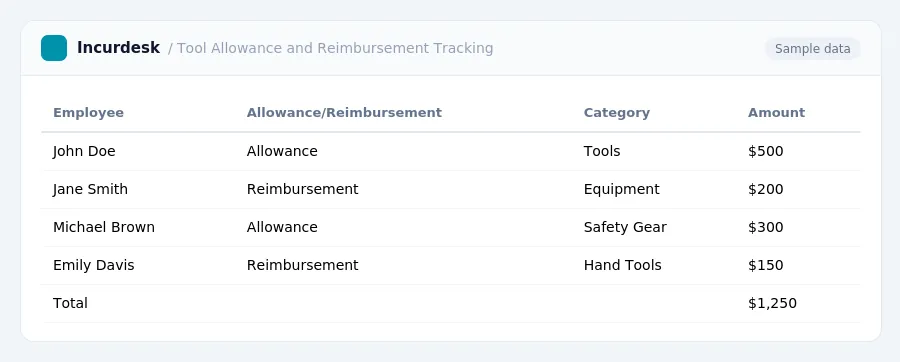
Understanding Tool Allowances vs Tool Reimbursements
When it comes to providing tools for your crew, you have two main options: tool allowances and tool reimbursements. Both methods allow you to deduct the cost of tools as a business expense, but they have different tax implications and requirements.
Here's a comparison of the two methods:
| Method | Characteristics |
|---|---|
| Tool Allowance | Flat monthly amount provided to employees for tools |
| Tool Reimbursement | Actual cost of tools reimbursed to employees |
Tool allowances are generally considered taxable wages, meaning you'll need to report them as income on your employees' W-2 forms. On the other hand, tool reimbursements are considered a business expense and are not subject to income tax. However, you'll need to keep records of the actual cost of the tools and the employee's receipts to support your reimbursement claims.
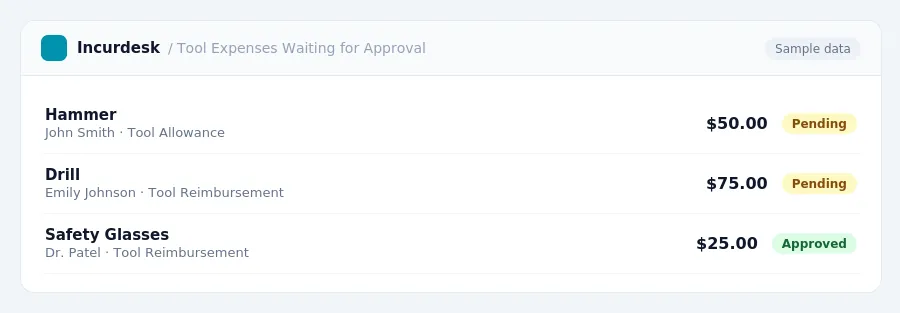
Defining Deductible Expenses and IRS Compliance
To qualify as deductible expenses, tools and power tools used exclusively for business purposes must meet the IRS "ordinary and necessary" test.
Reimbursements must meet three criteria to be considered an accountable plan by the IRS: a business connection, substantiation of expenses, and return of excess funds.
Make sure to keep accurate records of your tool expenses, including receipts and mileage logs, to ensure compliance with IRS regulations.
Keep in mind that the IRS may audit your business to verify the accuracy of your expense claims, so it's essential to maintain detailed records of all tool-related expenses.
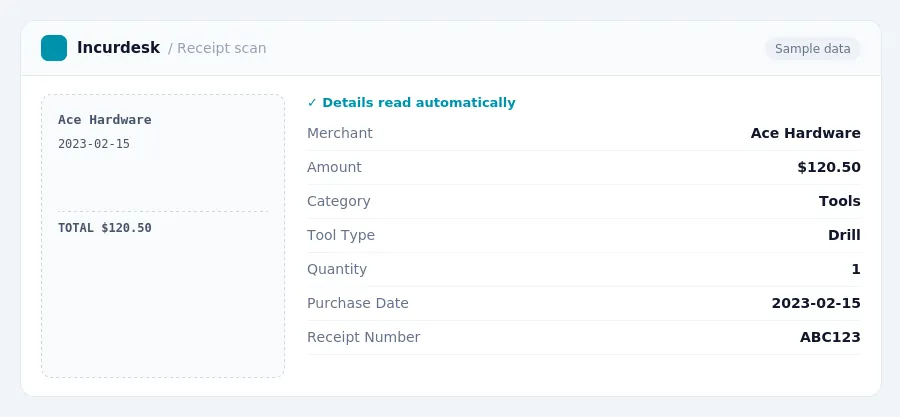
Choosing the Right Method for Your Crew
When deciding between tool allowances and tool reimbursements, consider your crew's specific needs and the type of tools they use. Tool allowances are often a better fit for crews that use specialized or high-cost equipment, such as heavy machinery or power tools. This method allows you to provide a set amount per year for tool expenses, which can be more predictable and easier to budget.
- Tool allowances can be more beneficial for crews that drive company vehicles for business purposes, as accurate mileage logs are required for business vehicle use, whether using the standard mileage rate or the actual expense method.
- For crews that use their personal vehicles for business, a tool allowance can be a convenient option, as it eliminates the need to track and log mileage.
On the other hand, tool reimbursements may be a better fit for crews that use a wide range of tools or have varying expenses throughout the year. This method requires you to reimburse your crew for actual tool expenses, which can be more time-consuming to track and manage.
Consider the following factors when making your decision:
- The type and cost of tools used by your crew
- The number of miles driven for business purposes
- The level of administrative burden you're willing to accept
Ultimately, the right method for your crew will depend on your specific business needs and circumstances. Be sure to consult with a tax professional to ensure you're making an informed decision that maximizes tax benefits and complies with IRS regulations.
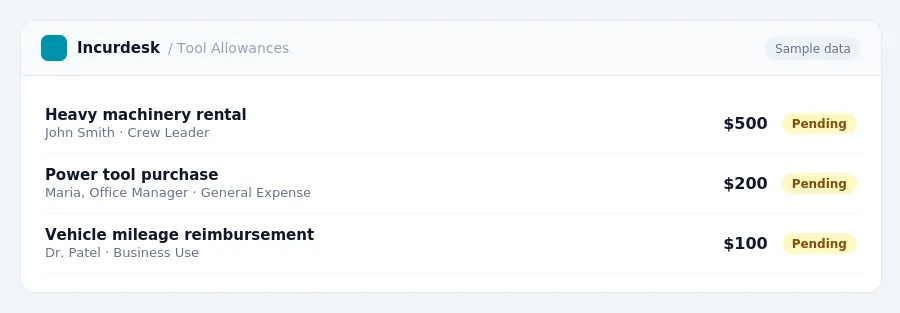
Documenting and Tracking Tool Expenses
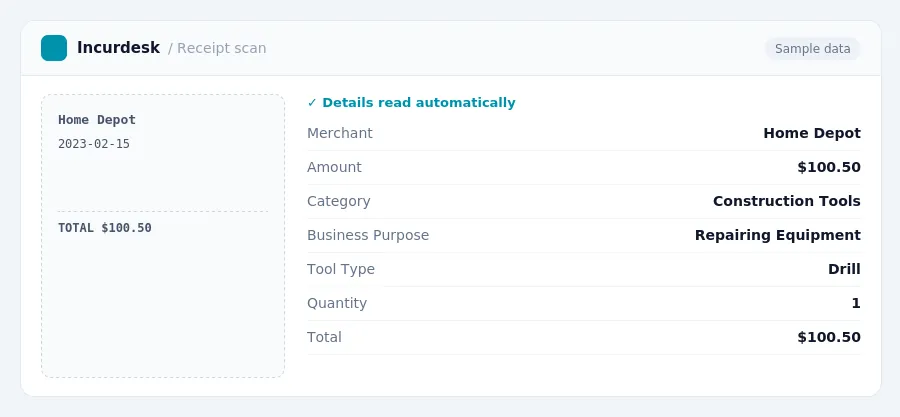
When providing reimbursement for tool expenses, it's essential to follow the rules to avoid any tax implications. Under an accountable plan, reimbursement should be against actual receipts, and the employer should maintain records of the business purpose, dates, and location of travel.
For tool allowances, employers should keep accurate records of the amount paid to each crew member, as well as the type and amount of tools purchased. This documentation is crucial for tax purposes and should be retained for at least three years.
Employers should also ensure that all documentation is easily accessible and can be provided to the IRS upon request. This includes:
- Original receipts for tool purchases
- Records of tool allowances paid to each crew member
- Documentation of business purpose, dates, and location of travel
Remember, accurate documentation is key to avoiding any tax implications and ensuring compliance with IRS regulations.
Maximizing Tax Benefits with Tool Allowances and Reimbursements
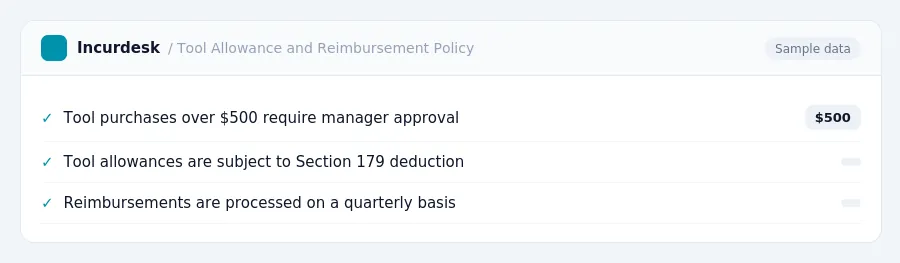
When it comes to tool allowances and reimbursements, the key to maximizing tax benefits lies in understanding how each method affects your business's bottom line. Section 179 allows businesses to deduct the full cost of qualifying property in the year of purchase, up to a certain limit. However, this deduction cannot create a net operating loss, and any unused deductions can be carried forward to offset future tax years.
When choosing between tool allowances and reimbursements, consider the following:
- Tool allowances can be more beneficial for businesses that purchase tools frequently, as they allow for a larger deduction in the year of purchase.
- Reimbursements, on the other hand, may be more suitable for businesses that purchase tools less frequently, as they allow for a more gradual deduction over time.
Keep in mind that federal law is the primary focus for tax deductions, but some states are enacting portable benefits laws that may affect how contractors offer benefits to independent contractors. Be sure to check with your state's laws and regulations to ensure compliance.
By understanding the tax implications of tool allowances and reimbursements, you can make informed decisions that help maximize your business's tax benefits.
Remember to review and update your business's tax strategy regularly to ensure you are taking advantage of all available deductions and credits.
| Option | Limitation |
|---|---|
| Section 179 Deduction |
Keeping this simple: Incurdesk keeps receipts and approvals together, so you know exactly what to reimburse. It is built for small construction teams. Try it free.
Stop losing 4+ hours a week
30-day free trial · No credit card · Setup in 15 minutes