
Tool Reimbursement: What Contractors Actually Pay Out
A practical, data-backed guide to controlling costs and automating expense workflows.
As a contractor, you're responsible for reimbursing your employees for tools and equipment, which can be a complex task. Construction expense management for under $10/user (2026)
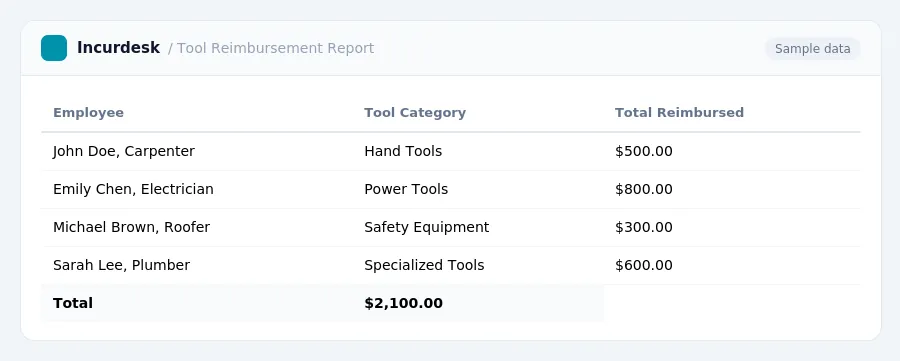
For example, let's say an electrician uses a $200 cordless drill for 100% of their work.
When it comes to calculating the cost of tools and equipment, you'll need to consider the following:
- Initial cost: The cost of purchasing the tool or equipment.
- Depreciation: The decrease in value of the tool or equipment over time.
- Wear and tear: The normal wear and tear on the tool or equipment.
This includes a business connection, substantiation of expenses, and return of excess funds.
For example, if an employee is reimbursed for a $100 tool, you'll need to ensure that the reimbursement is for a business-related expense, and that the employee provides documentation to support the expense. If the employee returns the tool or excess funds, you'll need to document the return as well.
localities.
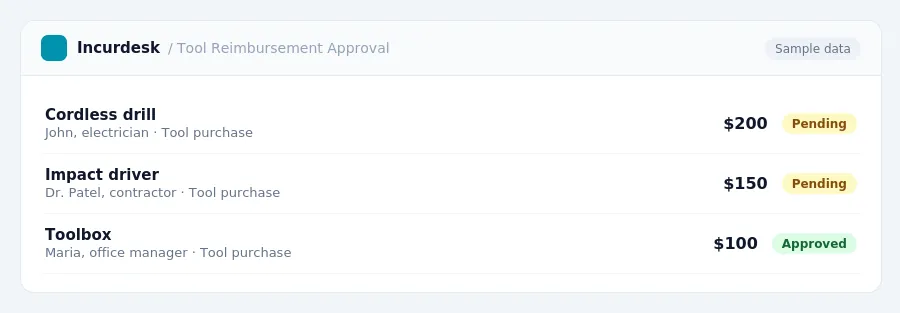
Keeping this simple: Incurdesk turns submitted expenses into clean expense reports. It is built for small construction teams. Try it free.
Managing Tool Reimbursement Compliance
Here are some key steps to ensure compliance:
- Review and update your tool reimbursement policy annually to reflect changes in tax laws and regulations.
- Establish clear guidelines for deducting business expenses, including the types of tools and equipment that are eligible for reimbursement.
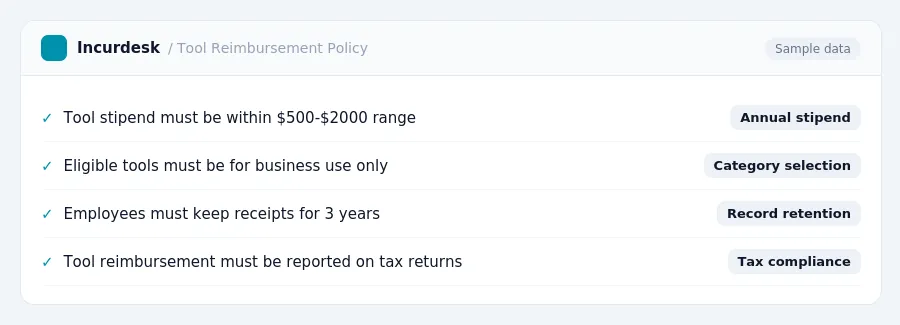
- Set a reasonable annual tool stipend, typically ranging from $500 to $2,000 per field employee, and communicate this to employees.
- Ensure that employees understand the tax implications of tool reimbursement and provide them with information on how to report these expenses on their tax returns.
It's also essential to keep accurate records of tool expenses, including receipts, invoices, and mileage logs. These records should be stored for at least three years in case of an audit.
Understanding Tool Reimbursement Requirements
Contractors must comply with various rules and regulations when reimbursing employees for tools and equipment. Here are some key requirements to keep in mind:
- Some states have specific laws requiring reimbursement for certain expenses related to job duties. For example:
- California, Illinois, Massachusetts, Montana, North Dakota, South Dakota, and the District of Columbia require reimbursement for 'necessary' expenses related to job duties.
- Minnesota requires reimbursement for equipment used for work, excluding 'tools of the trade'.
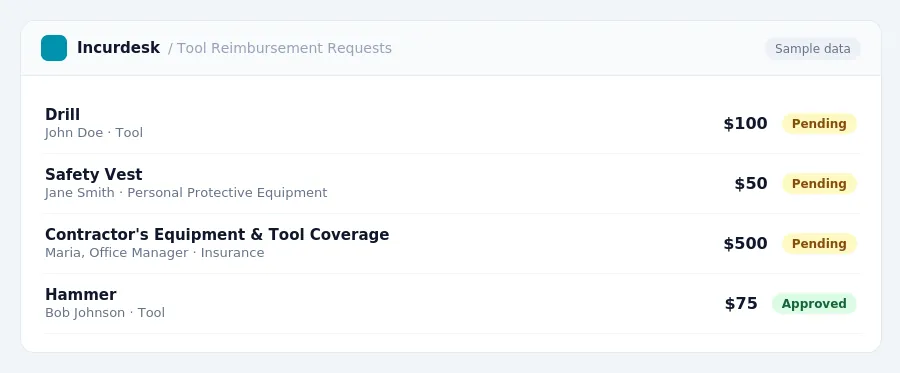
Contractors may also need specialized insurance coverage, such as Contractors Equipment & Tool Coverage or Inland Marine insurance, to protect against loss or damage to tools and equipment.
Choosing the Right Reimbursement Structure
When it comes to reimbursing employees for tools and equipment, there are several reimbursement structures to choose from. A construction company might offer a one-time tool allowance of $500 at the start of employment, requiring proof of purchase for reimbursement. Alternatively, the company could choose to reimburse employees for actual expenses incurred, which may include mileage, fuel, and maintenance costs.
To determine the best reimbursement structure for your company, consider the following options:
- Flat rate reimbursement: Pay a fixed amount per tool or piece of equipment, which can be deducted from the employee's paycheck.
- Actual expense reimbursement: Reimburse employees for the actual cost of tools and equipment, plus any related expenses such as mileage or maintenance.
- Hybrid reimbursement: Combine elements of flat rate and actual expense reimbursement to create a customized structure.
When choosing a reimbursement structure, be sure to consider the following factors:
- Employee needs and expenses
- Company budget and financial goals
It's also essential to establish clear policies and procedures for tool reimbursement, including deadlines for submitting expense reports and requirements for proof of purchase.
Maintaining Accurate Tool Expense Records
Accurate tool expense records are essential for maintaining a compliant tool reimbursement program. Here's how to keep track of your tool expenses:
When structuring your tool reimbursement as an accountable plan, keep in mind that these expenses are considered business expenses and are not subject to income tax.
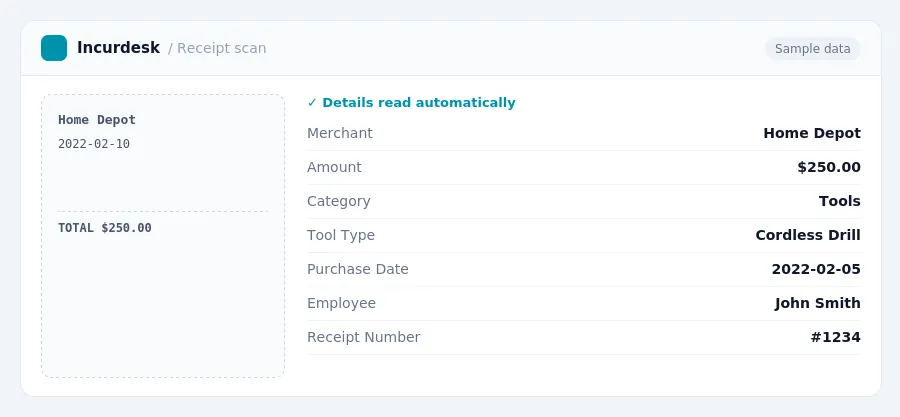
- Document all tool purchases, including receipts and invoices.
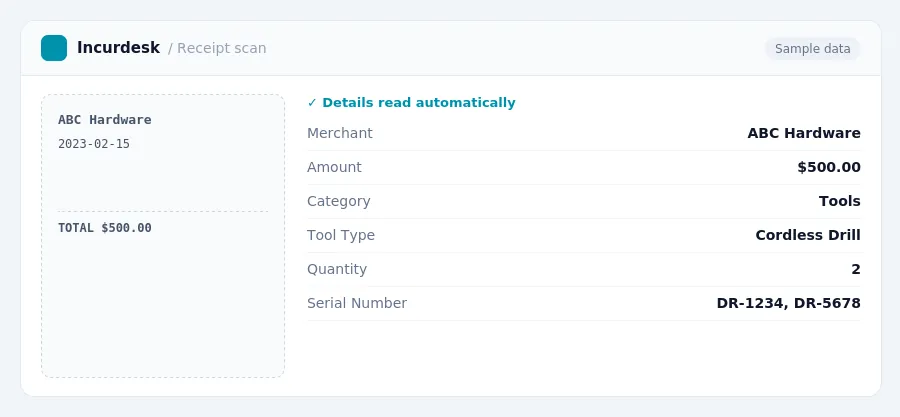
- Keep an up-to-date tool inventory, including serial numbers and photos.
- Regularly review and update your inventory to ensure accuracy.
Having an accurate and up-to-date tool inventory is crucial for insurance purposes and to avoid denied claims. This will also help you to:
- Verify ownership and ensure that you are reimbursing the correct employee.
- Accurately calculate depreciation and expenses.
Stop losing 4+ hours a week
30-day free trial · No credit card · Setup in 15 minutes