
Tracking After-Hours Emergency Repair Expenses
A practical, data-backed guide to controlling costs and automating expense workflows.
Tracking after-hours emergency repair expenses is crucial for effective expense management for property management, and understanding what constitutes an emergency is key. For a complete overview, see our expense management guide.
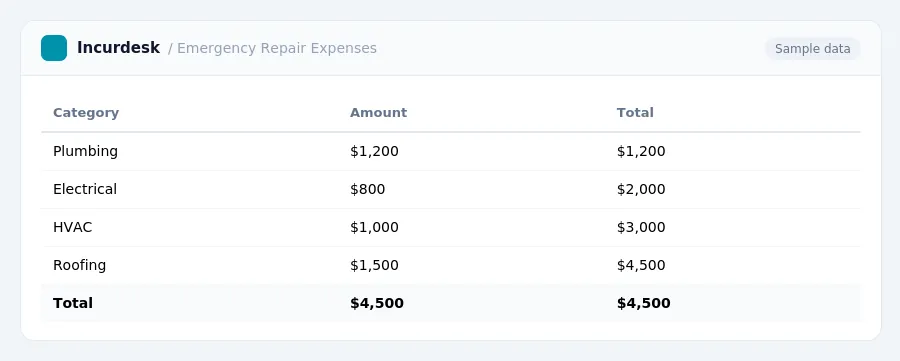
Define What Constitutes an Emergency Repair
- Emergency repairs typically involve situations that threaten residents' safety or could cause significant property damage. This includes major plumbing leaks, electrical hazards, fire damage, gas leaks, or storm-related structural issues. For example, a burst pipe or a gas leak would qualify as an emergency repair.
- For instance, patching a roof leak is a repair, but replacing the entire roof is a capital improvement.
- While federal tax rules apply nationwide, specific landlord-tenant laws regarding repair timelines and habitability can vary by state. For example, Texas law requires landlords to address conditions impacting a tenant's health, safety, or ability to live in the home.
- The definition of an emergency repair, the required response time for landlords, and the legal options available to tenants if repairs are not made can vary significantly by state and local jurisdiction.
- The de minimis safe harbor thresholds for 2026 are expected to remain at $2,500 (without AFS) and $5,000 (with AFS). The Small Taxpayer Safe Harbor limits for 2026 are also expected to remain at $10,000 or 2% of the property's basis.
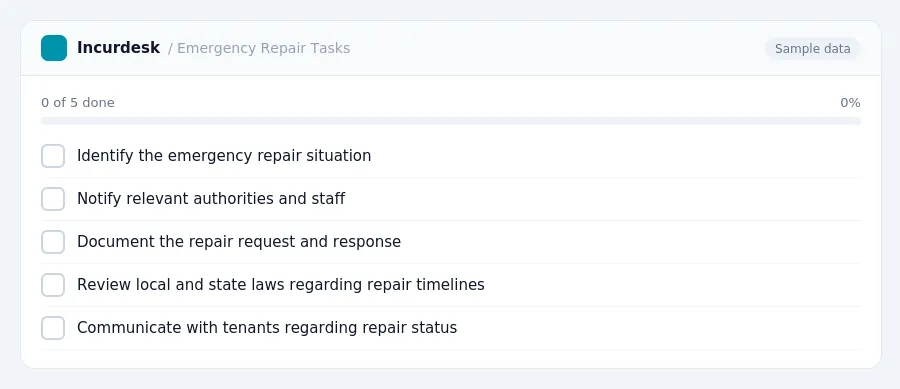
Track and Categorize Emergency Repair Expenses
- Set up a system to track and categorize emergency repair expenses, including a separate fund for unexpected repairs. It's recommended to keep 3 to 6 months of rental expenses in an emergency fund to cover urgent repairs like plumbing failures or HVAC issues.
- Maintain meticulous records of all financial transactions, including receipts, invoices, and work orders.
- Use a software solution to automate expense tracking, categorize expenses, and provide detailed reports. This will help streamline financial management and ensure compliance.
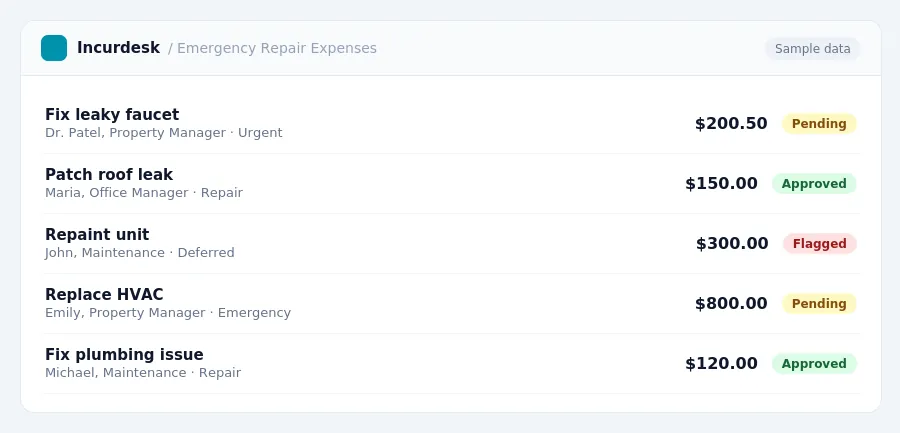
- Examples of these expenses include fixing a leaky faucet, patching a roof leak, or repainting a unit between tenants.
- Keep in mind that while the core principles of repair vs.
Understand the Legal and Tax Implications
To do this, you need to be aware of what constitutes an emergency repair and how it differs from a non-emergency repair. Issues that can wait for normal business hours, such as a single clogged toilet, minor faucet leaks, or burned-out light bulbs, do not typically qualify as emergencies.
Here are some key rules to keep in mind:
- Businesses must also keep track of the date and time of the repair, as well as the name and contact information of the repair person or contractor.
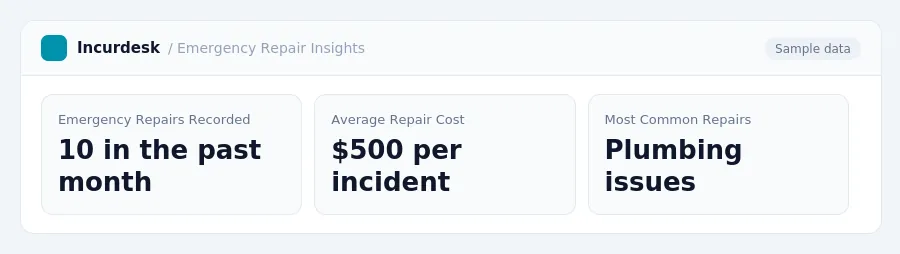
Document and Financially Manage Emergency Repairs
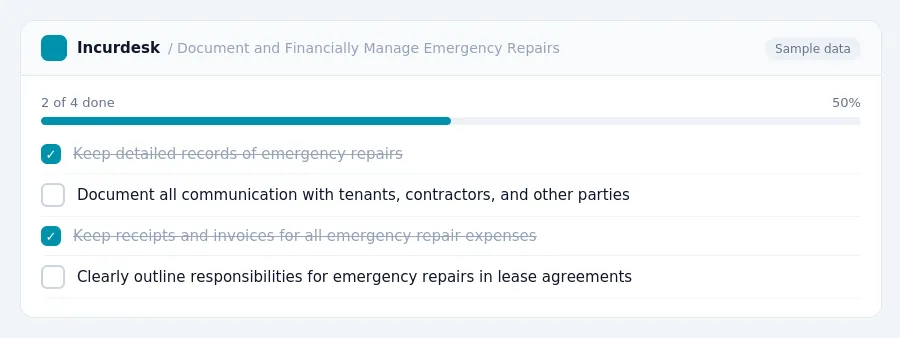
- Keep detailed records of emergency repairs, including dates, times, and descriptions of the work performed, as well as the cost of materials and labor. This will help you track and categorize expenses accurately.
- Document all communication with tenants, contractors, and other parties involved in the emergency repair, including emails, phone calls, and meeting notes. This will help you demonstrate compliance with legal requirements and support your financial management.
- Keep receipts and invoices for all emergency repair expenses, including proof of payment and any relevant warranties or guarantees. This will help you track expenses and ensure that you are meeting your financial obligations.
- Clearly outline the responsibilities for emergency repairs, including the procedures for reporting and responding to emergencies, in your lease agreements. This will help you establish clear expectations with tenants and ensure compliance with legal requirements.
- Review and update your financial records regularly to ensure that you are accurately tracking and categorizing emergency repair expenses.
Landlords are legally obligated to handle emergency repairs that affect health, safety, or violate building codes. They must address emergencies promptly, often within hours, to prevent harm or legal liability.
Specific responsibilities for repairs, including emergency repairs, should be clearly outlined in lease agreements, which can be tailored to individual properties and landlord-tenant relationships.
While the core principles of repair vs.
-
Regularly review and update your company's accounting practices to ensure compliance with changing tax laws and regulations.
Consult with a tax professional or accountant to ensure your company's accounting practices align with the latest tax laws and regulations.
-
Keep detailed records of all emergency repair expenses, including receipts, invoices, and cancelled checks.
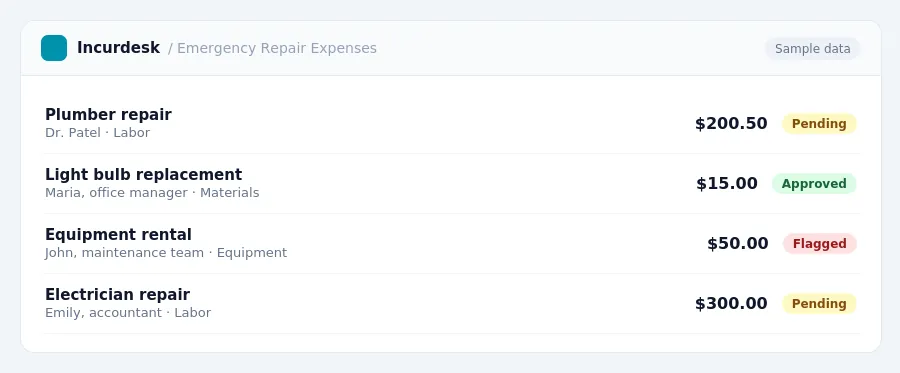
Organize these records by category (e.g., labor, materials, equipment) and by date to ensure easy access and tracking.
Consider implementing a centralized system for tracking and storing financial records to streamline the accounting process.
-
Classify emergency repair expenses correctly as either repairs or capital expenditures.
Keep records of the classification process and the reasoning behind each classification to ensure compliance with tax laws and regulations.
-
Ensure accurate and timely reporting of emergency repair expenses on your company's tax returns.
Work with your tax professional or accountant to ensure compliance with all tax laws and regulations.
Regularly review and update your company's financial statements to ensure accurate reflection of emergency repair expenses.
Keeping this simple: Incurdesk turns submitted expenses into clean expense reports. It is built for small property management teams. Try it free.
Stop losing 4+ hours a week
30-day free trial · No credit card · Setup in 15 minutes