
Tracking Continuing Education Spend Across Hospital Departments
A practical, data-backed guide to controlling costs and automating expense workflows.
Small hospital businesses in the US can maximize tax benefits and ensure compliance with professional licensing boards by accurately tracking continuing education (CE) expenses for their employees. To do so, it's essential to understand the tax deductibility of CE expenses, including what types of education qualify, how to document these expenses, and any state-specific requirements for healthcare professionals' licenses and certifications. Effective expense management for hospitals
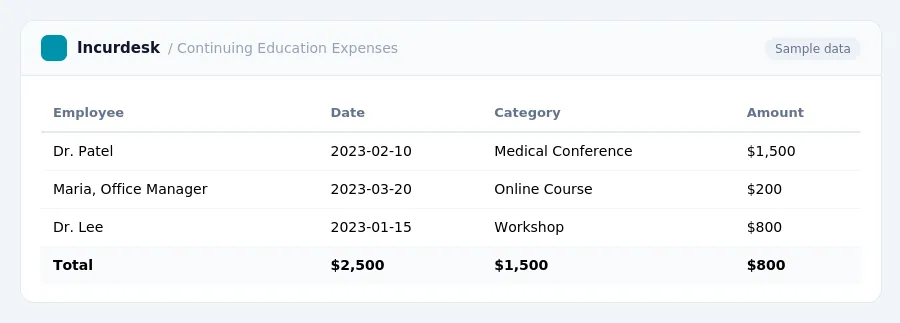
Document Continuing Education Expenses
- This will help ensure that all qualifying expenses are accounted for when filing taxes.
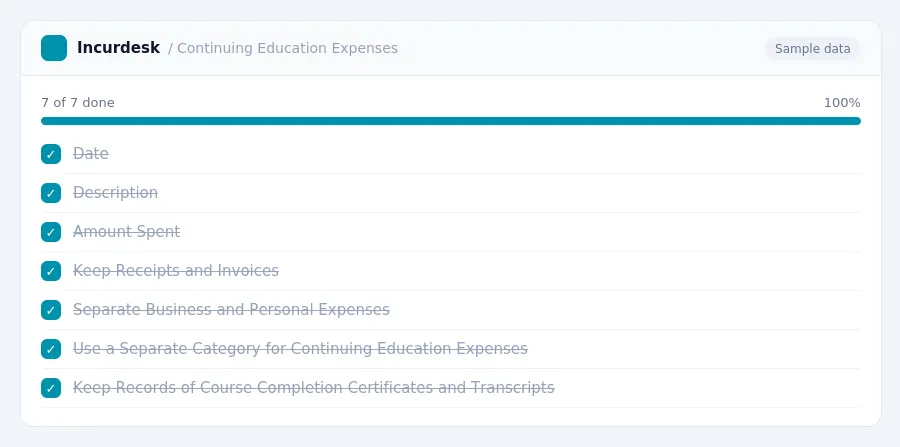
- When documenting expenses, include the date, description, and amount spent on each continuing education activity. Keep receipts, invoices, and other supporting documentation for each expense.
- Separate business and personal expenses to avoid confusion. Use a separate column or category for continuing education expenses to make it easier to review and reconcile your records.
- Consider using a mileage log to track business mileage related to continuing education activities.
- Keep records of all continuing education activities, including course completion certificates, transcripts, and other documentation. This will help you demonstrate the business purpose of the education and ensure compliance with professional licensing boards.
- Review and update your records regularly to ensure accuracy and completeness. This will help you maximize tax benefits and avoid potential audit issues.
Remember to keep all supporting documentation for at least three years in case of an audit. This includes receipts, invoices, mileage logs, and other records related to continuing education expenses.
Identify Qualifying Education
- These requirements often include mandated topics such as human trafficking, implicit bias, cultural competency, and prevention of medical errors. For example, in California, healthcare providers are required to complete 2 hours of training on human trafficking every 2 years, starting from 2016. Check with your state's licensing board for specific requirements.
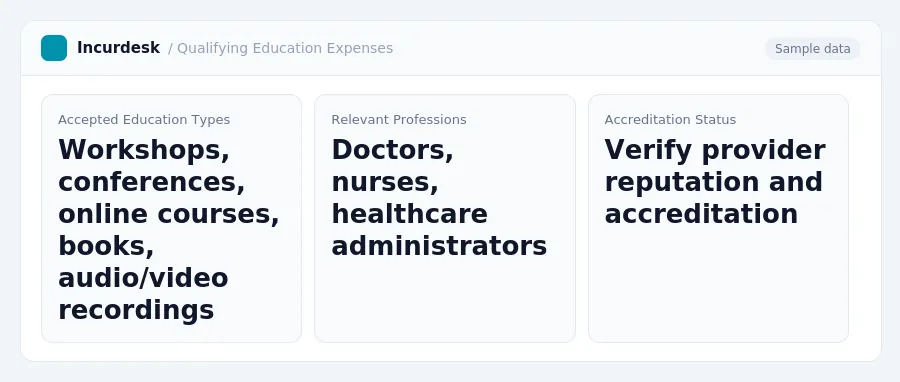
- Next, consider the types of education that are commonly accepted as qualifying expenses. These may include:
- Workshops and conferences
- Online courses and webinars
- Books and e-books
- Audio and video recordings
- Make sure the education is directly related to your profession or business. For example, if you're a doctor, a course on marketing or finance would not be considered qualifying education. However, a course on medical ethics or patient communication would be.
- Verify that the education provider is reputable and accredited. You can check with your state's licensing board or professional organization for a list of approved providers.
- Keep records of your education, including certificates of completion, receipts, and documentation of the topics covered. This will help you track your qualifying education and ensure you're meeting state-specific requirements.
Track State-Specific Requirements
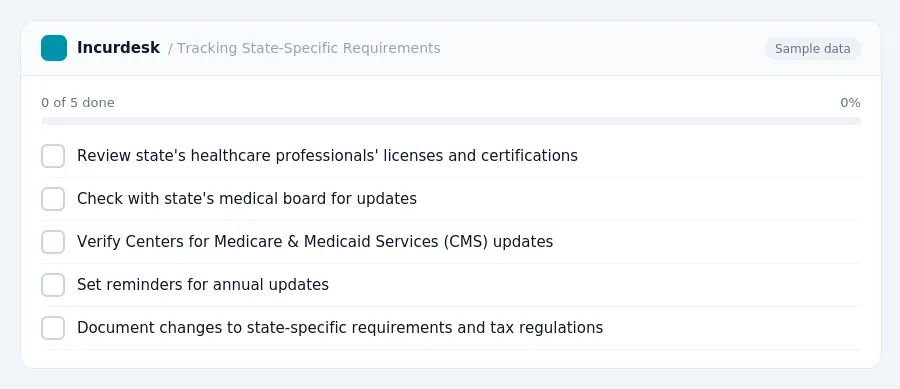
- Review the specific requirements for your state's healthcare professionals' licenses and certifications. For example, Advanced Practice Nurses (APNs) with prescriptive authority may need to complete additional pharmacology or controlled-substance courses to maintain their licenses. Check with your state's medical board for the most up-to-date information.
-
Check the Centers for Medicare & Medicaid Services (CMS) website for annual updates on rules that may impact hospital reimbursement and operational considerations.
-
Consider setting reminders to check for updates on state-specific requirements and tax regulations annually, as these can change frequently. Staying informed will help you ensure accurate tracking and compliance.
-
Document any changes to state-specific requirements and tax regulations in your records, including the date and source of the information. This will help you maintain accurate records and ensure compliance with professional licensing boards.
Reimburse Employees for Continuing Education
-
To reimburse employees for continuing education, you'll need to follow these steps:
- Establish a reimbursement plan: Create a written plan outlining the reimbursement process and any requirements or limitations.
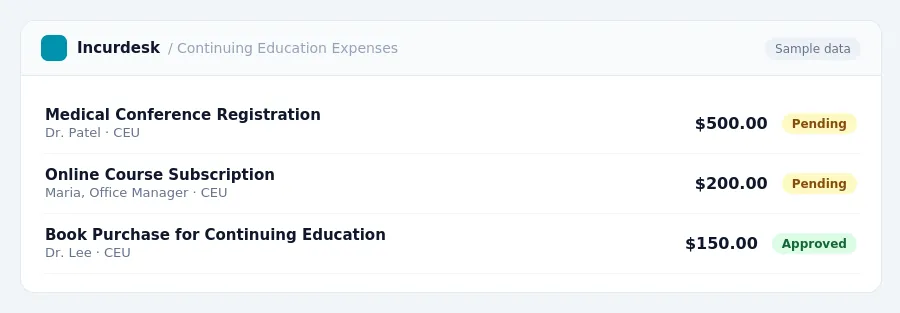
- Document employee expenses: Have employees submit receipts and documentation for their continuing education expenses.
- Review and approve expenses: Review the submitted expenses and approve or deny reimbursement based on your established plan.
- Reimburse employees: Pay the approved expenses to the employees, keeping records of the reimbursement for tax purposes.
- Consult your tax professional to ensure accurate calculations.
- Separate personal and business expenses to ensure only business-related continuing education expenses are deducted. Review your records to identify qualifying expenses, such as tuition, travel, and materials.
- Keep accurate records of continuing education expenses, including receipts, invoices, and bank statements.
- They can help you navigate complex tax laws and ensure accurate calculations.
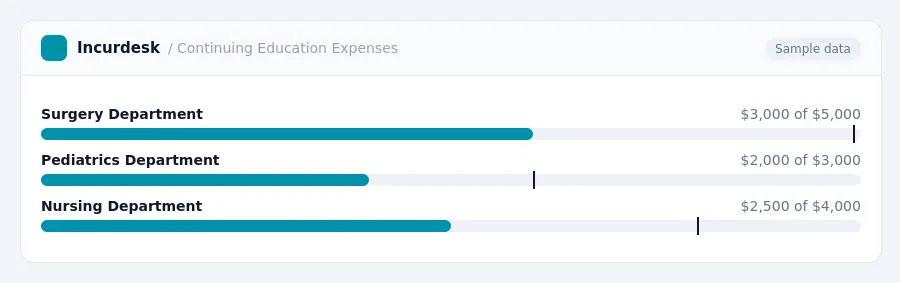
Keeping this simple: Incurdesk turns submitted expenses into clean expense reports. It is built for small hospital teams. Try it free.
Stop losing 4+ hours a week
30-day free trial · No credit card · Setup in 15 minutes