Tracking Drain Camera and Equipment Rental Costs
A practical, data-backed guide to controlling costs and automating expense workflows.
To effectively track and manage plumbing service expense costs, including drain camera and equipment rental expenses, it's essential to have a system in place. This can be achieved by implementing a reliable plumbing service expense management software that helps track and categorize expenses, such as equipment rental rates.
Step 1: Identify Your Business Needs
Here is the section "Step 1: Identify Your Business Needs":
Identifying your business needs is crucial for accurately tracking drain camera and equipment rental costs. As a small plumbing service business, you're likely to have varying equipment needs depending on the types of jobs you handle, the size of your team, and the services you offer. To get started, you'll need to consider the following factors:
- The types of jobs you handle and the equipment required for each job
- The size of your team and the number of employees who may need equipment rental services
- The services you offer and the equipment used to provide those services
- The frequency and duration of equipment rental services
- The location of your business and any factors that may affect equipment rental costs (e.g. high rental rates in certain areas)
For example, if you have a team of plumbers who handle residential drainage jobs, you may need to rent drain cameras, pumps, and other equipment more frequently than if you only had a team that handles commercial jobs. Similarly, if you offer drain cleaning services for commercial clients, you may need to rent specialized equipment like high-pressure pumps and vacuum trucks.
By considering these factors, you can start to get a sense of what equipment needs to be rented and by how much. This will help you determine your rental rates and costs, and make it easier to track your expenses over time.
A common starting point for daily equipment rental rates is 1-2% of the equipment's market value. As you gather more data and refine your equipment needs, you can adjust your rates to reflect the actual costs of renting and maintaining the equipment.
The rules in this guide
| Amount | Required | In Incurdesk |
|---|---|---|
| Above $75 | Itemised receipt | Checked on every expense |
| Above $250 | Written business purpose | Checked on every expense |
| Above $500 | Names of attendees | Checked on every expense |
| Above $2,500 | Senior sign-off; never auto-approved | Checked on every expense |
Each rule is checked on every expense by Incurdesk’s approval agent.
Tag every case to a dentist
When it comes to tracking drain camera and equipment rental costs, it's essential to identify the specific cases that require attention. Here's how to do it:
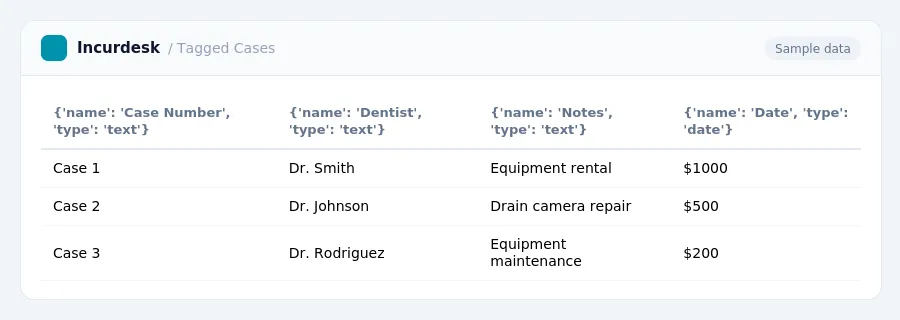
- Create a spreadsheet or table to list each case, including the details such as date, description, equipment rented, and rental rate.
- Make sure to include columns for the date, case number, equipment type, rental rate, and any relevant notes or comments.
- Consider using a template or a standard format to make it easier to track and analyze the data.
- Tag each case to a specific dentist or healthcare professional, as required by your company's policies or guidelines. This will help you to identify who was involved in each case and ensure that the necessary documentation is kept.
- Make sure to update the spreadsheet regularly, ideally on a monthly or quarterly basis, to reflect any changes or updates in the cases.
- Consider setting up a system to track the dates and times of each case, as this can help you to identify patterns or trends in the rental rates and costs.
Calculate Rental Rates and Costs
Here is the section titled "Calculate Rental Rates and Costs":
- Determine your business's equipment rental base rate. A common starting point is 1-2% of the equipment's market value.
- Identify any add-ons to your rental base rate, such as delivery and pickup, damage waivers or insurance, fuel, cleaning, extra engine hours, fees, sales tax, or wear items or attachments. Make a list of these add-ons and their corresponding costs.
- Consider the total cost of ownership for the equipment, including maintenance, repairs, and replacement. This will help you determine the net rental rate.
- Calculate the total cost of equipment rental expenses, including base rate, add-ons, and any taxes or fees. Make sure to include any depreciation or amortization of the equipment.
- Determine your tax implications for equipment rental income. You may be able to deduct the rental income as a business expense, but you'll need to follow specific tax rules and regulations.
- Keep track of your equipment rental expenses, including dates, amounts, and add-ons. You can use a spreadsheet or a simple table to record this information.
Track Your Equipment Rental Expenses
Here is the article:
Track Your Equipment Rental Expenses
- Identify your business needs: Determine the types of equipment you need to rent for your plumbing service business, such as drain cameras, drain snakes, and other specialized equipment. Consider the frequency and duration of use, as well as the number of employees who will use the equipment.
- Calculate rental rates and costs: Research the rental rates and costs for similar equipment in your area. from October 1, 2026 - September 30, 2027.
- Track your equipment rental expenses: Keep a record of all equipment rentals, including dates, locations, and costs. You can use a spreadsheet, such as a table or a chart, to help you track your expenses. You may also want to consider using an online tool, such as a cloud-based accounting software, to make it easier to track and manage your expenses.
Step 1: Identify Your Business Needs Small plumbing service businesses need to track drain camera and equipment rental costs to make informed decisions and manage their finances effectively. By understanding the costs associated with these expenses, businesses can allocate resources efficiently and make the most of their equipment.
Step 2: Tag every case to a dentist Accurately tracking every case to a dentist is crucial for billing and insurance purposes. This will help businesses to claim the appropriate costs and avoid any potential errors or discrepancies.
Step 3: Calculate Rental Rates and Costs The rental rates for drain cameras and equipment can vary depending on factors such as the type of equipment, location, and rental duration. As a general starting point, a common rate range is 1-2% of the equipment's market value per day. Businesses should research and compare market rates to determine the best rental rate for their specific needs.
Step 4: Track Your Equipment Rental Expenses Regularly tracking rental expenses will help businesses to identify any seasonal fluctuations or trends. This information can be used to adjust budgets, allocate resources, and make informed decisions about equipment purchases and maintenance.
Tax rules, limits and rates change. Confirm current figures with the IRS or your accountant before you file.
Keeping this simple: Incurdesk turns submitted expenses into clean expense reports. It is built for small plumbing service teams. Try it free.
AI expense management for finance teams and whoever keeps the books. It checks every expense against your rules, approves the routine ones and chases missing receipts for you.
Try it free for 30 days →Stop losing 4+ hours a week
30-day free trial · No credit card · Setup in 15 minutes