Tracking Drop Cloths, Tape and Consumables Spend
A practical, data-backed guide to controlling costs and automating expense workflows.
Small painting contractors need to accurately track and categorize their spending on consumables like paint, tape, drop cloths, and other supplies to manage their businesses effectively. To get started, contractors should consider using painting contractors expense management software to streamline their expense tracking process. For a complete overview, see our expense management guide.
Tracking Drop Cloths, Tape and Consumables Spend
To get started, follow these steps:
- Keep a record of all drop cloths, tape, and other consumables used during each job, including the date, quantity, and location.
- Categorize your consumables into three main groups: paint, tape, and drop cloths.
- Assign a unique identifier to each category, such as a color-coded sticker or a specific number.
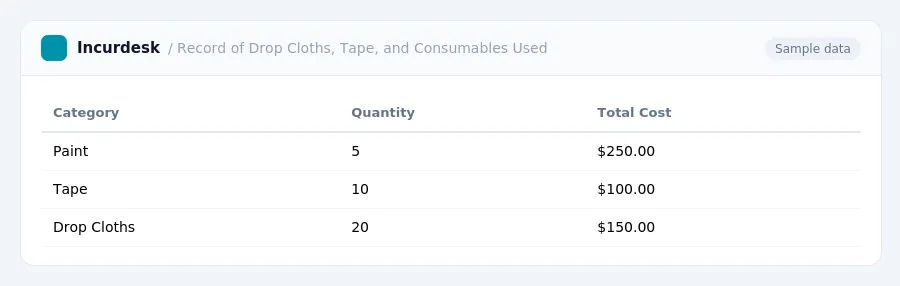
- Use a spreadsheet or a simple table to track your consumables, with columns for the category, quantity, and total cost.
- Set up a system to automatically update your records, such as a recurring invoice or a daily log of used materials.
- Consider using a barcode scanner or a mobile app to speed up the tracking process.
- Review your records regularly to ensure accuracy and identify areas for improvement.
The rules in this guide
| Amount | Required | In Incurdesk |
|---|---|---|
| Above $75 | Itemised receipt | Checked on every expense |
| Above $250 | Written business purpose | Checked on every expense |
| Above $500 | Names of attendees | Checked on every expense |
| Above $2,500 | Senior sign-off; never auto-approved | Checked on every expense |
Each rule is checked on every expense by Incurdesk’s approval agent.
The average residential painting job value in the U.S. is $3,500. The U.S. painting and wall covering industry generates an estimated $41 billion to $49.1 billion in annual revenue.
When tracking these supplies, consider the following steps:
- Check the prices of each item at the time of purchase, as the prices may vary over time.
- Record the dates of purchase and the quantity of each item.
- Calculate the total cost of each item, including any applicable sales tax.
- Determine the standard material markup for painting contractors, which is typically 20-35%.
Note: Keep accurate records of all purchases, including receipts, invoices, and credit card statements. This will help you to accurately track and categorize your spending.
COGS Calculation for Painting Contractors
Tracking Drop Cloths, Tape and Consumables Spend
One critical aspect of tracking consumables is understanding the concept of Cost of Goods Sold (COGS). COGS is the direct cost of producing and selling a product or service, and it includes the cost of materials, labor, and overhead. For paint contractors, COGS typically includes the cost of paint, paint supplies, and other materials.
To calculate COGS, paint contractors need to track the cost of each consumable item, including the quantity used, the cost per unit, and the total cost. This information can be recorded on a job-by-job basis, or on a periodic basis, such as monthly or quarterly.
When tracking consumables, paint contractors should also consider the following:
- Record the cost of materials and supplies, including paint, tape, drop cloths, and other materials.
- Identify the quantity of each item used, including the number of rolls of paint, the number of sheets of tape, and the number of drop cloths.
- Record the total cost of all consumables used on each job, and compare it to the total revenue generated by the job.
By following these steps, paint contractors can accurately track and categorize their consumable expenses, and make informed decisions about their business operations.
Tax-Related Considerations for Painting Contractors
- The standard material markup for painting contractors is typically 20-35%.
When tracking drop cloths, tape, and consumables, it is essential to consider these tax-related factors to ensure accurate accounting and compliance with tax regulations.
- Drop cloths and coverings used for painting
- Paint and painting supplies
- Tape and other adhesives used for painting
- Paper and other materials used for painting
To deduct these expenses, contractors must maintain accurate records, including receipts and invoices, for each expense. For example, contractors may be able to deduct the full cost of materials in the year of purchase if they meet certain conditions.
To implement a comprehensive supply tracking system, contractors should consider the following best practices:
- Separate business and personal expenses to avoid confusion and ensure accurate accounting
- Consider using a spreadsheet or accounting software to track expenses and ensure compliance with tax regulations
Best Practices for Implementing a Comprehensive Supply Tracking System
Here are some best practices to consider:
- Start by identifying the key areas where spending can be tracked, such as paint, tape, drop cloths, and other supplies.
- Establish a standardized system for tracking and categorizing expenses, including a unique identifier for each item.
- Set up a database or spreadsheet to store and organize data, using a format that is easy to navigate and update.
- Regularly review and reconcile data to ensure accuracy and completeness.
- Consider implementing a "first in, first out" (FIFO) inventory system to ensure that older supplies are used before newer ones.
- Keep records of all receipts, invoices, and other documentation, including proof of purchase and payment.
- Consider setting up a system for tracking and reporting on consumable expenses, such as paint and tape.
- Review and update supply tracking systems regularly to ensure they remain accurate and relevant.
- Consider seeking guidance from a tax professional or accountant to ensure compliance with all applicable laws and regulations.
Tax rules, limits and rates change. Confirm current figures with the IRS or your accountant before you file.
Keeping this simple: Incurdesk collects every receipt and expense report in one place, so spending is easy to review. It is built for small painting contractor teams. Try it free.
AI expense management for finance teams and whoever keeps the books. It checks every expense against your rules, approves the routine ones and chases missing receipts for you.
Try it free for 30 days →Stop losing 4+ hours a week
30-day free trial · No credit card · Setup in 15 minutes