
Tracking Expenses for Shelter and Rescue Partnerships
A practical, data-backed guide to controlling costs and automating expense workflows.
As a small veterinary business owner or office manager in the US, tracking expenses for shelter and rescue partnerships is crucial for effective expense management for veterinary clinics, especially when it comes to maximizing tax deductions. By understanding the various types of deductions available, avoiding common mistakes, and staying informed about state variations and annual changes in tax laws, you can optimize your tax savings for the 2026 tax year. For veterinary practices operating as pass-through entities, this can result in a significant QBI deduction of up to 20% of qualified business income. For a complete overview, see our expense management guide.
Identify Qualified Partnerships
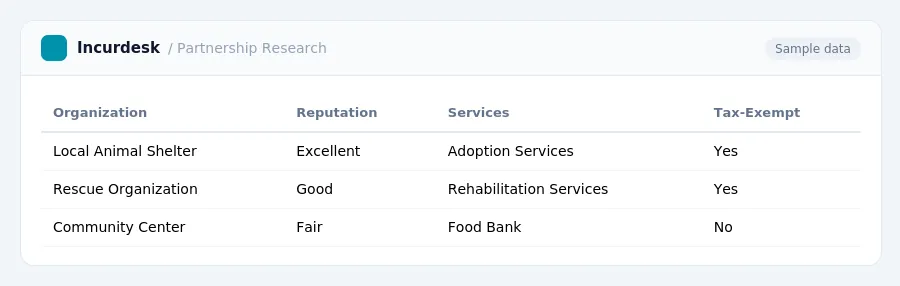
- Identify qualified partnerships by researching local animal shelters and rescue organizations that align with your veterinary practice's mission and goals. Consider factors such as the organization's reputation, the type of services they provide, and their need for support.
You can start by contacting your local United Way or Chamber of Commerce to get a list of local animal shelters and rescue organizations. You can also check the website of the Internal Revenue Service (IRS) for information on qualified charitable organizations.
- Verify the tax-exempt status of the organizations you are considering. You can do this by checking the IRS website or by contacting the organization directly and asking for their tax-exempt ID number.
- Ensure that your partnership with the qualified organization is in writing. This can be a formal agreement or a simple letter outlining the terms of your partnership, including the services you will provide and the benefits you will receive.
This written agreement will help you establish a clear understanding of your partnership and ensure that both parties are on the same page.
- Obtain a letter from the qualified organization acknowledging your donation and stating the fair market value of the donation. This letter is known as a "qualified appraisal" and is required for donations exceeding $500.
You can obtain a qualified appraisal from the organization or from a qualified appraiser.
- Keep records of your partnership and donations, including receipts, invoices, and correspondence. This will help you track your expenses and ensure that you are in compliance with tax laws and regulations.
You should keep these records for at least three years in case of an audit.
Track Expenses and Deductions
- Establish a system to track expenses related to your shelter and rescue partnerships. This can be as simple as using a spreadsheet or a designated notebook. Be sure to include the date, description, and amount of each expense.
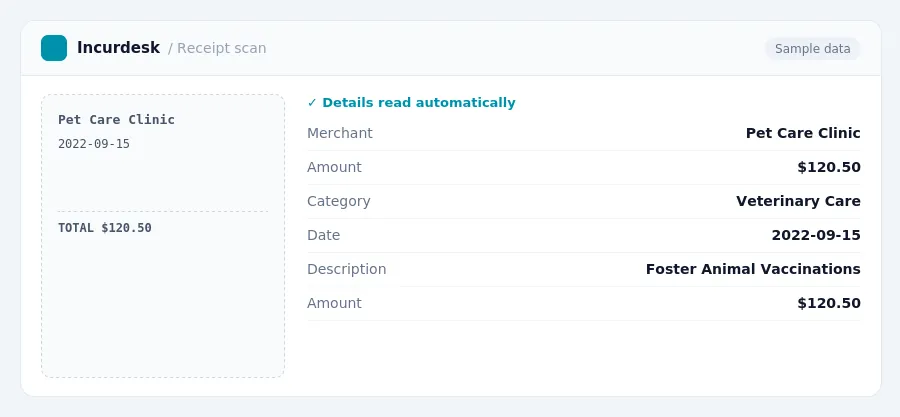
- Keep receipts for all expenses, including those for food, supplies, and veterinary care for foster animals. These may qualify as charitable deductions if the taxpayer itemizes.
- For unreimbursed expenses related to fostering animals through a 501(c)(3) nonprofit, consider keeping a log or record of the expenses, as these may be eligible for charitable deductions.
- Review your records regularly to ensure you are capturing all eligible expenses. This will help you maximize your tax deductions and avoid common mistakes.
- Consider consulting with a tax professional to ensure you are taking advantage of all available deductions and following the correct procedures for tracking and reporting expenses.
It's also important to note that veterinary practices operating as pass-through entities may qualify for the Qualified Business Income (QBI) deduction, allowing up to 20% of qualified business income to be deducted for the 2026 tax year.
Claim Charitable Contributions
- Claim charitable contributions made to animal shelters and rescue organizations as tax-deductible donations. When claiming charitable contributions, ensure that the partner organization is a qualified 501(c)(3) entity. This can be verified by checking the organization's tax-exempt status on the IRS website.
- Keep accurate records of all donations, including receipts, bank statements, and cancelled checks. This documentation is crucial in case of an audit.
- Track the fair market value of donations, such as supplies or services provided. This can be determined by researching comparable prices or consulting with a tax professional.
- For veterinary services provided to partner organizations, consider the fair market value of the services rendered. This may involve estimating the cost of the services or consulting with a tax professional.
- When claiming charitable contributions, consider the Qualified Business Income (QBI) deduction, which may allow veterinary practices operating as pass-through entities to deduct up to 20% of qualified business income for the 2026 tax year.
- Consult with a tax professional to ensure that all charitable contributions are properly claimed and that the documentation is accurate and complete.

Document Business Expenses
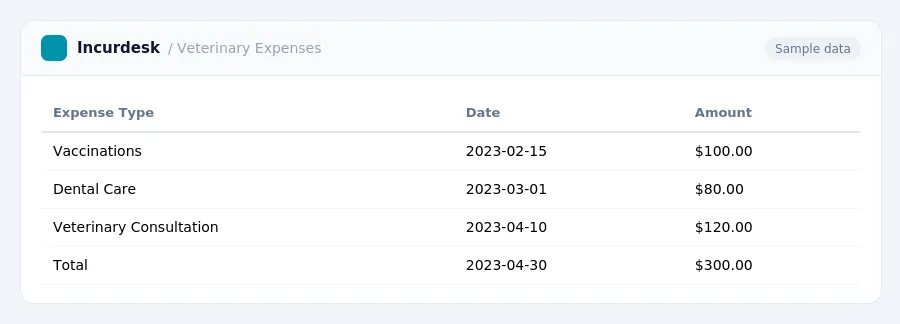
- Keep detailed records of veterinary expenses, including receipts, invoices, and bank statements. This will help you accurately track expenses and ensure you are deducting only legitimate business expenses.
- Only deduct veterinary expenses that are common, accepted, appropriate, and helpful to your business. This means that expenses like vaccinations, dental care, and surgical procedures may be deductible, but grooming or boarding services may not be.
- If you have a dog used for security purposes, keep records of expenses like food, veterinary care, and training. These expenses may be deductible as business expenses, but only if the dog's primary role is security and not as a pet.
- If you have cats used to control rodents at your business location, keep records of expenses related to their care and maintenance. These expenses may be deductible as business expenses if necessary for operations and not primarily personal pets.
Report Tax-Deductible Donations
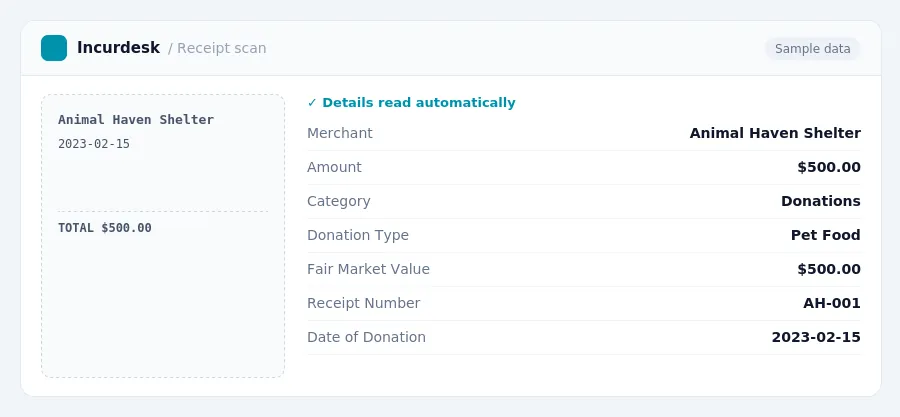
- When claiming tax-deductible donations, make sure to obtain a receipt or letter from the animal shelter or rescue organization. This documentation is essential for verifying your charitable contributions.
- For tax-deductible donations, the IRS allows you to deduct the fair market value of goods and services donated. For example, if you donate $1,000 worth of pet food to an animal shelter, you can deduct $1,000 on your tax return.
- When reporting tax-deductible donations, it's essential to keep accurate records of your contributions. This includes receipts, invoices, and any other documentation that supports your charitable contributions.
- This deduction may also apply to tax-deductible donations made to animal shelters and rescue organizations.
Keeping this simple: Incurdesk turns submitted expenses into clean expense reports. It is built for small veterinary teams. Try it free.
Stop losing 4+ hours a week
30-day free trial · No credit card · Setup in 15 minutes