
Tracking In-Kind Services and Donated Materials
A practical, data-backed guide to controlling costs and automating expense workflows.
Small museums and historical societies can benefit from clear guidance on tracking, valuing, and reporting in-kind donations, including services and materials. To accurately manage these donations, organizations should consider implementing small museums or historical societies expense management software to streamline their tracking processes. For a complete overview, see our expense management guide.
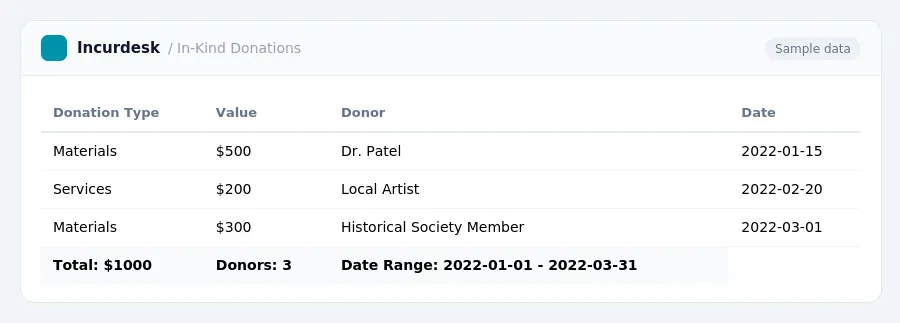
- This applies to individuals, partnerships, and corporations. However, exceptions apply for property worth $500 or less when Form 8283 was signed, or property consumed or distributed in furtherance of the nonprofit's mission.
Publicly traded securities are a common exception to appraisal requirements. When donated, they are tracked and reported as a noncash donation of a good, even if the nonprofit liquidates them immediately.
Familiarize yourself with these rules to ensure compliance and avoid any potential issues.
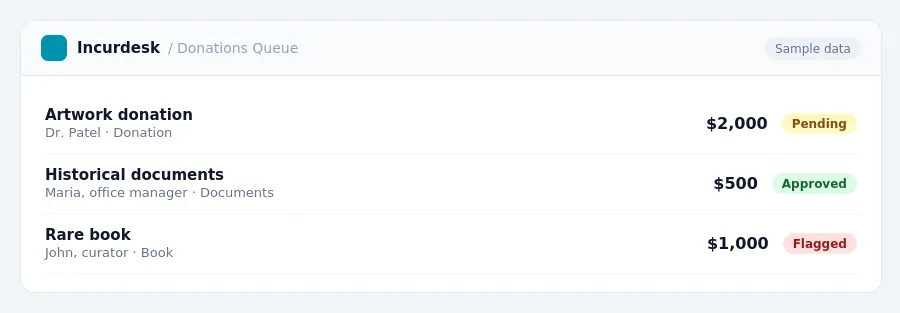
Document the Fair Market Value of In-Kind Donations
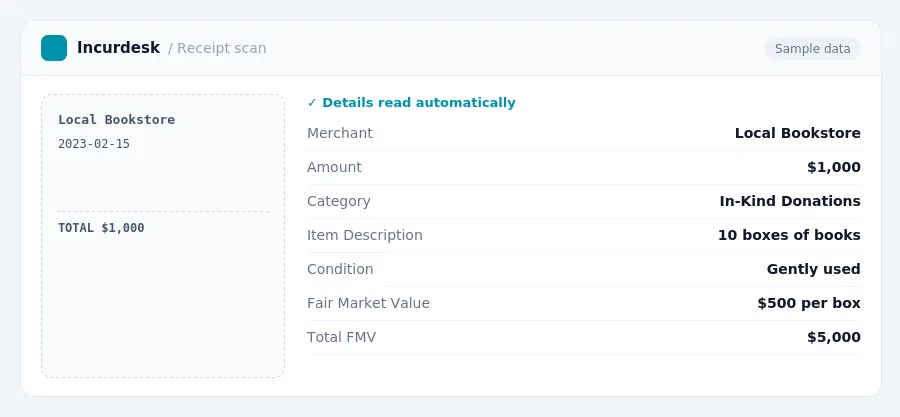
- Document the fair market value of in-kind donations by establishing a clear process for evaluating and recording the value of each item or service donated. This includes determining the type of item or service, its condition, and any relevant market data. For example, if a donor donates a collection of books, you would research the current market value of similar books in good condition to determine the fair market value of the donation.
- For donations valued at $5,000 or less per item or group of similar items, use Section A of Form 8283. This section is for smaller donations and requires a simple description of the item or group of similar items and its fair market value. For example:
- For donations exceeding $5,000 for a single item or group of similar items, or when special rules apply, use Section B of Form 8283.
- Keep accurate records of the fair market value of in-kind donations, including the date of donation, the type and quantity of items donated, and the donor's contact information.
Provide a Contemporaneous Written Acknowledgment to Donors
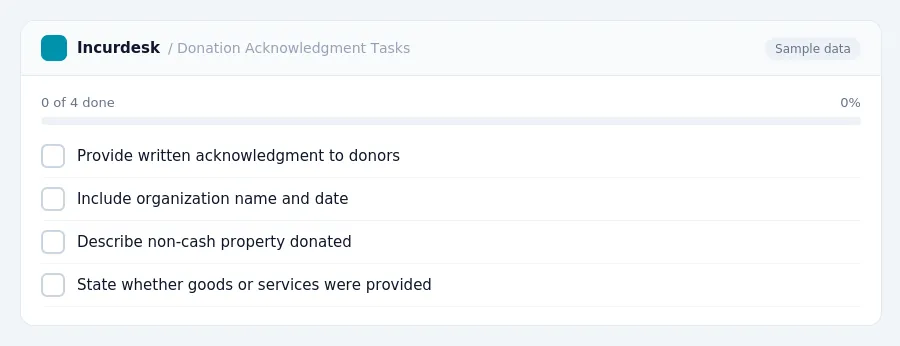
- When a donor gives a contribution of $250 or more, provide a contemporaneous written acknowledgment to the donor. This is a requirement for both cash and non-cash contributions.
- The acknowledgment should include the following information:
- The name of your organization
- The date of the contribution
- A description of the non-cash property donated, without including a dollar value
- A statement about whether goods or services were provided in return for the donation
- Remember that donated goods are reported as noncash contributions on Form 990, Part VIII, line 1g, but donated services and the donated use of facilities are generally not reported on the Form 990 revenue statement.
File the Necessary Forms and Reports for In-Kind Donations
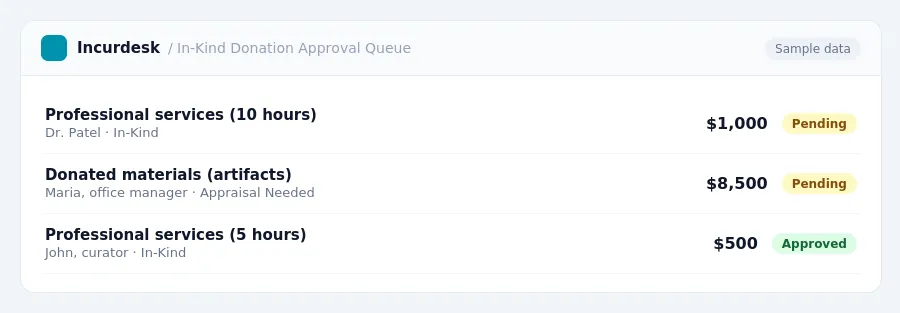
- For professional services, calculate the fair market value by tracking the time spent by the professional and using their standard hourly rate. For example, if a professional donates 10 hours of their time at a rate of $100 per hour, the fair market value is $1,000.
- Keep detailed records of in-kind donations, including receipts, invoices, and appraisal documents.
- For donated materials, obtain an appraisal from a qualified appraiser if the fair market value exceeds $5,000. The appraisal should include a description of the item, its condition, and the method used to determine the fair market value.
Maintain Accurate Records and Avoid Compliance Issues
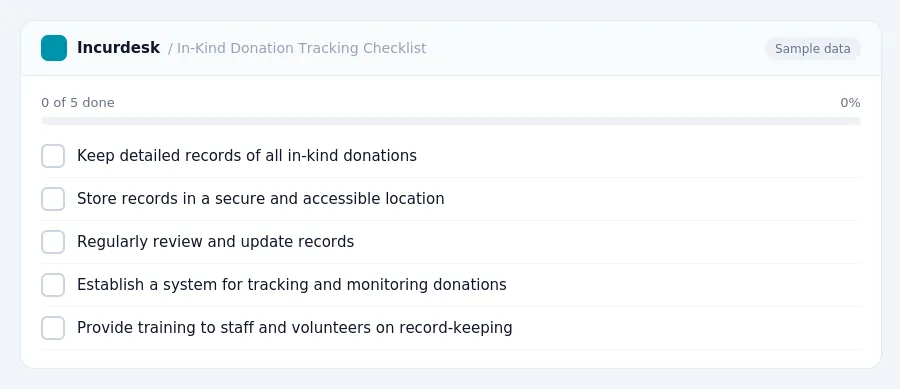
- Keep detailed and accurate records of all in-kind donations, including receipts, invoices, and other documentation. This will help ensure that you can properly track and value donations, and that you can provide the necessary information to donors and tax authorities. Make sure to store these records in a secure and accessible location, such as a designated file or database.
- Regularly review and update your records to ensure that they are accurate and complete. This may involve checking for missing information, correcting errors, and verifying the value of donations.
- Establish a system for tracking and monitoring in-kind donations, including a process for reporting and reconciling donations. This will help you stay on top of your donations and ensure that you are complying with tax laws and regulations.
- Provide training to staff and volunteers on the importance of accurate record-keeping and the procedures for tracking and valuing in-kind donations. This will help ensure that everyone is aware of their responsibilities and can contribute to maintaining accurate records.
- Consider implementing a system for tracking and monitoring in-kind donations that integrates with your financial management and accounting systems. This can help streamline your processes and reduce the risk of errors or discrepancies.
Keeping this simple: Incurdesk turns submitted expenses into clean expense reports. It is built for small small museum historical society teams. Try it free.
Stop losing 4+ hours a week
30-day free trial · No credit card · Setup in 15 minutes