
Tracking Lab and Diagnostic Send-Out Costs
A practical, data-backed guide to controlling costs and automating expense workflows.
Small veterinary businesses need to track their direct costs of external laboratory and diagnostic tests to manage their expense management for veterinary clinics effectively. These costs can be categorized as a component of Cost of Goods Sold (COGS), which for veterinary practices typically ranges between 20% to 33% of revenue. Accurate tracking is also crucial for regulatory compliance, particularly concerning workplace safety and employee benefits. For a complete overview, see our expense management guide.
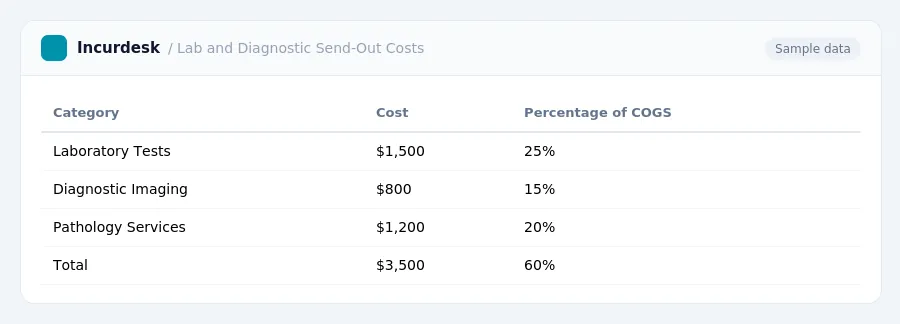
Categorize Laboratory Expenses for Financial Tracking
To accurately track laboratory expenses, it's essential to categorize them correctly in your financial records. Laboratory expenses can include costs for:
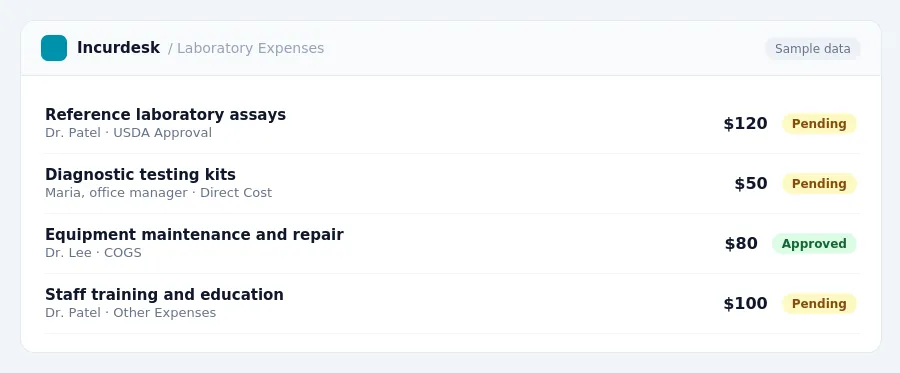
- Reference laboratory assays
- Diagnostic testing kits
- Equipment maintenance and repair
- Staff training and education
- Other related expenses
When categorizing laboratory expenses, consider the following:
- For reference laboratory assays, check if they require formal USDA approval. If not, categorize them as a direct cost. If unsure, verify with the laboratory provider.
- For accredited veterinary medical diagnostic laboratories, consider the requirements set by the American Association of Veterinary Laboratory Diagnosticians (AAVLD), focusing on technical and operational competence.
- For veterinary practices, laboratory expenses are a component of Cost of Goods Sold (COGS). A target COGS for labs is generally 20% to 33% of revenue.
- Ensure that laboratory expenses are accurately recorded and categorized in your financial records to ensure accurate financial tracking and regulatory compliance.
Calculate Your Laboratory Fees as Direct Costs
- To calculate your laboratory fees as direct costs, start by identifying the specific laboratory and diagnostic tests you use in your veterinary practice. This may include blood work, urinalysis, imaging studies, and other tests. Create a list of the tests and their corresponding fees.
- Next, categorize the laboratory fees as direct costs, which are expenses that are directly related to the treatment and care of your patients. Direct costs include medications, medical supplies, and prescription diets, and laboratory fees are considered a direct cost as well.
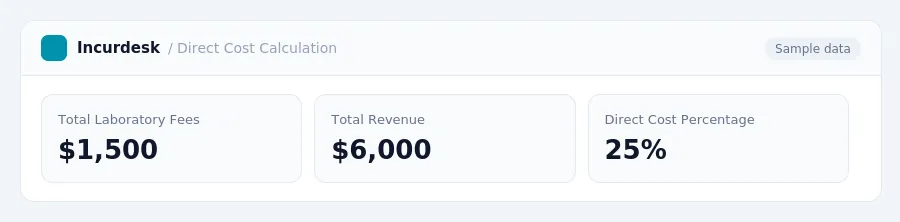
- To calculate the direct cost of laboratory fees, you can use the following formula: Direct Cost = Total Laboratory Fees / Total Revenue.
- As a general guideline, laboratory expenses should not exceed 20% to 33% of revenue for veterinary practices. If your laboratory fees exceed this range, you may need to re-evaluate your testing protocols and consider alternative testing options.
- Finally, make sure to track your laboratory fees accurately and regularly to ensure that you are meeting your financial goals and regulatory requirements.
By following these steps, you can accurately calculate your laboratory fees as direct costs and ensure that you are managing your expenses effectively.
As a veterinarian, you're considered a health professional and fall under "specified service trades or businesses" (SSTBs) for QBI purposes. This classification may affect your eligibility based on income thresholds.
In the meantime, you can use the following income ranges to estimate your eligibility:
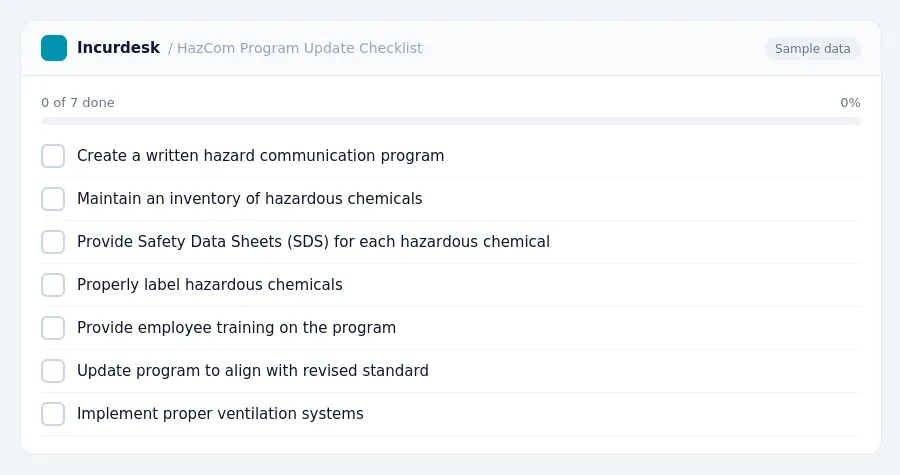
- This includes creating a written hazard communication program, maintaining an inventory of hazardous chemicals, and providing Safety Data Sheets (SDS) for each. Make sure to properly label hazardous chemicals and provide employee training on the program.
- Update your HazCom program to align with the revised standard, which has been updated to align with international standards. Enforcement for veterinary practices is set for November 20, 2026. Review the new standard and make any necessary changes to your program.
- This includes implementing proper ventilation systems and providing personal protective equipment (PPE) for employees.
- There are currently 29
- Ensure compliance with the Family and Medical Leave Act (FMLA) by establishing a clear policy for employee leave and providing necessary documentation.
- Review your employee benefits package to ensure compliance with FMLA and other regulations. This includes providing paid time off, sick leave, and other benefits as required by law.
- Keep accurate records of your workplace safety policies and procedures, as well as employee benefits and leave.
Keeping this simple: Incurdesk turns submitted expenses into clean expense reports. It is built for small veterinary teams. Try it free.
Stop losing 4+ hours a week
30-day free trial · No credit card · Setup in 15 minutes