Tracking Maintenance Spend Per Truck
A practical, data-backed guide to controlling costs and automating expense workflows.
Tracking maintenance spend per truck is essential for small logistics businesses to understand operating costs, make informed decisions, and ensure tax compliance. By accurately tracking expenses, owners and office managers can identify areas for efficiency and cost reduction. For logistics expense management, it is often more cost-effective to track maintenance costs per truck rather than total company costs. For the bigger picture, see our guide to logistics expense management for under $10/user (2026).
Categorizing and Recording Maintenance Expenses
To track maintenance spend per truck, follow these steps:
- Identify the types of maintenance expenses that are relevant to your business, such as engine maintenance, brake repairs, and tire replacements.
- Create a system for categorizing these expenses, such as using a spreadsheet or a specialized maintenance tracking software.
- Record each maintenance expense, including the type of maintenance, the date, and the cost.
- Consider setting up a system for tracking and recording hours worked by drivers or maintenance personnel, to ensure accurate calculations of labor costs.
- Keep a record of all invoices or receipts related to maintenance expenses, including the date, amount, and vendor information.
- Review and reconcile your records regularly to ensure accuracy and consistency.
- Consider consulting with a tax professional or accountant to ensure you are meeting all tax requirements and following industry standards.
- Average annual repair and maintenance cost for heavy-duty commercial trucks increased 3.7% year-over-year through Q4 2025.
Keeping this simple: Incurdesk keeps receipts and approvals in one place, which makes a written policy easier to follow. It is built for small logistics teams. Try it free.
Ensuring Compliance with Industry Standards and Regulations
As a small logistics business, it's essential to track maintenance and repair expenses per truck to ensure compliance with industry standards and regulations. The Federal Motor Carrier Safety Administration (FMCSA) periodically updates regulations to address changes in the industry.
States have varying rules on weight limits, emissions standards, and labor laws that impact commercial trucking operations. For example, some states have specific requirements for the type and condition of tires, while others have strict rules about the number of hours drivers can work before taking a break.
To ensure compliance, it's crucial to review and update your maintenance records regularly. This includes tracking expenses such as oil changes, brake pad replacements, and engine maintenance. You should also keep records of any repairs or replacements made to your trucks, including the date, description, and cost.
The FMCSA has established guidelines for the maintenance and repair of commercial trucks, and failing to comply can result in fines and other enforcement actions.
Tax rules, limits and rates change. Confirm current figures with the IRS or your accountant before you file.
Tracking Maintenance Spend Per Truck
To accurately track maintenance and repair expenses per truck, it's essential to maintain meticulous recordkeeping. This includes categorizing expenses, such as fuel, maintenance, and repairs, and ensuring that all necessary documentation is kept.
For instance, consider a small logistics business with 20 trucks. To track maintenance spend per truck, the owner can:
- Create a spreadsheet or use a maintenance tracking app to record each truck's mileage, maintenance history, and repair costs.
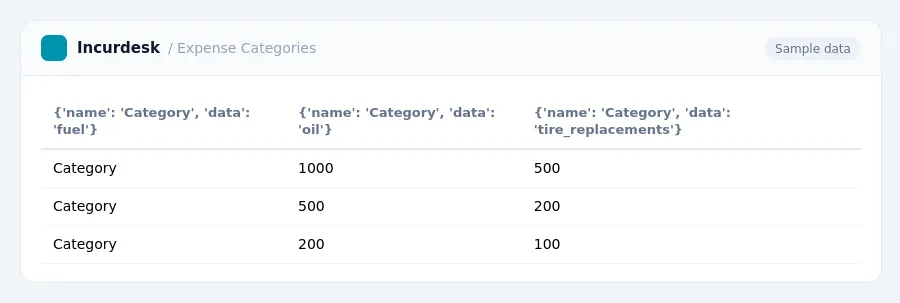
- Break down expenses into categories, such as fuel, oil, and tire replacements, and assign a specific cost to each category.
- Regularly review and update records to ensure accuracy and completeness.
- Consider using a centralized database or accounting system to streamline the tracking process.
By implementing a thorough maintenance tracking system, small logistics businesses can gain valuable insights into operating costs, make informed decisions, and ensure compliance with industry regulations.
The rates vary depending on the type of vehicle and the time period.
It's essential to note that these rates apply to gas, diesel, electric, and plug-in hybrid vehicles.
The rates are applied to the cost of fuel, maintenance, and other expenses incurred for business use.
AI expense management for finance teams and whoever keeps the books. It checks every expense against your rules, approves the routine ones and chases missing receipts for you.
Try it free for 30 days →Stop losing 4+ hours a week
30-day free trial · No credit card · Setup in 15 minutes