
Tracking Referral Relationship Expenses with General Dentists
A practical, data-backed guide to controlling costs and automating expense workflows.
Small orthodontic practices can deduct a significant portion of their referral relationship expenses with general dentists, but it's essential to follow clear guidelines to avoid violating healthcare fraud and abuse laws. Generally, 50% of the cost of business meals is deductible, but other expenses, such as travel and lodging, may also be eligible for deduction. By using orthodontic practices expense management software For a complete overview, see our expense management guide.
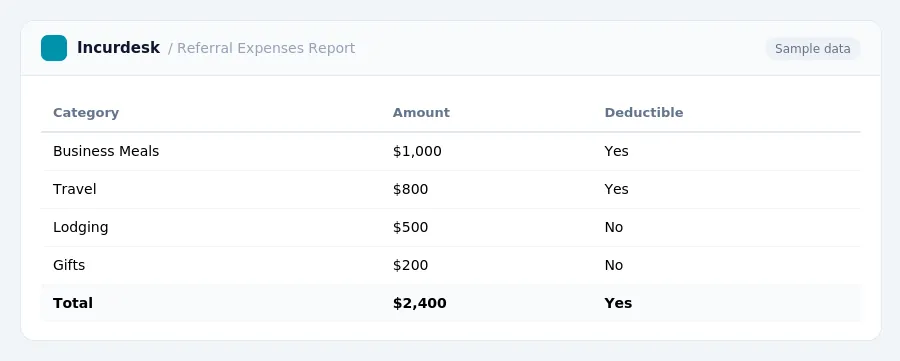
Tracking Permissible Referral Expenses
When tracking referral relationship expenses with general dentists, it's essential to understand what expenses are permissible and how to properly document them. The Stark Law prohibits physicians from referring Medicare patients for designated health services to entities with which they have a financial relationship, unless an exception applies. To avoid violating the law, ensure you're only deducting expenses that are directly related to the referral relationship and comply with the law's requirements.
- Keep a record of all expenses, including receipts and invoices.
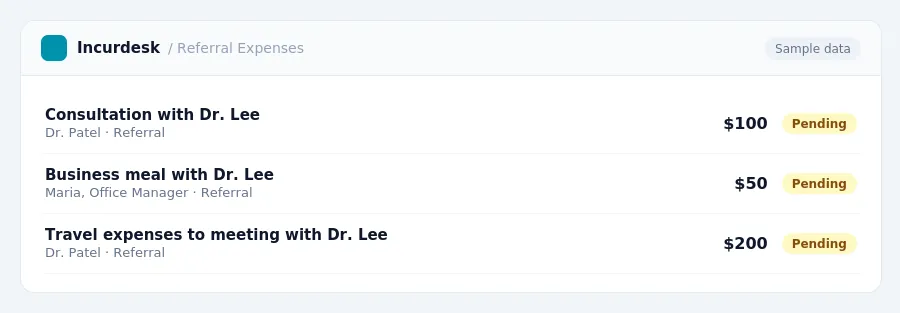
- Document the purpose of each expense, such as "consultation with general dentist" or "business meal to discuss referral relationship."
- Track the date, time, and location of each expense.
- Identify the general dentist and your staff members involved in the expense.
For example, if you take a general dentist to a business lunch, you can only deduct 50% of the meal's cost as a business expense, as per the 2026 guidelines. Make sure to keep a record of the meal's total cost and the amount deducted as a business expense.
Understanding Deductibility Limits and Exclusions
When it comes to deducting referral relationship expenses, it's essential to understand the limits and exclusions. Here are some practical guidelines to keep in mind.
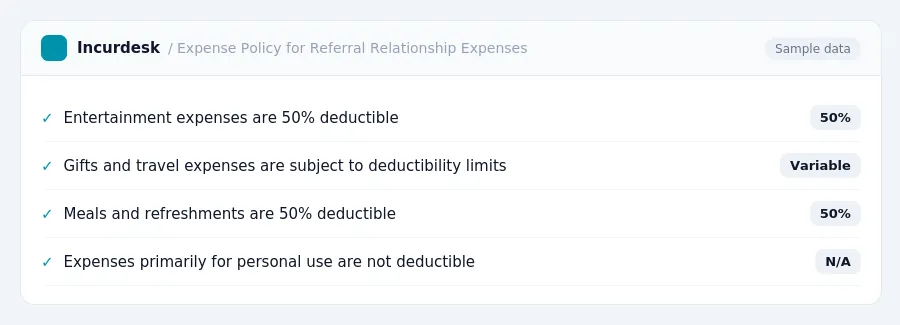
When tracking expenses, make sure to categorize them accurately. For example, if you're entertaining a general dentist at a dinner meeting, you can deduct the cost of the meal, but only up to 50% of the total cost. The remaining 50% is considered personal entertainment and is not deductible.
Other expenses that may be subject to deductibility limits include:
- Gifts and entertainment expenses
- Travel expenses, such as flights and hotels
- Meals and refreshments
When determining deductibility, consider the business purpose of the expense. If the expense is primarily for business, it's more likely to be deductible. However, if the expense is primarily personal, it may not be deductible.
To avoid any issues, keep detailed records of all expenses, including receipts and invoices. This will help you accurately track and categorize expenses, and ensure compliance with deductibility limits.
Avoiding Healthcare Fraud and Abuse Laws
When it comes to avoiding healthcare fraud and abuse laws, understanding the Anti-Kickback Statute (AKS) is crucial. This federal law prohibits offering, paying, soliciting, or receiving anything of value to induce or reward patient referrals for services payable by federal healthcare programs (Medicare, Medicaid, etc.).
- Be aware of the AKS's broad definition of "remuneration," which includes anything of value, such as cash, services, or items of value.
- Avoid making payments or offering inducements to general dentists in exchange for referrals, as this can be seen as an attempt to influence their decision-making.
- Ensure that any business relationships or collaborations with general dentists are transparent and do not involve any exchange of value for referrals.
- Keep accurate records of all business interactions and payments made to general dentists, as these may be subject to scrutiny under the AKS.
Additionally, be mindful of the AKS's safe harbor rules, which provide protection for certain types of payments and business arrangements. However, these safe harbors are complex and require careful analysis.
When in doubt, consult with a healthcare attorney or compliance expert to ensure that your business practices comply with the AKS and other relevant laws.
Managing Business Gift and Entertainment Expenses
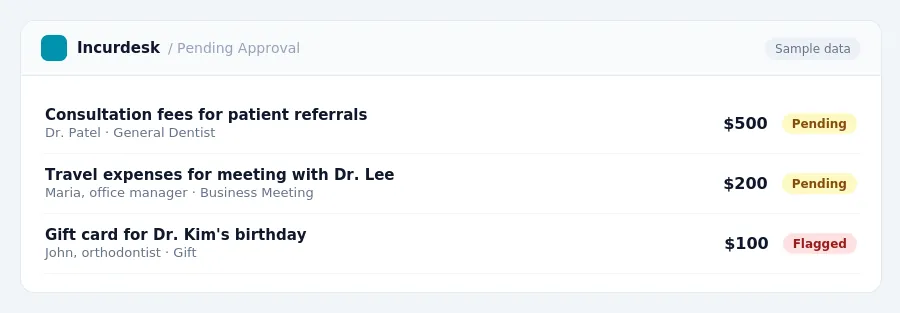
To manage business gift and entertainment expenses, it's essential to understand what is and isn't deductible.
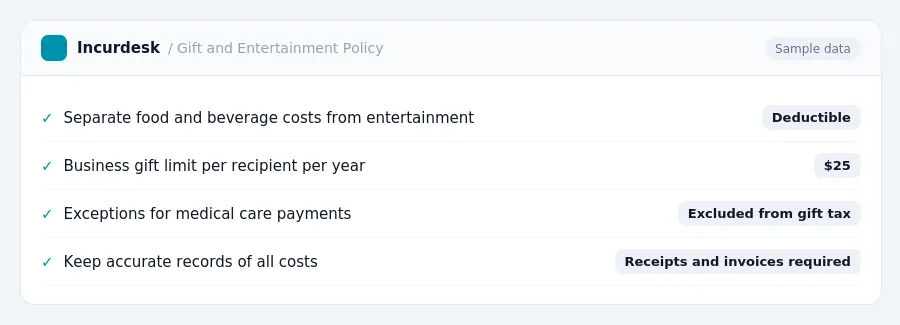
- When combining food and beverage costs with entertainment, they become non-deductible. So, be sure to separate these costs to ensure deductibility.
- Business gift deductions are limited to $25 per recipient per year. This limit has remained the same since 1962.
- Items costing $4 or less with a business name permanently imprinted and distributed widely are not treated as gifts subject to the $25 limit.
- Payments made directly to a medical provider or insurer for another individual's medical care are excluded from gift tax, in addition to the annual exclusion.
When tracking business gift and entertainment expenses, be sure to keep accurate records of all costs, including receipts and invoices. This will help ensure you're meeting deductibility limits and avoiding any potential tax issues.
Complying with Stark Law and State Regulations
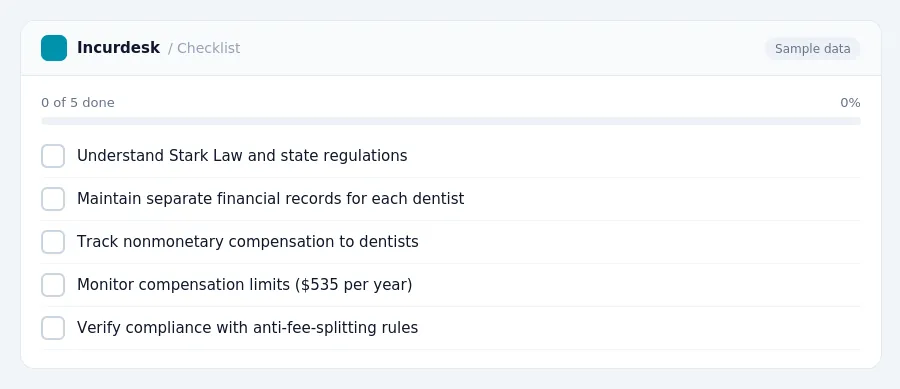
When building relationships with general dentists, it's essential to understand the Stark Law and state regulations that govern referral relationships. The Stark Law prohibits physician self-referral in certain situations, including referrals for designated health services (DHS) such as orthodontic services. To comply with the Stark Law, nonmonetary compensation to a physician is limited to $535 per year.
State dental boards also enforce strict anti-fee-splitting rules, prohibiting dentists from sharing professional clinical fees with non-dentists. To avoid violating these rules, it's crucial to maintain separate financial records for each dentist referral relationship. This will help you track the amount of compensation paid to each dentist and ensure that it complies with state regulations.
By tracking nonmonetary compensation and maintaining separate financial records for each dentist referral relationship, you can ensure compliance with the Stark Law and state regulations.
Keeping this simple: Incurdesk keeps receipts and approvals together, so you know exactly what to reimburse. It is built for small orthodontic practice teams. Try it free.
Stop losing 4+ hours a week
30-day free trial · No credit card · Setup in 15 minutes