
Tracking Reimbursable Project Expenses at Architecture Firms
A practical, data-backed guide to controlling costs and automating expense workflows.
Small architecture businesses need a clear system to track reimbursable project expenses accurately. To avoid disputes with clients and ensure compliance with IRS regulations, you should understand which expenses are eligible for reimbursement and how to document them properly. For the bigger picture, see our guide to architecture expense management for under $10/user (2026). For a complete overview, see our expense management guide.
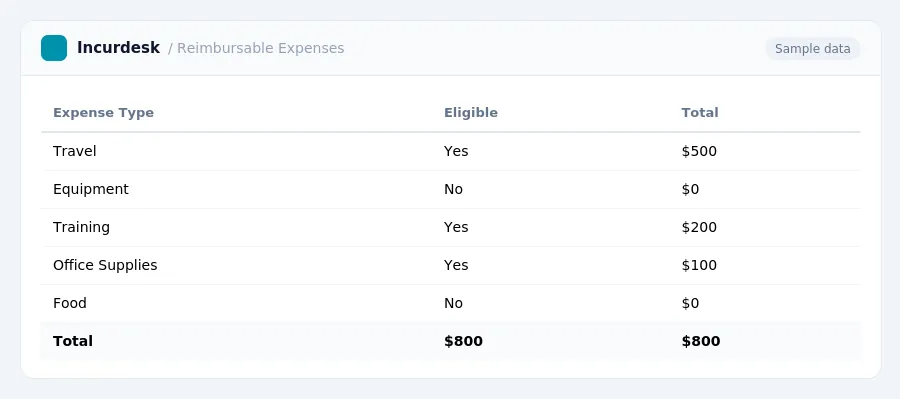
Determine Eligible Expenses
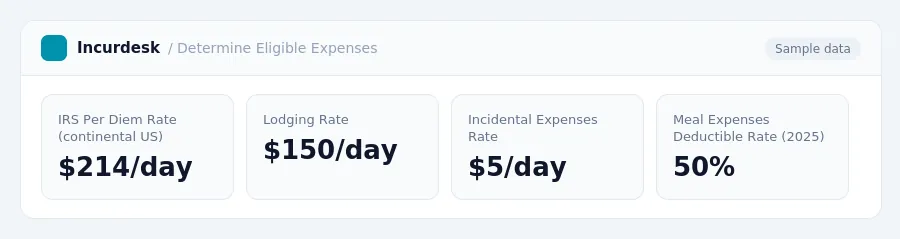
To determine eligible expenses for reimbursement, start by understanding the IRS per diem rates for travel. For other localities within the continental U.S., the rate is $214 per day, with $150 for lodging and $64 for M&IE.
Understand that the IRS also sets a rate for incidental expenses only, which is $5 per day for any location. If employees do not incur meal expenses, this rate can be used for reimbursement.
For business travel, 50% of meal expenses are deductible through 2025. This means that clients may reimburse half of the actual meal expenses incurred during business travel.
Be aware that some states may have specific laws regarding employee expense reimbursement. For example, California requires employers to fully reimburse employees for all "actually and necessarily incurred" expenses. While the IRS mileage rate is often used, it must cover all actual costs.
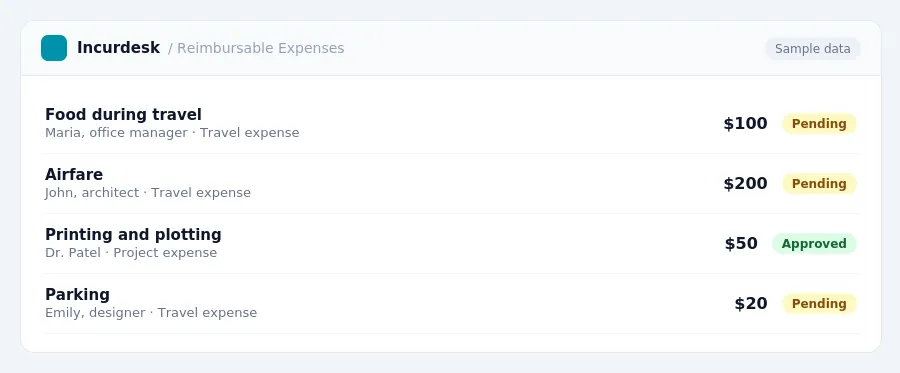
Calculate Reimbursable Expenses
- Identify reimbursable expenses by project. Review each expense to determine if it is directly attributable to a specific project. These expenses are typically billed dollar-for-dollar to the client. Reimbursable expenses do not include general overhead costs like rent, utilities, or staff salaries.
- Document and categorize reimbursable expenses. Typical reimbursable expenses for architecture firms include:
- Mileage
- Food during travel (50% of meal expenses are deductible through 2025)
- Airfare
- Hotel stays
- Rental cars
- Parking
- Printing and plotting
- Photocopies
- Courier services
- Postage
- Costs for outside consultants like engineers or surveyors, if billed to the client
- Verify the accuracy of reimbursable expenses. Double-check that each expense is properly documented and categorized. Ensure that all expenses are directly attributable to a specific project and are not general overhead costs.
Track and Record Expenses
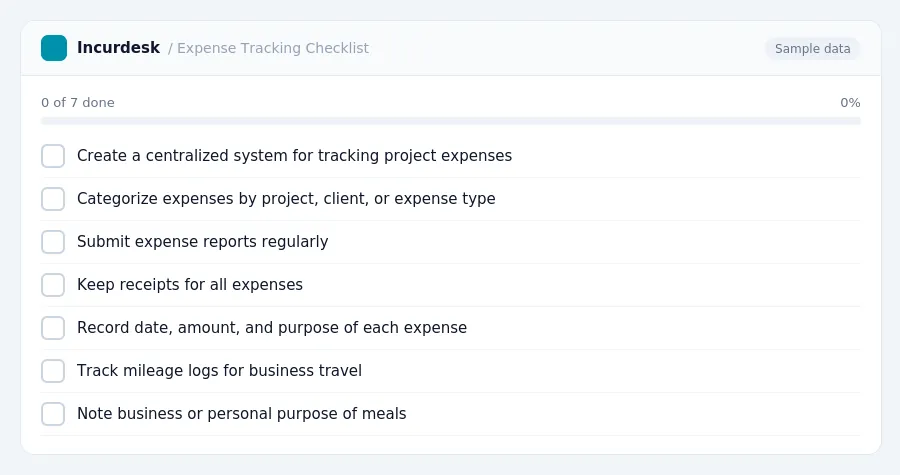
- Use a centralized system to track project expenses, such as a spreadsheet or accounting software. This will help ensure that all expenses are recorded accurately and in a timely manner.
- Create a system for categorizing expenses, such as by project, client, or expense type. This will make it easier to track and record expenses and ensure that all eligible expenses are reimbursed.
- Consider implementing a process for submitting expense reports, such as weekly or bi-weekly. This will help ensure that expenses are recorded and reimbursed in a timely manner.
- Keep receipts for all expenses, including meals, lodging, and transportation.
- Record the date, amount, and purpose of each expense.
- For business travel, keep track of mileage logs and record the start and end mileage for each trip. For meals, keep track of the amount spent and note whether the expense was for business or personal purposes.
- For capitalized costs, such as fees paid for architectural and engineering services, keep track of the amount paid and the date of payment.
- These costs must be added to the basis of the property being constructed, rather than deducted as a current expense.
- These capitalized costs are then recovered through annual depreciation.
- Review and reconcile expense reports regularly to ensure accuracy and completeness.
- Consider implementing a system for approving expense reports, such as a manager or accountant, to ensure that all expenses are eligible for reimbursement.
Apply IRS Regulations
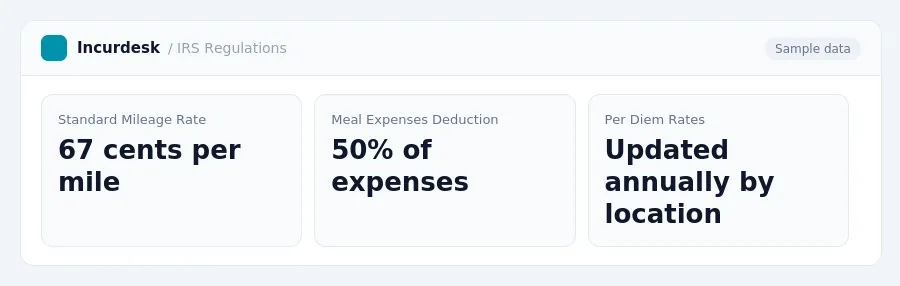
- When applying IRS regulations, start by understanding the standard mileage rate for business use of a vehicle. For 2024, this rate is 67 cents per mile, and it applies to cars, vans, pickups, and panel trucks, including electric and hybrid vehicles.
- Keep in mind that the IRS standard mileage rate is updated annually, so be sure to check for any changes for the current year.
- For business travel, the IRS allows 50% of meal expenses to be deductible through 2025. However, the exact amount of this deduction can vary depending on the specific location and the type of meal.
- IRS per diem rates are also updated annually and vary by location, with specific rates for "high-cost localities." For 2024, these rates are different from those for 2023-2024, and again different from those for 2024-2025. You can check the IRS website for the most up-to-date information on per diem rates.
- When tracking business expenses, be sure to keep accurate records of dates, locations, and amounts spent. This will help ensure that you are in compliance with IRS regulations and can accurately claim deductions.
- Finally, be aware of any deadlines for claiming business expenses, and be sure to submit your claims in a timely manner to avoid any potential penalties or delays.
To ensure compliance with IRS regulations, it's essential to stay up-to-date on any changes to the standard mileage rate, per diem rates, and other relevant rules. You can find more information on the IRS website or consult with a tax professional if you have any questions or concerns.
Bill Clients Accurately
- When billing clients for reimbursable expenses, it's essential to be transparent and detailed. Start by including a clear breakdown of the expenses incurred on the project. This should include a description of the expense, the date it was incurred, and the amount claimed.
- Use a separate line item for each expense to avoid confusion and ensure accuracy.
- Make sure to include any supporting documentation, such as receipts or invoices, to back up the expense claim.
- When calculating the total amount to bill, consider any applicable taxes or fees. You may also want to factor in any late payment penalties or interest charges.
- Provide clients with a clear payment schedule and terms, including any deadlines for payment. This will help prevent delays and ensure timely payment.
- Consider offering clients the option to pay by credit card or online payment services, which can make it easier for them to make timely payments.
- Keep accurate records of all payments received and apply them to the outstanding balance. This will help you track the status of each client's account and ensure that all expenses are fully reimbursed.
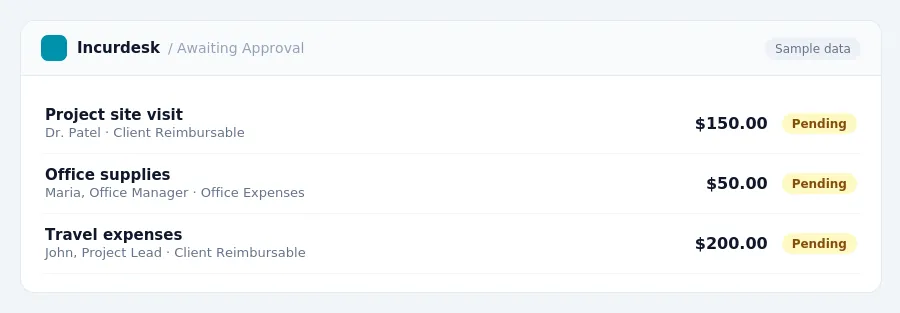
Keeping this simple: Incurdesk turns submitted expenses into clean expense reports. It is built for small architecture teams. Try it free.
Stop losing 4+ hours a week
30-day free trial · No credit card · Setup in 15 minutes