
Tracking Retainer Lab Fees Across Treatment Plans
A practical, data-backed guide to controlling costs and automating expense workflows.
Accurately tracking retainer lab fees is essential for small orthodontic practices to manage their expenses effectively. To do this, you need to understand the typical price ranges for different retainer types, including initial fabrication and potential replacements. By utilizing orthodontic practices expense management software, you can stay on top of these costs and make informed decisions about quoting patients and managing your practice's budget.
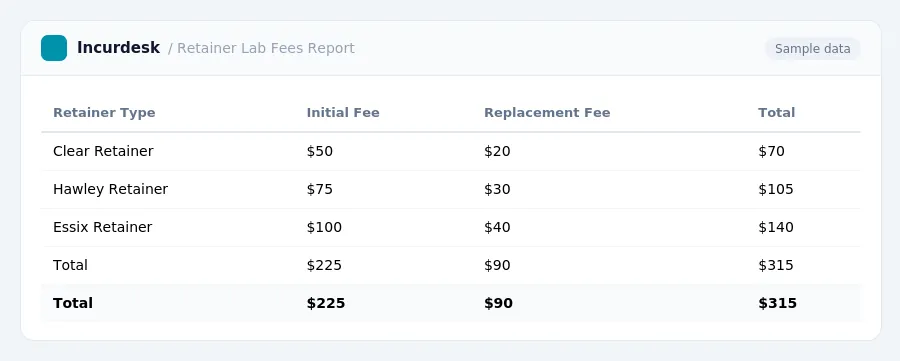
Track Typical Retainer Lab Fees
- Start by tracking the typical lab fees for different types of retainers, including clear aligners, Hawley retainers, and Essix retainers. These fees can vary depending on the type of retainer, with clear aligners often being more expensive than other types.
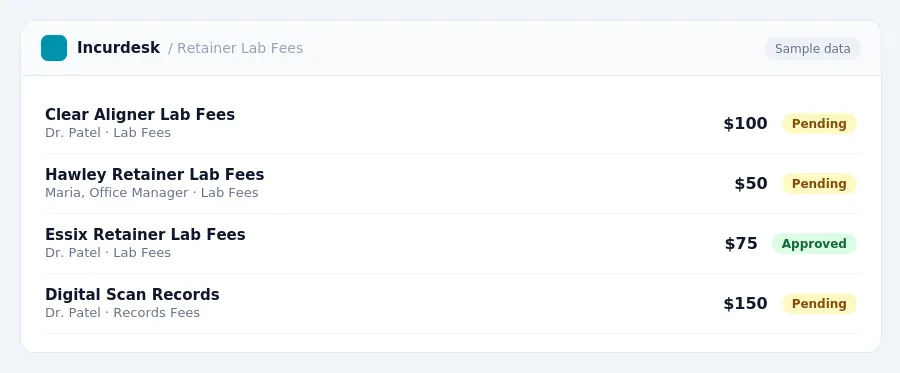
- Consider the cost of records required for retainer fabrication, such as digital scans or impressions. These costs can range from $50 to $200 or more, depending on the type of record and the laboratory.
- Understand the laboratory and material fees associated with retainer fabrication. These fees can range from $50 to $500 or more, depending on the type of retainer and the materials used.
- Be aware that states vary in how they classify dental prosthetics and lab services for sales tax purposes. Some states exempt custom dental prosthetics as medical devices, while others tax digital design services. Check with your state's department of revenue for specific guidance.
- Cash-basis practices can deduct lab fees as a direct cost of treatment when paid.
Understand What's Included in Initial Treatment Fees
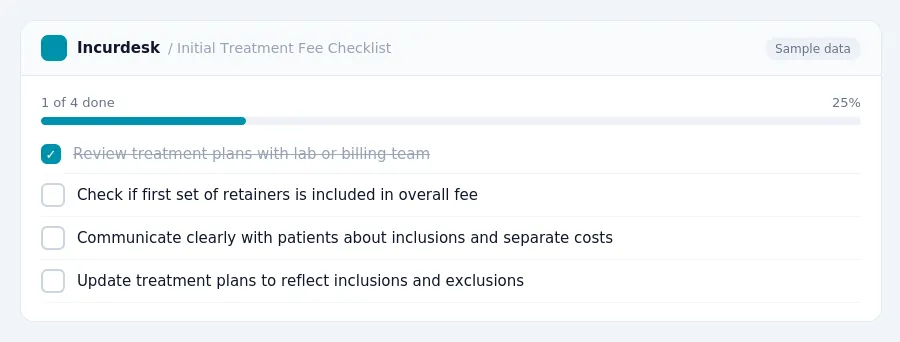
The initial treatment fee for orthodontic retainers can be a source of confusion for both practices and patients. It's essential to clarify what's included in this fee to avoid any misunderstandings or additional costs. To start, confirm whether the first set of retainers is included in the overall braces or aligner treatment fee or if it's billed separately.
Some practices may include the initial set of retainers in the overall treatment fee, while others may charge for them separately. To ensure transparency, ask your lab or billing team to review your treatment plans and clarify what's included in the initial treatment fee.
Here are some key points to consider:
- Check your treatment plans and confirm what's included in the initial treatment fee.
- Communicate clearly with patients about what's included in the initial treatment fee and what they can expect to pay separately.
Determine Factors Influencing Retainer Costs
-
When determining the costs associated with orthodontic retainers, it's essential to consider various factors that can influence these expenses. One significant factor is the type of retainer being used.
-
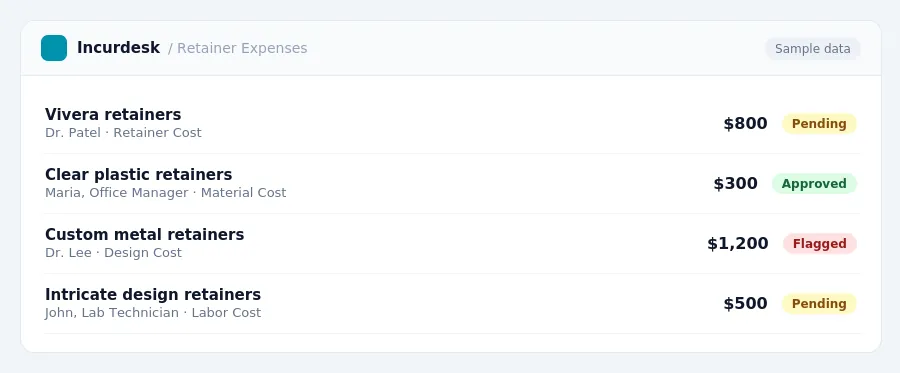
For example, a Vivera set of four retainers, which is a brand of retainer from Invisalign, can cost between $400 to $1,200.
-
Another factor to consider is the material used to make the retainer. Different materials, such as clear plastic or metal, can affect the overall cost.
-
Additionally, the complexity of the retainer design can also impact the cost. Retainers with intricate designs or custom features may be more expensive to produce.
-
Lastly, the cost of labor and production can vary depending on the lab or manufacturer.
Consider Online Lab Options and Accuracy
- When considering online lab options for orthodontic retainers, it's essential to weigh the cost savings against potential accuracy issues. Some online labs offer replacement retainers for $50-$100, but this may come with a trade-off in precision without a professional impression or digital scan.
-
To ensure accuracy, consider the following factors:
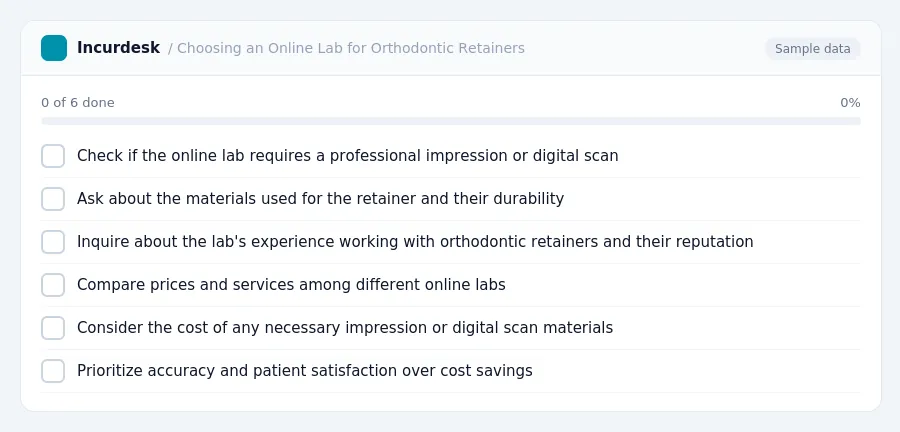
- Check if the online lab requires a professional impression or digital scan to create the retainer.
- Ask about the materials used for the retainer and their durability.
- Inquire about the lab's experience working with orthodontic retainers and their reputation.
- Compare prices and services among different online labs to find the best option for your practice. Be sure to consider the cost of any necessary impression or digital scan materials.
When selecting an online lab, prioritize accuracy and patient satisfaction over cost savings. A well-made retainer is essential for maintaining proper alignment and ensuring the long-term success of your patients' orthodontic treatment.
Manage Retainer Replacements and Record Keeping
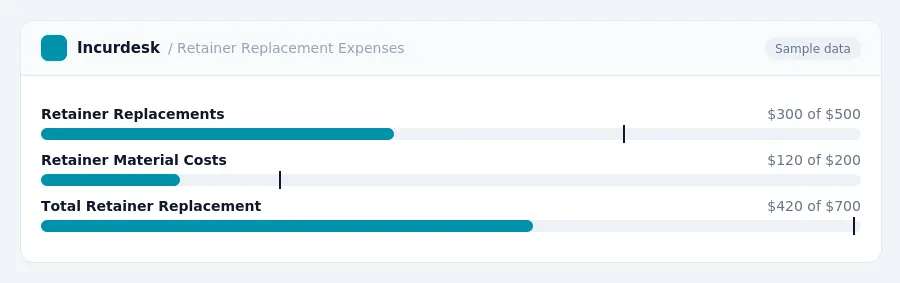
- Keep a record of each patient's retainer replacement history, including the date of replacement, the type of retainer used, and the cost. This will help you track the total amount spent on retainer replacements over time.
- Calculate the total cost of retainer replacements for each patient, and add this to their overall orthodontic investment.
- Consider using a table or spreadsheet to track and calculate retainer replacement costs. This can help you identify trends and patterns in your practice's retainer replacement expenses.
- Make sure to communicate with your patients about the cost of retainer replacements, and include this information in your initial treatment agreement. This will help them understand their financial obligations and plan accordingly.
- Regularly review your retainer replacement records to ensure accuracy and completeness. This will help you make informed decisions about your practice's finances and provide better care for your patients.
By following these steps, you can effectively manage retainer replacements and record keeping, and provide your patients with a clear understanding of their financial obligations.
Keeping this simple: Incurdesk turns submitted expenses into clean expense reports. It is built for small orthodontic practice teams. Try it free.
Stop losing 4+ hours a week
30-day free trial · No credit card · Setup in 15 minutes