
Tracking Utility Bills for Vacant Units
A practical, data-backed guide to controlling costs and automating expense workflows.
As a small property management business, effectively tracking utility bills for vacant units is crucial for maintaining financial efficiency and compliance. To achieve expense management for property management, you'll need to understand current rules, such as the IRS requirement to report vacant unit expenses on Form 8825, and potential deductions like the utility bill expense on Schedule E. By following these guidelines, you can ensure accurate tracking and maximize deductions for your business. For a complete overview, see our expense management guide.
Determine Eligibility for Deductions
-
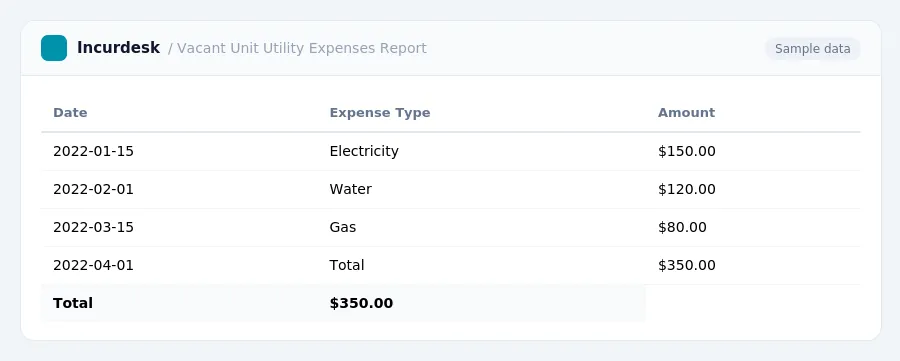
To determine if your property management business is eligible for deductions on utility bills for vacant units, you'll need to review your business's tax status and local laws.
As a real estate professional, you may be able to claim unlimited vacancy loss deductions for the 2026 tax year if you meet specific criteria, such as the 750-hour test.
- Check with the IRS or a tax professional to see if you qualify as a real estate professional and are eligible for these deductions.
- Verify that you meet the 750-hour test, which requires you to work at least 750 hours of services performed as a real estate agent or broker in the tax year.
-
Note that several states are enacting laws in 2026 and 2027 to increase fee transparency, which may impact how utility charges and other fees can be advertised and billed.
For example, some states are requiring utility providers to clearly disclose the breakdown of charges on customer bills.
- Check with your state's public utility commission or regulatory agency to see if there are any new laws or regulations affecting utility billing in your area.
Maintain Accurate Records of Utility Expenses
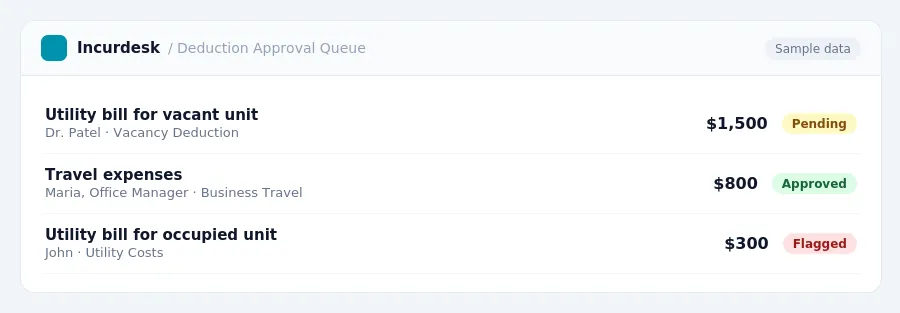
- Keep accurate records of utility expenses by tracking the start and end dates of each vacancy period. This will help you identify the exact time frame for which you are claiming deductions.
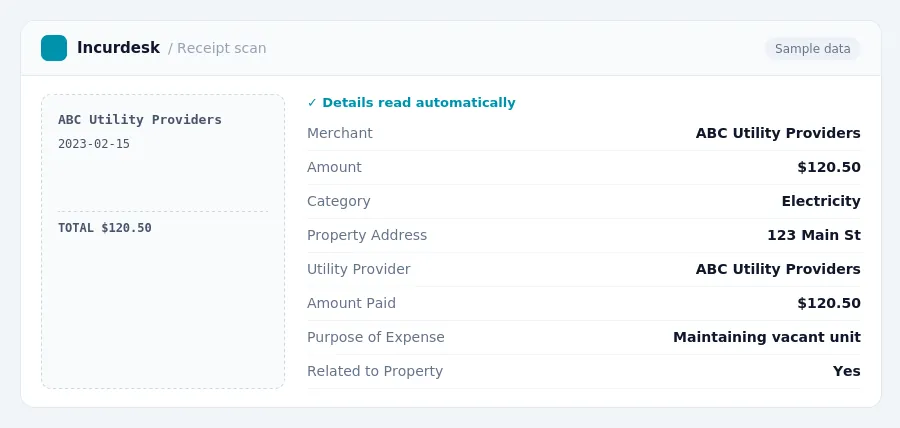
- Document all utility bills, invoices, and payment receipts for vacant units. Make sure to include the property address, utility provider, and the amount paid.
- Use a spreadsheet or a utility expense tracking platform to organize and categorize your records. This will make it easier to review and analyze your expenses.
- For each utility expense, note the purpose of the expense and how it relates to maintaining the property. This will help you demonstrate the necessity of the expense in case of an IRS inquiry or audit.
- Store your records securely and have them readily available for tax purposes. Consider scanning or digitizing your paper records to make them easier to access.
- Review your records regularly to ensure accuracy and completeness. This will also help you identify any discrepancies or errors that may need to be addressed.
According to the IRS, ordinary and necessary expenses for maintaining a rental property, including utilities, remain deductible during vacancy periods as long as the property is actively held out for rent. This applies to the 2026 tax year.
It's essential to note that losses from rental income during vacancy periods are not deductible, as stated in IRS Publication 527 (2025).
Meticulous documentation of utility expenses and vacancy periods is vital to support deductions in case of IRS inquiries or audits.
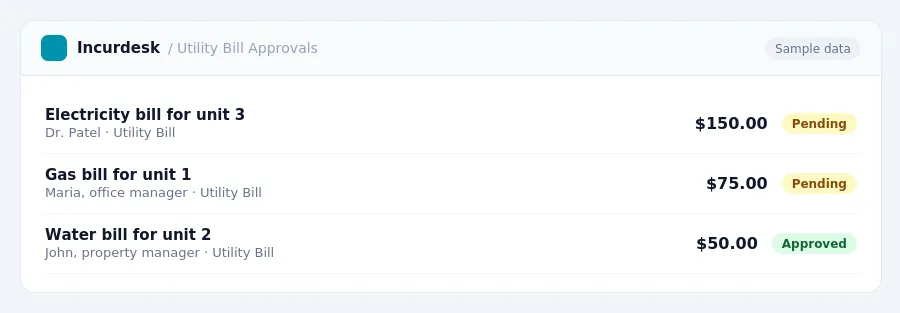
Platforms like UtilityControl and others are designed to help manage utility expenses across multiple properties, offering features such as automated bill capture, payment processing, and multi-property tracking.
Laws concerning Ratio Utility Billing Systems (RUBS), submetering, and fee transparency are rapidly changing and vary significantly by state.
Choose the Right Software for Tracking Utility Bills
- Consider the size of your property portfolio when selecting software for tracking utility bills. For small landlords with 1-5 units, a free plan may be available that features automated bill processing and AI-assisted insights. For example, UtilityControl offers a free plan for one property with three meters, which may be applicable for 2026.
- Look for software that can handle multiple meters and properties, as well as provide real-time updates and notifications. This can help you stay on top of your utility bills and ensure that you're taking advantage of available deductions.
- Check if the software you're considering is compliant with local laws and regulations, particularly those related to passive activity loss rules. These rules can vary by tax year, so make sure you're using software that can help you stay up-to-date.
- Consider the cost and scalability of the software, as well as its customer support and user interface. You want a system that's easy to use and can grow with your business.
- Review the software's features and functionality to ensure they meet your specific needs. Some software may offer additional features, such as energy management and benchmarking, that can help you optimize your utility usage and costs.
Understand Local Laws and Regulations
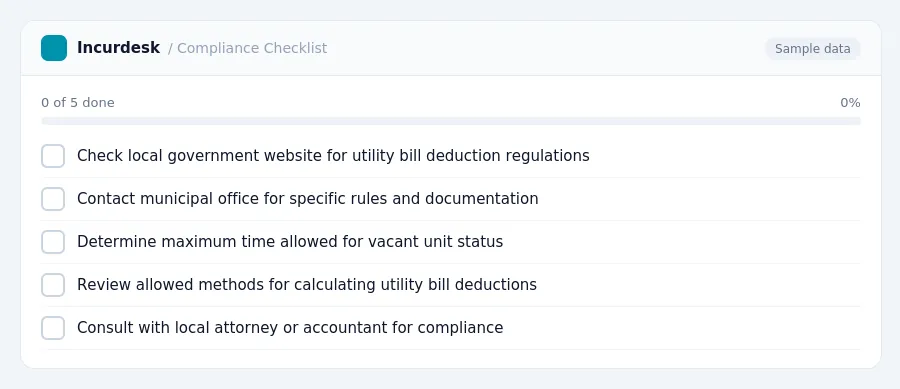
It's crucial to familiarize yourself with the specific regulations in your area regarding utility bill deductions for vacant units. The rules may vary depending on your location, so it's essential to research and understand the laws that apply to your business. Start by checking with your local government or municipal office to determine what rules govern utility bill deductions for vacant properties.
Some common regulations to look for include:
- Maximum time allowed for vacant unit status before utility bills can be deducted
- Required documentation for vacant unit status, such as lease termination notices or property inspections
- Allowed methods for calculating utility bill deductions, such as prorating or averaging
Make sure to review and understand these regulations to ensure you're in compliance. You may also want to consult with a local attorney or accountant to ensure you're meeting all the necessary requirements.
Implement Effective Utility Bill Management Strategies
- Develop a clear policy on utility bill management for vacant units. Review local laws and regulations, such as Colorado HB26-1013 (2026), which clarifies that Ratio Utility Billing Systems (RUBS) are legal but imposes conditions, including no markups and disclosure of the allocation method in the lease.
- Consider implementing submetering for vacant units, which can help you track and manage utility costs more accurately. This can be especially useful in areas with high utility costs, such as water or electricity.
- When allocating utility costs to tenants, ensure that you are in compliance with local regulations, such as the District of Columbia Law 26-156 (Effective August 14, 2026), which prohibits charging tenants for utility costs of common spaces or vacant units separately from rent.
- Keep accurate records of utility expenses, including receipts, invoices, and payment records.
- Stay up-to-date with changes to local laws and regulations, such as the IRS Collection Financial Standards for housing and utilities, which are updated periodically. This will help you ensure compliance and avoid potential fines or penalties.
When reviewing utility bills for vacant units, consider the following:
- Check for any errors or discrepancies in the bill, such as incorrect charges or unauthorized usage.
- Verify that the bill is accurate and reflects the actual usage of the vacant unit.
- Check if the bill includes any additional charges or fees that may not be applicable to the vacant unit.
By following these steps and staying up-to-date with local laws and regulations, you can effectively manage utility bills for vacant units and ensure compliance with local regulations.
Keeping this simple: Incurdesk turns submitted expenses into clean expense reports. It is built for small property management teams. Try it free.
Stop losing 4+ hours a week
30-day free trial · No credit card · Setup in 15 minutes