
Volunteer Reimbursement at Historical Societies
A practical, data-backed guide to controlling costs and automating expense workflows.
Historical societies need to understand IRS guidelines and state-specific regulations for reimbursing volunteers to ensure compliance and avoid unintended tax consequences. To do this, they should know the correct mileage rates, which vary by year and type of vehicle, and can be found on the IRS website. They should also be aware of eligible expenses, such as mileage, meals, and lodging, and have a system in place for documenting these expenses, such as small museums or historical societies expense management software.
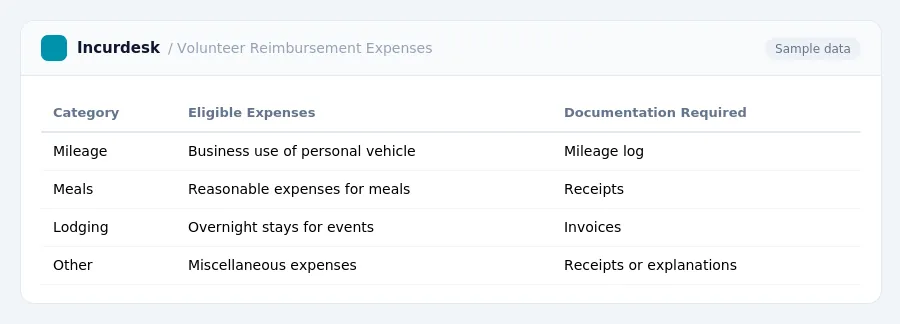
Understanding IRS Guidelines for Volunteer Reimbursement
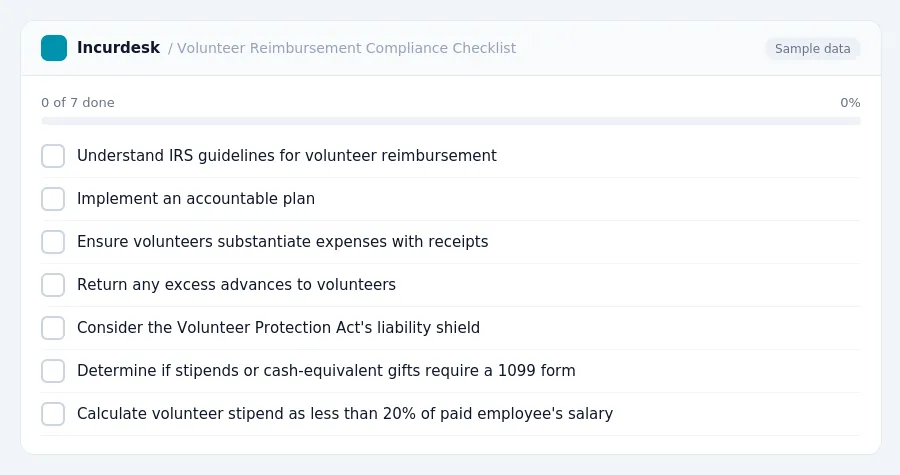
To ensure compliance and avoid unintended tax consequences, it's essential to understand IRS guidelines for volunteer reimbursement. An accountable plan is a written reimbursement arrangement that meets IRS rules, requiring volunteers to substantiate expenses with receipts and return any excess advances.
When implementing an accountable plan, consider the following guidelines:
- The Volunteer Protection Act's liability shield for volunteers can be lost if a volunteer receives more than $500 per year in compensation, not counting reimbursed expenses.
- Stipends or cash-equivalent gifts are generally considered taxable income and may require a 1099 form if they meet IRS thresholds.
- A volunteer stipend is presumed nominal if it is less than roughly 20% of what a paid employee would earn for the same work.
- While federal guidelines set the standard, laws regarding volunteer reimbursements can vary by state.
Setting the Right Reimbursement Rate: Charitable vs. Business Mileage Rates
When reimbursing volunteers for mileage, it's essential to use the correct rate to avoid any tax implications. The IRS sets two different mileage rates: a charitable rate for volunteers and a business rate for employees.
If you're unsure about the current rate, you can check the IRS website for updates.
When reimbursing volunteers, you can use the charitable mileage rate. However, if you're unsure which rate to use or have specific questions, consult the IRS website or seek guidance from a tax professional.

Eligible Expenses and Documentation Requirements
When reimbursing volunteers, it's essential to understand what expenses are eligible and how to document them correctly. Here are some key guidelines to keep in mind:
Eligible Expenses:
- Volunteer mileage (up to the federal volunteer mileage rate of $0.14/mile)
- Actual documented expenses related to volunteer work, such as:
- Gasoline or diesel fuel
- Oil and maintenance (only if directly related to volunteer work)
- Tolls and parking fees
However, general repairs and maintenance for a volunteer's vehicle are not eligible expenses.
Documentation Requirements:
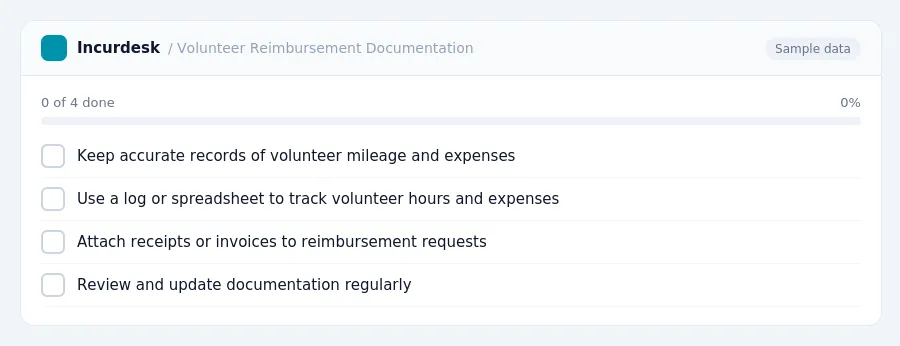
- Keep accurate records of volunteer mileage and expenses, including dates, times, locations, and amounts
- Use a log or spreadsheet to track volunteer hours and expenses
- Attach receipts or invoices to reimbursement requests
Remember to review and update your documentation regularly to ensure accuracy and compliance.
Implementing an Accountable Plan to Ensure Compliance
Implementing an accountable plan is crucial for historical societies to ensure compliance and avoid tax consequences when reimbursing volunteers. An accountable plan requires volunteers to provide documentation and account for expenses within a specific timeframe.
To qualify for an accountable plan, volunteers must provide documentation for expenses, such as receipts for mileage, gas, oil, parking fees, and tolls, within 60 days of incurring them. Additionally, volunteers must return any excess reimbursement within 120 days.
- Establish a clear policy outlining the types of expenses that can be reimbursed, such as mileage, gas, oil, parking fees, and tolls.
- Provide volunteers with a system to track and document their expenses, such as a log or spreadsheet.
- Set a deadline for volunteers to submit their expense reports, typically within 60 days of incurring the expense.
- Review and process expense reports in a timely manner to ensure reimbursements are made promptly.
By following these steps and operating under an accountable plan, historical societies can ensure that reimbursements are not considered taxable income and avoid potential tax consequences and liability issues.
Stipends vs. Reimbursements: Avoiding Tax Consequences and Liability Issues
When deciding between stipends and reimbursements for your volunteers, it's essential to understand the tax implications and potential liability issues.
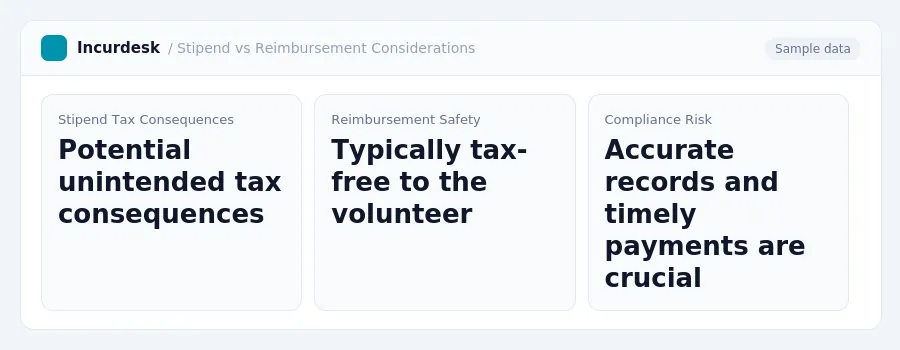
Stipends can be problematic, even if they're nominal. According to the IRS, even small stipends can be considered compensation for services, which can lead to unintended tax consequences.
Reimbursements, on the other hand, are typically tax-free to the volunteer. However, it's crucial to follow the rules: organizations should not pay reimbursements more than one month in advance of the expense.
To ensure compliance, keep accurate records of all stipends and reimbursements, including the date, amount, and purpose of each payment. This will help you track your expenses and avoid potential liability issues.
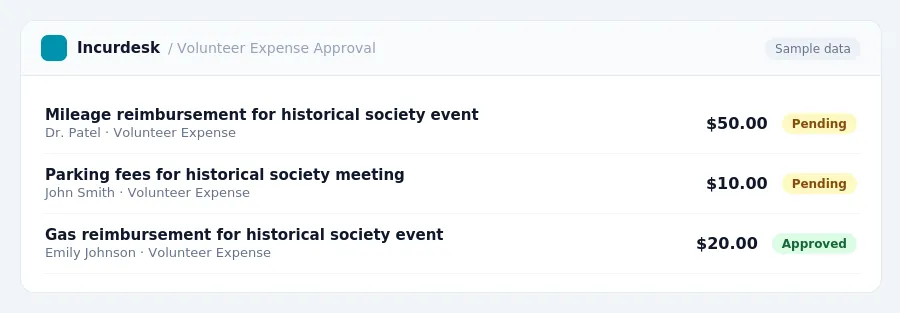
Consider the following example:
By choosing the right approach and following the rules, you can avoid unintended tax consequences and liability issues.
Keeping this simple: Incurdesk keeps receipts and approvals together, so you know exactly what to reimburse. It is built for small small museum historical society teams. Try it free.
Stop losing 4+ hours a week
30-day free trial · No credit card · Setup in 15 minutes