
What a Dental Practice Spends on CE Per Dentist Per Year
A practical, data-backed guide to controlling costs and automating expense workflows.
Effective expense management for dental practice requires understanding these costs and exploring tax-deductible options.
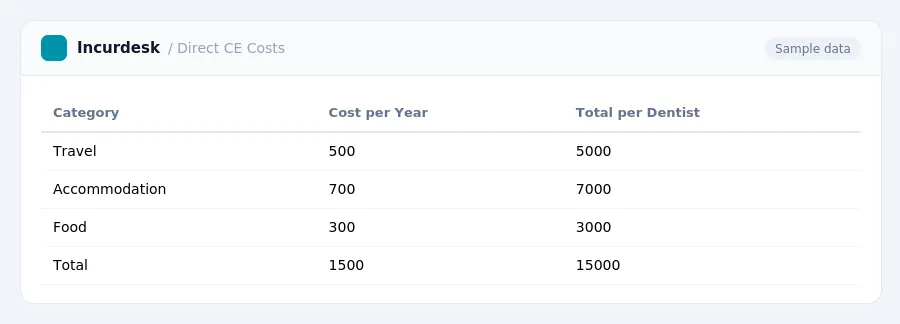
Tax-Deductible Expenses and Record Keeping
Tax-deductible expenses and record keeping are essential for small dental practices to minimize their tax liability. These expenses include tuition, books, supplies, and travel expenses related to professional development. To qualify as a deductible expense, the business expense must be "ordinary and necessary" for the business, meaning it's common and helpful for the practice.
- Keep accurate records of all CE expenses, including receipts and invoices.
- Document the date, amount, and description of each expense.
- Retain records for at least three years in case of an audit.
If the course was paid for in installments, the practice can deduct the total amount paid, not just the amount paid in the current year.
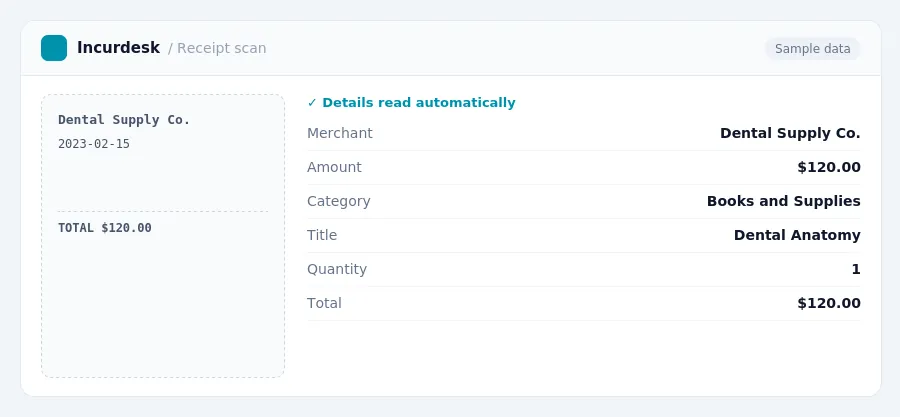
Keeping this simple: Incurdesk lets your team snap a photo of a receipt and fills in the details for you. It is built for small dental practice teams. Try it free.
State-Specific CE Requirements and Compliance
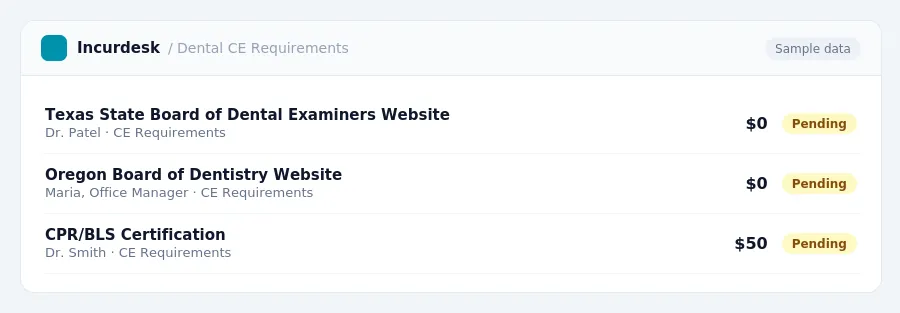
Dental practices must comply with their state's specific continuing education (CE) requirements. These requirements vary by state, so it's essential to check your state's dental board website for the most up-to-date information. Here are a few examples:
- Texas dentists must complete 24 hours of CE every two years, with specific requirements for technical/scientific content and risk management. Be sure to review the Texas State Board of Dental Examiners' website for detailed information on CE requirements.
- Check the Oregon Board of Dentistry's website for more information on CE requirements.
- Many states require CPR or Basic Life Support (BLS) certification as part of CE requirements. Be sure to check with your state's dental board to see if this is a requirement in your state.
Calculating Direct CE Costs
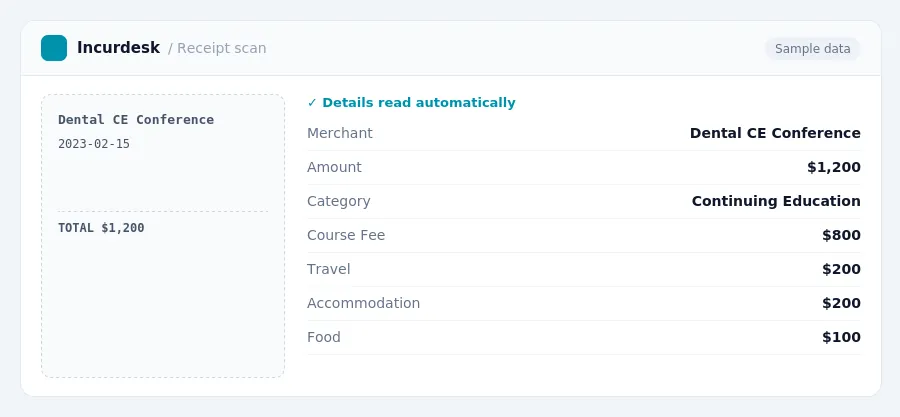
Dental practices can deduct the costs of continuing education (CE) courses, certifications, and seminars that enhance a dentist's skills. To calculate these direct costs, consider the following:
- Course fees: These can range from a few hundred dollars to several thousand dollars per course.
- Certification costs: These may include fees for exams, study materials, and certification renewal.
- Travel and accommodation costs: These can add up quickly, especially for out-of-town courses.
- Other expenses: These may include course materials, equipment, and software.
For federal tax purposes, the IRS allows a deduction of up to $5,000 for start-up costs and up to $5,000 for organizational costs. These deductions begin to decrease if total costs exceed $50,000.
When calculating direct CE costs, be sure to keep accurate records of all expenses, including receipts and invoices. This will help you take advantage of these deductions when filing your taxes.
Indirect Costs and Productivity Loss
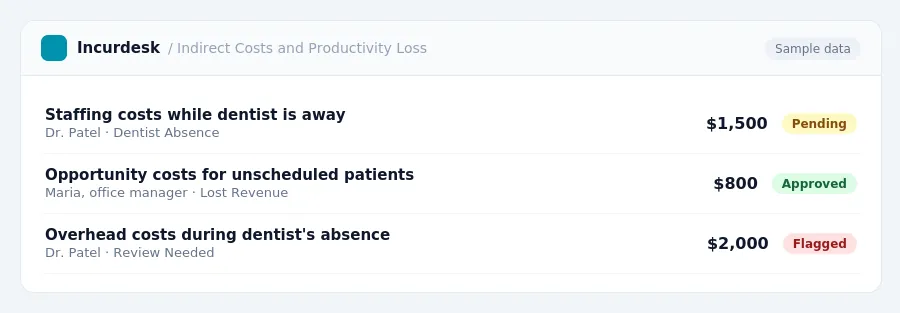
When calculating the total cost of continuing education (CE) for your dental practice, don't forget to factor in indirect costs and productivity loss.
The typical cost for a dental CE hour is approximately $39. However, there are additional indirect costs to consider.
Lost productivity is a significant indirect cost. When your dentist is attending a course, your practice is not generating revenue from that dentist's chair time.
Other indirect costs to consider include:
- Staffing costs while the dentist is away
- Overhead costs, such as utilities and supplies, while the dentist is away
- Opportunity costs, such as the cost of not being able to schedule additional patients during the dentist's absence
When calculating indirect costs, consider the number of hours your dentist will be away from the practice and the potential revenue that could be generated during that time.
Choosing CE Providers and Evaluating Quality
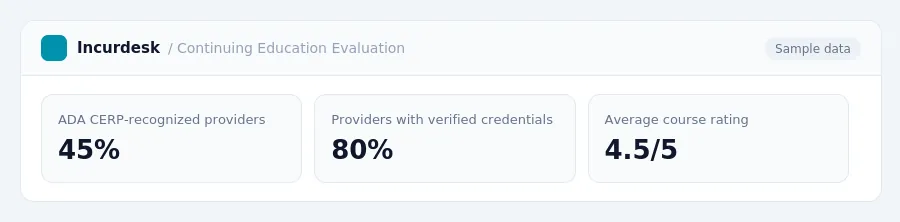
When selecting a continuing education (CE) provider, it's essential to evaluate the quality of the courses and the organization itself. The American Dental Association (ADA) Continuing Education Recognition Program (ADA CERP) helps identify quality CE providers. To find ADA CERP-recognized providers, visit the ADA website and search for the "Continuing Education Recognition Program" page. You can also check the provider's website for the ADA CERP logo, which indicates that they meet the ADA's standards for CE.
Checking the provider's credentials can help ensure that the credits earned from their courses are accepted by your state's dental board. Credits from ADA CERP-recognized providers are generally accepted by dental boards in the U.S. However, it's always a good idea to verify this with your state's dental board before registering for a course. By choosing a high-quality CE provider, you can ensure that your dentists receive valuable education and training that will benefit your practice.
When evaluating a CE provider, look for the following:
- ADA CERP recognition
- Accreditation by a recognized accrediting agency
- Positive reviews from other dentists and dental professionals
- A clear course schedule and description
- A guarantee of credits being accepted by your state's dental board
By taking the time to research and evaluate CE providers, you can make informed decisions about the courses your dentists attend and ensure that they receive the best possible education and training.
Stop losing 4+ hours a week
30-day free trial · No credit card · Setup in 15 minutes