What a Pharmacy Spends on Pharmacist CE
A practical, data-backed guide to controlling costs and automating expense workflows.
Small independent pharmacies need to be aware of the costs associated with mandatory continuing education (CE) for their pharmacists and technicians. This includes understanding the typical expenses for CE courses, such as those offered through organizations like the National Association of Boards of Pharmacy (NABP), and potential tax deductions or credits available. For instance, the NABP offers a range of CE courses, and the cost varies depending on the course and location, but for 2026, there is no specific cap on continuing education deductions for self-employed individuals. Additionally, these courses often include tax-deductible expenses, and the amount of deduction depends on the business's profitability and IRS reasonableness standards. For the bigger picture, see our guide to independent pharmacies expense management software. For a complete overview, see our expense management guide.
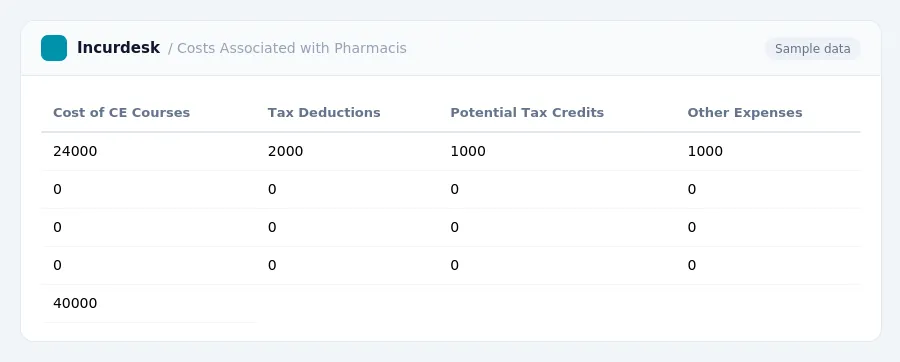
Potential Tax Deductions or Credits
For small independent pharmacies, understanding the tax implications of continuing education (CE) is crucial. The American Opportunity Tax Credit (AOTC) is a federal tax credit available for the first four years of postsecondary education for students pursuing a degree or recognized credential. The maximum benefit per eligible student is up to $2,500.
To claim tax deductions, pharmacies must have detailed documentation, including receipts, course descriptions, certificates, and proof of payment. This documentation is essential for verifying the cost of CE courses and ensuring compliance with the IRS.
Pharmacies should keep accurate records of their CE expenses, including receipts for courses, certificates, and other supporting documents.
This means that pharmacies must demonstrate that their CE expenses are reasonable and necessary to maintain their business.
It is essential to consult with a tax professional to ensure compliance with all tax laws and regulations, including those related to CE and tax credits. Additionally, pharmacies should review their business records and financial statements to ensure they are in compliance with all tax requirements.
Keeping this simple: Incurdesk turns submitted expenses into clean expense reports. It is built for small independent pharmacy teams. Try it free.
State-Specific Requirements
Many states mandate specific continuing education (CE) topics for pharmacists and technicians. These requirements vary by state, but some common examples include:
- Pain management and opioids
- Implicit bias training
- HIV/AIDS awareness
- Domestic violence recognition
- Child abuse identification
- Controlled substance prescribing
For example, in Texas, pharmacists are required to complete at least 1 hour of CE to cover Texas pharmacy law per two-year cycle. Additionally, some states may require CE on specific topics, such as medication safety or patient counseling. It's essential to check with your state's pharmacy board to determine the specific CE requirements and any deadlines.
It's also worth noting that some states may offer CE credits that can be applied to other professional development activities, such as conferences or workshops. To ensure compliance with state-specific requirements, it's crucial to review the CE requirements for your state and plan accordingly.
To stay on top of CE requirements, consider the following steps:
- Review your state's pharmacy board website to determine the specific CE requirements.
- Check with local colleges or universities to see if they offer CE courses that meet your state's requirements.
- Look into online CE providers that offer state-specific courses.
- Consider consulting with a pharmacist or technician who has experience with CE requirements in your state.
Costs Associated with Pharmacist CE
The costs associated with pharmacist continuing education (CE) can vary depending on the type of course, duration, and provider.
Typical expenses for CE courses include:
- National Association of Boards of Pharmacy (NABP) CPE Monitor courses: These courses are accredited by ACPE and typically cost between $200 and $400.
- Workshops or seminars: These may cost $500 to $2,000 or more.
- Travel and accommodation costs: These can add up quickly and vary depending on the location and duration of the trip.
It's worth noting that some states offer tax credits or deductions for CE courses, but the specifics can vary.
The rules in this guide
| Amount | Required | In Incurdesk |
|---|---|---|
| Above $50 | Itemised receipt | Checked on every expense |
| Above $150 | Written business purpose | Checked on every expense |
| Above $250 | Names of attendees | Checked on every expense |
| Above $2,500 | Senior sign-off; never auto-approved | Checked on every expense |
Each rule is checked on every expense by Incurdesk’s approval agent.
Typical Expenses for CE Courses
Online CE courses and live webinars can range from $10 to $50 per credit hour. For example, a self-employed pharmacist can deduct qualifying continuing education expenses as business expenses on Schedule C for 2026. The Lifetime Learning Credit (LLC) can be worth up to $2,000 per tax return annually.
For example, a self-employed pharmacist can deduct expenses related to maintaining their professional licenses or certifications, even if they are not directly related to CE courses.
Influence on CE Cost and Necessity
The cost of CE courses can vary, but for many pharmacies, the costs are relatively low.
Typically, CE courses for pharmacists can range from $50 to $500 per session, with some packages offering discounts for multiple sessions. For technicians, courses may be $20 to $100 per session, with some companies offering group rates for multiple attendees.
State-specific requirements can also impact the necessity and cost of CE. For example, some states have laws requiring pharmacists to complete certain hours of CE each year. In other states, CE requirements may be dictated by the pharmacy association or trade organization.
The cost of CE can vary depending on the state and the type of CE. For instance, some states may offer more extensive CE programs, while others may have more limited options. Additionally, some states may have more stringent requirements for CE, such as requiring pharmacists to complete a certain number of hours of CE each year.
Regardless of the specific costs and requirements, it is essential for pharmacies to carefully review their CE needs and budget accordingly. This can help ensure that pharmacists and technicians receive the necessary training and continuing education to stay up-to-date with the latest developments in their field.
Tax rules, limits and rates change. Confirm current figures with the IRS or your accountant before you file.
AI expense management for finance teams and whoever keeps the books. It checks every expense against your rules, approves the routine ones and chases missing receipts for you.
Try it free for 30 days →Stop losing 4+ hours a week
30-day free trial · No credit card · Setup in 15 minutes