
When a Brokerage Needs More Than Agent Spreadsheets
A practical, data-backed guide to controlling costs and automating expense workflows.
As a small real estate business owner or office manager, you're likely familiar with the challenges of managing agent spreadsheets to track commissions, expenses, and financial performance. However, when your business grows beyond a few agents, these spreadsheets can become cumbersome and inaccurate, leaving you vulnerable to financial errors and regulatory non-compliance. For the bigger picture, see our guide to real estate expense management for under $10/user (2026).
Beyond Agent Spreadsheets: Operational Efficiency
As your brokerage grows, you'll start to notice inefficiencies in your accounting processes. Agent spreadsheets can become a bottleneck, slowing down operations and making it difficult to manage multiple tasks at once. To streamline your workflow, it's essential to move beyond spreadsheets and implement more robust systems.
- Centralize your data: Consider investing in a centralized accounting platform that allows you to store and manage all your financial data in one place.
- Automate routine tasks: Set up automated workflows to handle tasks such as invoicing, commission tracking, and financial reporting, freeing up your agents to focus on more critical activities.
- Integrate with other systems: Ensure that your accounting platform integrates seamlessly with other essential tools, such as CRM software and trust account management systems.
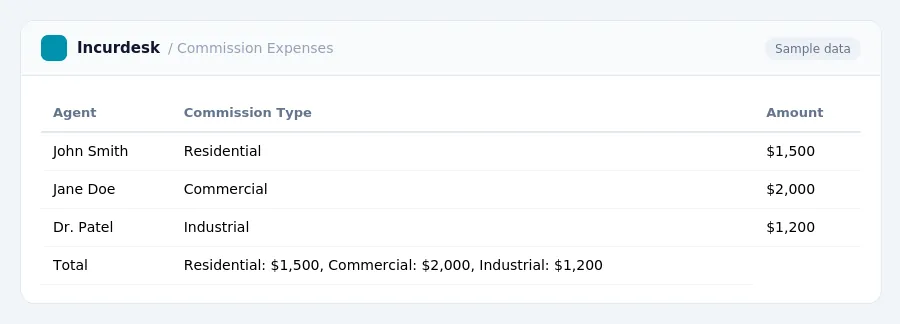
- Implement a commission tracking system: To accurately calculate commissions, you'll need a system that can track sales data, agent performance, and commission splits. This will help you optimize your commission structure and ensure compliance with industry regulations.
By implementing these systems, you'll be able to improve operational efficiency, reduce errors, and increase productivity. This will enable you to better serve your clients, agents, and other stakeholders, ultimately driving growth and success for your brokerage.
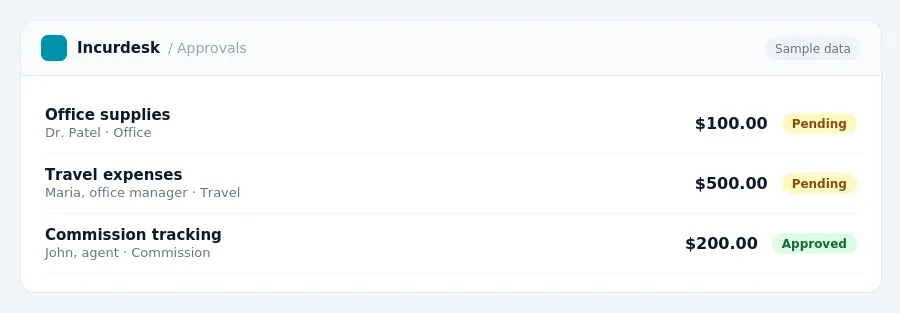
Keeping this simple: Incurdesk turns submitted expenses into clean expense reports. It is built for small real estate teams. Try it free.
The Dangers of Misclassifying Workers in Real Estate Brokerages
Misclassifying workers in real estate brokerages can have severe consequences. Remote work or flexible hours do not automatically establish contractor status.
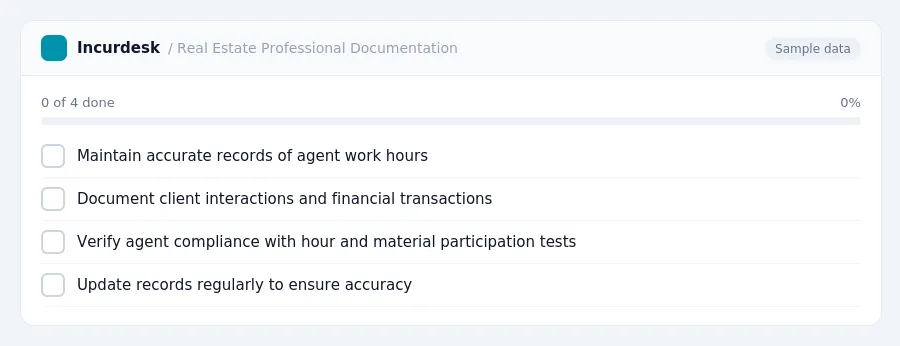
When it comes to taxes, real estate agents must meet specific hour and material participation tests to qualify as a real estate professional. This requires documentation of full-time brokerage work, not just holding a license.
For example, consider a brokerage with 10 agents.
This includes maintaining accurate records of agent work hours, client interactions, and financial transactions.
Key Takeaways:
When Agent Spreadsheets Fall Short: Regulatory Compliance
As a real estate brokerage, you're likely no stranger to dealing with complex regulations. But when it comes to accounting, agent spreadsheets can fall short in ensuring compliance. For instance, the 2024 NAR settlement has changed the rules regarding who pays the buyer's agent. Now, buyers are contractually responsible for their own agent under a written agreement, but sellers can still agree to pay the buyer's agent through concessions on a deal-by-deal basis.
This includes payments to agents, which can be a significant portion of your revenue. The national average total real estate commission is approximately 5.7% of the home's sale price, with about 2.88% going to the listing agent and 2.82% to the buyer's agent.
Keep accurate records of all transactions, including receipts, invoices, and payment records. This will help you stay compliant and avoid costly mistakes.
Key Takeaways:
- Familiarize yourself with the 2024 NAR settlement and its impact on who pays the buyer's agent.
- Keep accurate records of all transactions to ensure compliance.
When Agent Spreadsheets Fail: Financial Accuracy
Agent spreadsheets can become unreliable when it comes to financial accuracy, particularly in real estate brokerages where transactions involve large sums of money. To ensure accurate financial records, consider the following:
- Implement a clear and consistent accounting system, including separate columns for each transaction, income, and expenses.
- Regularly reconcile bank statements with your accounting records to catch any discrepancies.
- Ensure accurate tracking of commissions, which can vary based on factors such as the national average total real estate commission (approximately 5.7% of the home's sale price).
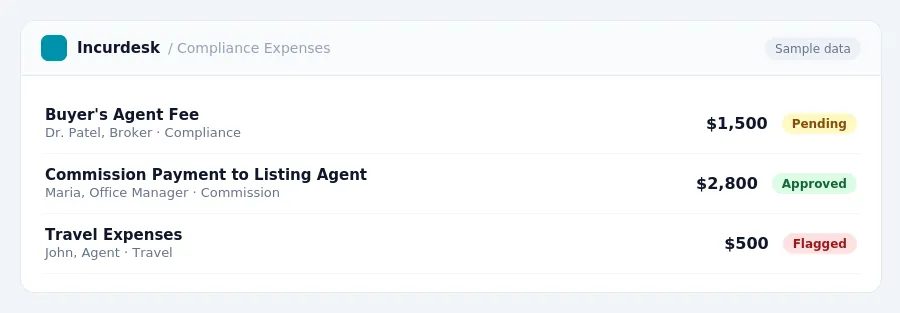
- Use a system to track and record all payments, including commission splits and fees.
It's also essential to ensure that all financial records are accurate and up-to-date, including:
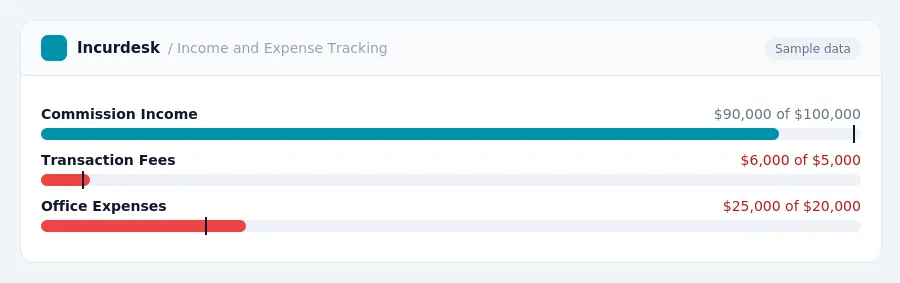
- Tracking all income, including commissions, fees, and other revenue sources.
- Accurately recording all expenses, including office expenses, marketing costs, and other operational expenses.
By implementing a robust accounting system and regularly reviewing your financial records, you can ensure the accuracy and reliability of your financial data, which is crucial for making informed business decisions.
Real Estate Accounting Challenges: Navigating Trust Accounts and Specialized Software
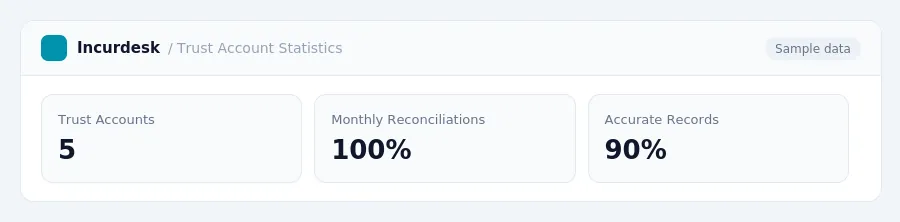
Real estate accounting challenges can be complex, especially when it comes to trust accounts and specialized software. For instance, licensed brokers and property managers who hold funds for others, such as security deposits and rent proceeds, must maintain trust accounts. However, the rules regarding deposit deadlines, reconciliation, and record retention vary by state.
One key requirement is the monthly three-way reconciliation of trust accounts. This involves ensuring that the adjusted bank balance equals the trust book balance and the sum of all owner and tenant ledgers. To achieve this, it's essential to keep accurate records and reconcile trust accounts regularly.
When it comes to accounting for real estate transactions, investors typically use either the cash basis or accrual basis of accounting. The cash basis records income when received and expenses when paid, while the accrual basis records transactions when they occur, regardless of cash flow.
Specialized real estate accounting software can be beneficial in tracking profit and loss by individual property, managing rent rolls, and handling CAM reconciliation for commercial leases. This software can help streamline accounting processes and improve accuracy.
For certain non-traditionally financed residential real estate transactions where the buyer is an entity or trust, a Real Estate Report must be filed with FinCEN. This nationwide requirement aims to increase transparency and deter money laundering.
When selecting specialized software, consider the specific needs of your business. For example, if you have a large portfolio of rental properties, you may need software that can handle complex calculations and provide detailed financial reports. Be sure to research and compare different options to find the one that best suits your needs.
Stop losing 4+ hours a week
30-day free trial · No credit card · Setup in 15 minutes