Where Yoga Studio Margins Go
A practical, data-backed guide to controlling costs and automating expense workflows.
In the world of small yoga studio businesses, financial management is crucial for success. Owners and office managers often struggle to balance their budget, navigate complex tax laws, and make informed decisions about how to allocate resources. The reality is that yoga studios are among the most expensive businesses to operate, with rent typically consuming 20-30% of revenue and instructor costs adding another 25-35%. The bottom line is that a small studio's gross revenue may range from $5,000 to $15,000 per month, leaving little room for profit or savings. For the bigger picture, see our guide to yoga studios expense management software.
Tax Implications and Business Structure
The tax implications and business structure for small yoga studio businesses in the US are complex and require careful consideration. This rate applies to business use of a vehicle, not personal use.
The tax implications for small yoga studio businesses include:
- Net operating losses (NOLs) can be claimed for losses exceeding the tax basis of assets. For example, if a studio has a net loss of $10,000, the business can claim a NOL of $10,000.
- The business structure can impact tax liabilities. Sole proprietorships and single-member limited liability companies (LLCs) may be subject to self-employment tax, while multi-member LLCs may be able to deduct business use of a vehicle as a business expense.
Keeping this simple: Incurdesk turns submitted expenses into clean expense reports. It is built for small yoga studio teams. Try it free.
Profit Margins and Secondary Revenue
In a small yoga studio business, profit margins can be a significant challenge. To improve profitability, owners and office managers need to understand the typical profit margins and secondary revenue streams that can help them make informed decisions.
Secondary revenue streams, such as membership sales, private lessons, and workshops, can also contribute significantly to the studio's income. However, these revenue streams are often unpredictable and can fluctuate depending on factors such as studio occupancy rates, instructor availability, and local demand.
To maximize profit margins and secondary revenue, owners and office managers can consider the following strategies:
- Develop a robust membership program to attract and retain members
- Offer a variety of private lessons and workshops to cater to different student needs
- Increase studio occupancy rates by implementing effective marketing and promotion strategies
- Encourage instructor studios to sell additional services or workshops to supplement their income
- Monitor and adjust studio operations to ensure that expenses are in line with projected revenue
By understanding the typical profit margins and secondary revenue streams, small yoga studio businesses can make data-driven decisions to improve profitability and ensure the long-term sustainability of their business.
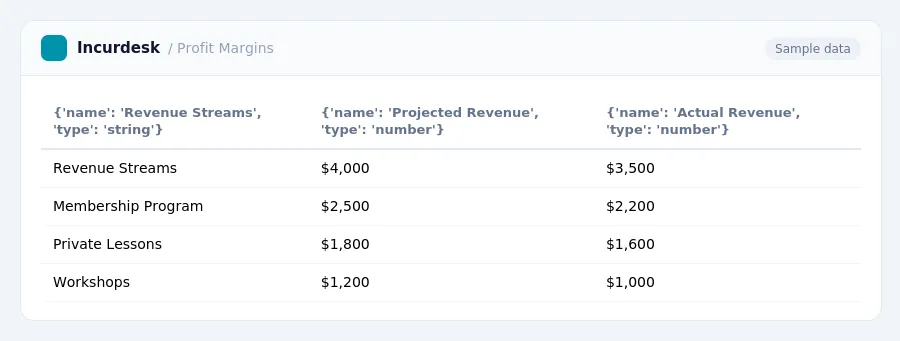
Revenue Streams and Expenses
The U.S. yoga industry, encompassing studios, digital platforms, apparel, and equipment, is valued at approximately $28 billion to $30 billion for 2025 and 2026. Standalone yoga studios generate about $9 billion in annual revenue. A typical single-location yoga studio generates between $150,000 and $300,000 in annual revenue in 2026. Studios with multiple revenue streams can exceed $500,000 annually.
For a small studio, monthly operating expenses might range from $5,000 to $15,000. These expenses are crucial in determining the studio's overall profitability. This will help small studios ensure they have enough revenue to cover their costs and generate a decent profit.
Cost Structure and Operating Costs
Here's the section on Cost Structure and Operating Costs:
Costs associated with opening and operating a yoga studio vary widely depending on the size, location, and type of studio. The total cost to open a yoga studio in 2026 typically ranges from $15,000 for a small leased space to $200,000 or more for a premium build-out. The average independent studio of roughly 1,500 square feet costs between $55,000 and $110,000 to open. Hot yoga studios can significantly increase startup costs, ranging from $80,000 to $400,000 or more.
In addition to initial startup costs, studios must also consider ongoing expenses.
Key Financial Metrics and Insights
As a small yoga studio owner or office manager, it's essential to understand the financial realities of running your business. Here are some key financial metrics to keep in mind:
- Instructor costs can add another 25-35% to your expenses, bringing the total to 45-65% of gross revenue.
- Monthly operating expenses can range from $5,000 to $15,000, depending on the size of your studio.
- To ensure long-term sustainability, it's crucial to manage your expenses carefully, focusing on reducing costs while maintaining high-quality services.
- Regularly reviewing your financials and adjusting your budget as needed can help you stay on track and make data-driven decisions.
- Keeping accurate records and being transparent with your clients and stakeholders can also help you identify areas for improvement and make informed decisions about your business.
Tax rules, limits and rates change. Confirm current figures with the IRS or your accountant before you file.
AI expense management for finance teams and whoever keeps the books. It checks every expense against your rules, approves the routine ones and chases missing receipts for you.
Try it free for 30 days →Stop losing 4+ hours a week
30-day free trial · No credit card · Setup in 15 minutes