Why Busy Season Breaks Manual Expense Processes
A practical, data-backed guide to controlling costs and automating expense workflows.
The current IRS rules and deadlines for business expense processes can be complex and overwhelming for small accounting businesses. To ensure compliance and optimize financial processes, it's essential to have a solid understanding of the specific figures, mileage reimbursement rates, per diem rates, tax filing deadlines, extension deadlines, Section 179 deduction limits, and other key aspects. The rules and deadlines vary by year, and it's crucial to stay up-to-date to avoid calculation errors, poor recordkeeping, and other common pitfalls that can lead to missed tax deadlines and penalties.
Accounting expense management for under $10/user (2026) requires regular review and updates to maintain accurate and compliant records. This includes tracking mileage reimbursement rates, per diem rates, and equipment deductions, as well as correctly filing tax returns and applying extension deadlines.
Tax Filing Deadlines and Extensions for Busy Season
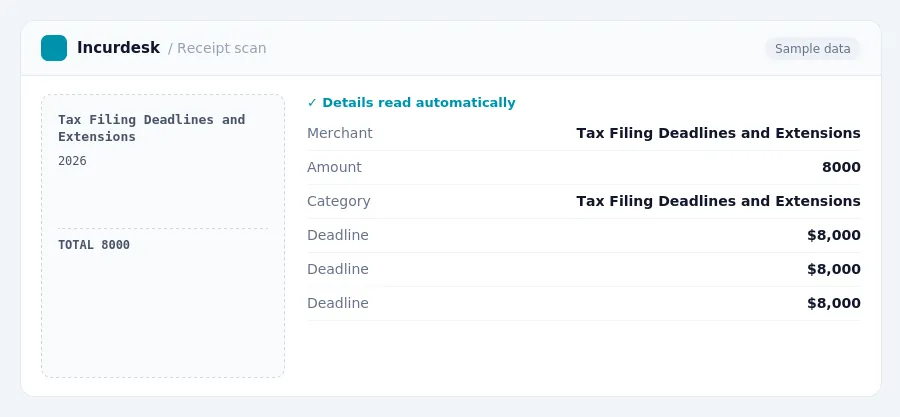
The federal tax filing deadlines for individuals and certain businesses, including partnerships and S corporations, are set for 2026. The deadlines are as follows:
- Individuals: April 15, 2026
- Partnerships and S corporations: March 15, 2026
- C corporations: April 15, 2026
- Individuals: October 15, 2026
- C corporations: September 15, 2026
It is essential to note that these deadlines apply to the 2026 tax year and may vary for subsequent years. To ensure compliance, it is crucial to review and update your tax filing processes to reflect these changes.
The tax extension deadlines for individuals and C corporations are also set for 2026. The deadlines are:
- Individuals: October 15, 2026
- C corporations: September 15, 2026
To avoid penalties and ensure timely submission of tax returns, it is recommended that you submit your tax returns by the designated deadlines. It is also essential to keep accurate records and properly categorize business expenses to ensure compliance with tax laws and regulations.
Keeping this simple: Incurdesk turns submitted expenses into clean expense reports. It is built for small accounting teams. Try it free.
Maximizing Deductions and Compliance
As a small accounting business owner or office manager, it's essential to stay on top of manual expense processes to ensure compliance with IRS rules and deadlines. To maximize deductions and compliance, follow these steps:
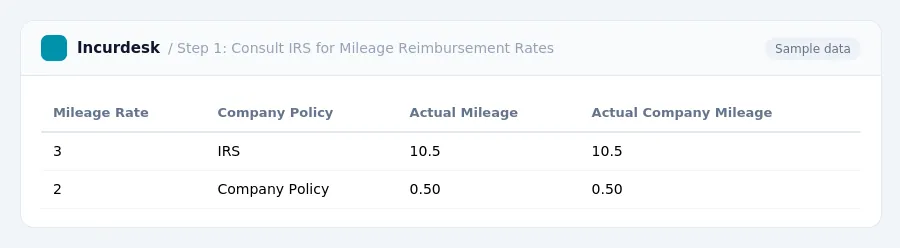
- For mileage reimbursement rates, consult the IRS's official website for the most up-to-date information.
- To ensure accurate tax filing deadlines, check the IRS's website for the latest information on deadline extensions. The IRS typically allows extensions for businesses with complex tax situations or those experiencing financial hardship.
- For equipment deductions, gather receipts and records for all business-related purchases, including tools, software, and hardware.
- When handling mixed expenses, categorize and account for each expense separately. This will help ensure accuracy and prevent incorrect deductions.
- To avoid calculation errors, create a spreadsheet or use an accounting software to track expenses and ensure accuracy.
- The deadline for businesses that filed Form 1120 (S corporation) is typically July 31, while those that filed Form 1120 (corporate) is typically October 31.
- State variations and yearly changes affect business expenses. Check the IRS's website for updates on state-specific rules and regulations.
By following these steps and staying informed about IRS rules and deadlines, you can maximize your deductions and ensure compliance with the tax laws.
Why Busy Season Breaks Manual Expense Processes
Busy Season Brings Changes to Manual Expense Processes
As the tax season approaches, small accounting businesses must ensure they are compliant with current IRS rules and regulations. To avoid costly mistakes, it's essential to stay up-to-date on the latest requirements.
This means businesses can only expense up to this amount, and they must make the deduction before the tax filing deadline.
The deduction can be claimed on Schedule C, and the business must keep records of the purchase and the equipment's condition.
To maximize deductions, businesses should keep accurate records of their expenses, including receipts, invoices, and bank statements. They should also consider using a mileage log to track their miles and ensure they are accurately reimbursed.
By staying informed about these changes and implementing proper record-keeping and expense tracking, small accounting businesses can ensure compliance and optimize their financial processes.
Understanding Mileage Reimbursement Rates
The IRS has recently updated its mileage reimbursement rates for business use. For the January 1 to June 30, 2026, period, the reimbursement rate for business use is 72.5 cents per mile.
This rate applies to all types of business-related mileage, including medical, moving, and charitable organization expenses.
However, the rate for charitable organization expenses has increased to 14 cents per mile.
It's essential to note that the mileage reimbursement rate varies depending on the type of expense and the specific circumstances. For example, if you are using your car for business purposes, you can use the standard rate of 72.5 cents per mile, but if you are using a vehicle for charitable organization purposes, the rate is 14 cents per mile.
To ensure compliance with these updated rates, it's crucial to keep accurate records of your business-related mileage. You can use a mileage log or a mobile app to track your miles and calculate your reimbursement.
Remember to also review your tax filing deadlines and extensions for the upcoming year. The IRS typically extends tax filing deadlines for six months, and the deadline for the 2026 tax year is October 15, 2026.

State Variations and Yearly Changes Affecting Business Expenses
As small accounting businesses, it's essential to understand the current IRS rules and deadlines to ensure compliance and optimize financial processes for the 2026 tax year. State variations and yearly changes can significantly impact business expenses, so it's crucial to be aware of these changes.
For the 2026 tax year, the per diem rate for high-cost localities (lodging, meals, incidental expenses) is $329 per day, effective October 1, 2026, through September 30, 2027. This rate applies to high-cost localities within the continental United States.
In contrast, the per diem rate for other localities within the continental United States is $230 per day for October 1, 2026, through September 30, 2027. This rate applies to localities outside the continental United States.
The per diem rate for incidental expenses only deduction is $5 per day for any locality within or outside the continental United States.
It's essential to note that the per diem rate for high-cost localities may be different for specific expenses, such as medical expenses or business use of a personal vehicle. Additionally, the per diem rate for meals and incidental expenses only may be different for specific types of meals, such as formal events or meetings.
To ensure compliance, businesses should review the IRS's guidance on per diem rates and mileage reimbursement rates. The IRS's website provides detailed information on these topics, including the various per diem rates and mileage reimbursement rates that apply to different types of business expenses.
By understanding these state variations and yearly changes, businesses can make informed decisions about their expense reimbursement processes and ensure compliance with IRS regulations.
Tax rules, limits and rates change. Confirm current figures with the IRS or your accountant before you file.
AI expense management for finance teams and whoever keeps the books. It checks every expense against your rules, approves the routine ones and chases missing receipts for you.
Try it free for 30 days →Stop losing 4+ hours a week
30-day free trial · No credit card · Setup in 15 minutes