
Why Owner Statements Get Disputed
A practical, data-backed guide to controlling costs and automating expense workflows.
For property owners, understanding owner statements is crucial for financial clarity, tax preparation, and building trust with their property managers. These statements summarize income and expenses, but disputes often arise from misinterpretations of distributions, reserve funds, management fees, and mishandling of security deposits. Effective expense management for property management requires a clear understanding of the management agreement and supporting documentation to ensure accurate financial records.
Trust Accounting and Security Deposits: Separation and Reconciliation
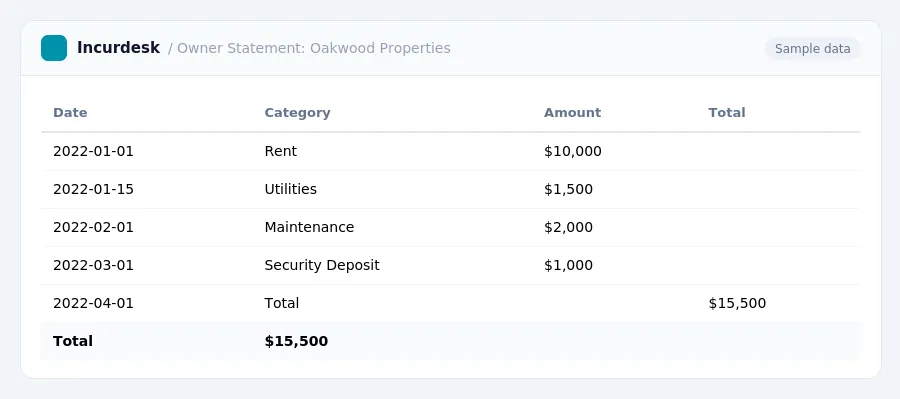
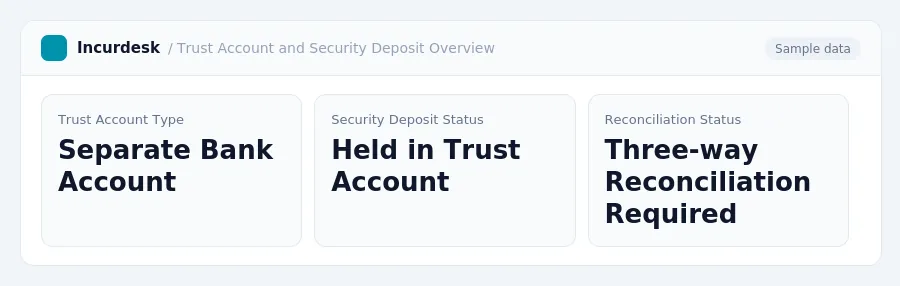
In all 50 US states, it is illegal to commingle trust funds with operating funds. To comply with trust accounting regulations, separate bank accounts are required for trust and operating funds. This means that tenant rent, security deposits, and owner reserves should be kept in a separate trust account, and not mixed with the property management company's operating funds.
- Security deposits belong to the tenant until they are legally due to the owner for damages or unpaid rent.
- Security deposits should be held in a trust account and not treated as income.
A three-way reconciliation is necessary to ensure that the trust account, operating account, and records are all balanced and accurate. This means that the property manager should:
- Compare the trust account balance to the operating account balance.
- Verify that the records for each account match the account balances.
- Reconcile any discrepancies or errors.
Trust accounting regulations, including requirements for separate bank accounts and reconciliation, vary by state. Property managers should check with their state's regulatory agency for specific requirements and deadlines.
Keeping this simple: Incurdesk keeps receipts and approvals in one place, which makes a written policy easier to follow. It is built for small property management teams. Try it free.
Management Fees and Reserve Funds: Calculation and Reporting
Management fees and reserve funds are common components of owner statements that can be easily misunderstood. To ensure accurate reporting, it's essential to understand how these components are calculated and presented.
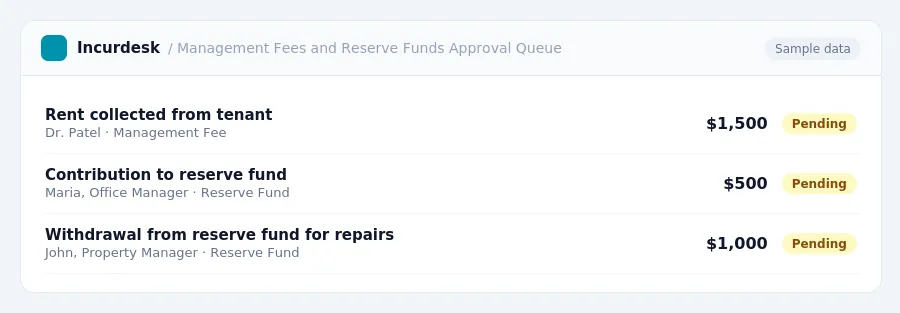
A standard owner statement includes a detailed breakdown of management fees, which should ideally be calculated based on collected rent, not scheduled rent. This means that if a tenant pays rent late, the management fee should only be charged on the amount actually collected, not the scheduled rent amount. Additionally, management fees should not be charged on concessions given to tenants, such as rent discounts or free rent periods.
The reserve fund is cash held for the owner to cover routine repairs and maintenance. The statement should reflect the current balance of the reserve fund and any activity, such as contributions or withdrawals.
By understanding how management fees and reserve funds are calculated and reported, property owners can ensure accurate financial clarity and avoid disputes with their property managers.
Understanding Owner Statements: Common Components and Misconceptions
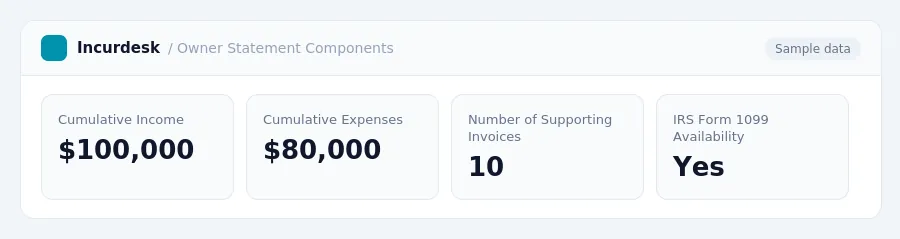
Owner statements provide property owners with a clear financial picture of their property's performance, aiding in budgeting, decision-making, and tax preparation. The IRS requires property owners to keep records of rental income and expenses, and owner statements serve as a strong starting point for tax preparation. It's essential to provide these statements to a tax preparer along with supporting invoices.
Some landlords receive annual owner statements for tax reporting purposes, which may include cumulative income and expenses, and IRS Form 1099. These statements summarize the property's income and expenses, giving owners a comprehensive view of their property's financial health.
When reviewing owner statements, look for the following common components:
- Cumulative income and expenses
- IRS Form 1099, if applicable
- Supporting invoices and receipts
It's crucial to understand that owner statements are not a one-size-fits-all document. The content and format may vary depending on the property management company and the specific needs of the property owner.
Income Recognition and Expense Classification
Income is recognized when it is actually received, not when it is owed. This means that unpaid rent will typically not appear as income on the statement.
To ensure accurate income recognition, property owners should review their owner statements for the following:
- Actual rent received from tenants
- Security deposits held in trust
- Other income, such as parking or storage fees
For expense classification, property owners should review the following:
- Operating expenses, such as maintenance and repairs
- Capital expenditures, such as renovations or new equipment
- Management fees, which may be a percentage of gross income or a flat fee
Property owners should also review their management agreement to understand how income and expenses are classified and reported.
Disputes and Solutions: How to Resolve Common Owner Statement Issues
When reviewing an owner statement, it's essential to address potential disputes promptly to maintain trust and avoid misunderstandings. Here are common issues and practical solutions to resolve them:
- Misunderstanding distributions: Verify that the owner statement accurately reflects the distribution of income, including any tax withholdings or fees.
- Reserve fund discrepancies: Ensure that the reserve fund balance is accurately reported and that any contributions or withdrawals are properly documented.
- Management fee disputes: Review the management agreement to confirm the fee structure and ensure that the owner statement accurately reflects the fee calculation.
- Security deposit issues:
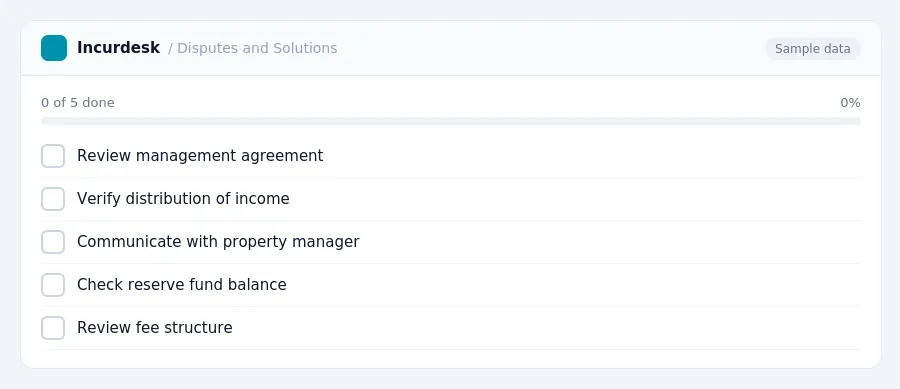
When resolving disputes, follow these steps:
- Review the management agreement and supporting documentation to understand the terms and conditions.
- Communicate with the property manager to clarify any discrepancies or questions.
- Request supporting documentation, such as receipts or invoices, to verify expenses or income.
- Address any issues promptly to avoid delays in tax preparation or other financial obligations.
Remember, timely communication and transparency are key to resolving disputes and maintaining trust between property owners and property managers.
Stop losing 4+ hours a week
30-day free trial · No credit card · Setup in 15 minutes