
Audit-Ready Expense Records for Healthcare Practices
A practical, data-backed guide to controlling costs and automating expense workflows.
Maintaining meticulous expense records is crucial for navigating audits smoothly in small healthcare businesses with 5-50 staff. To achieve this, you need to understand what documentation is required by regulatory bodies like the IRS and CMS, and implement robust internal processes to ensure accuracy and compliance. Effective expense tracking and management, including healthcare expense management for under $10/user (2026), can help avoid penalties and recoupments, and provide valuable insights into your practice's financial health. For a complete overview, see our expense management guide.
Understanding Regulatory Requirements for Audit-Ready Expense Records
As a small healthcare business owner or office manager, it's essential to understand the regulatory requirements for maintaining audit-ready expense records. This includes staying up-to-date with changes to the Medicare Physician Fee Schedule (MPFS) and practice expense methodology. For 2026, CMS is using two separate conversion factors, and it's proposed that changes to the practice expense methodology will be phased in over two years, starting January 1, 2027.
The Centers for Medicare and Medicaid Services (CMS) regularly updates its MPFS, impacting practice expense calculations and reimbursement. It's crucial to monitor these changes to ensure compliance. Additionally, 47 states and D.C. have fee rules for medical records, with 11 states adjusting these fees annually.
When it comes to documenting expenses, it's essential to keep accurate records of legitimate business expenses, including medical records fees. These fees vary significantly by state, with 11 states updating these fees annually. For the 2026 tax year, medical expenses are deductible only to the extent they exceed 7.5% of your Adjusted Gross Income (AGI).
To maintain compliance, keep track of the following:
- CMS updates to the MPFS and practice expense methodology
- State-specific medical records fees and any annual updates
- Legitimate business expenses, including medical records fees
Regularly review and update your records to ensure accuracy and compliance with regulatory requirements.
Implementing Robust Expense Tracking Systems for Small Healthcare Businesses
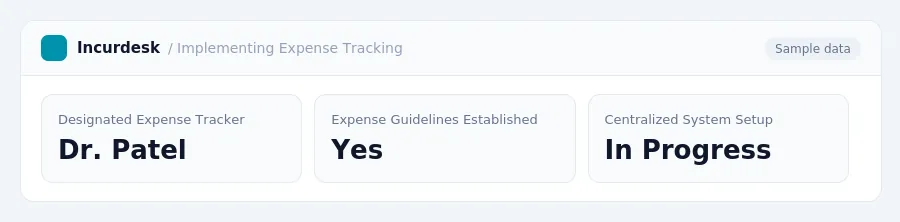
Implementing a robust expense tracking system is crucial for small healthcare businesses to ensure accurate and compliant expense records. To start, designate a specific person or team to be responsible for tracking expenses, and consider setting up a centralized system for all staff members to use. This can be achieved by using a cloud-based platform or a spreadsheet that can be accessed by everyone.
Establish clear guidelines for what expenses are allowed and what are not. For example, you can create a list of approved expense categories, such as travel, training, and equipment purchases. Make sure to communicate these guidelines to all staff members and provide examples of what is considered a legitimate business expense.
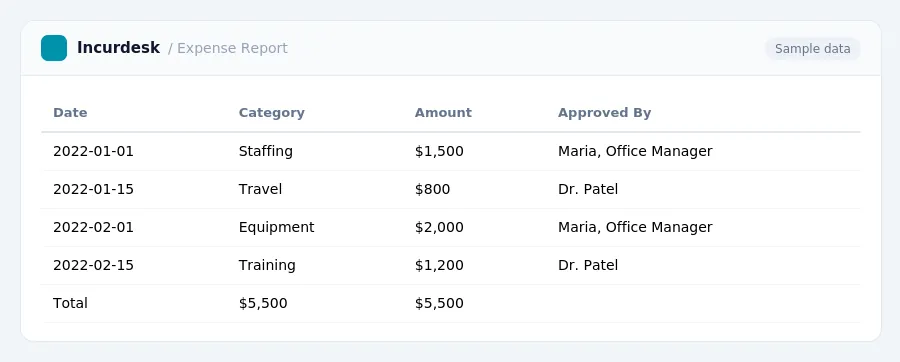
Set up a system for staff members to submit expense reports, either weekly or monthly. These reports should include detailed information about each expense, such as the date, amount, and a brief description of the expense. Consider using a standardized form or template to make it easier for staff members to submit their reports.
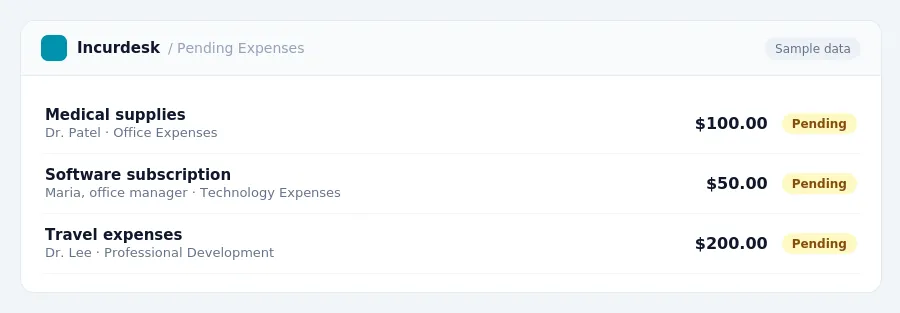
Regularly review and approve expense reports to ensure accuracy and compliance. Consider implementing a system of checks and balances to prevent any one person from approving their own expenses.
Consider implementing a process for reconciling credit card statements and bank accounts to ensure that all expenses are accounted for and that there are no discrepancies.
Documenting Legitimate Business Expenses for Medical Practices
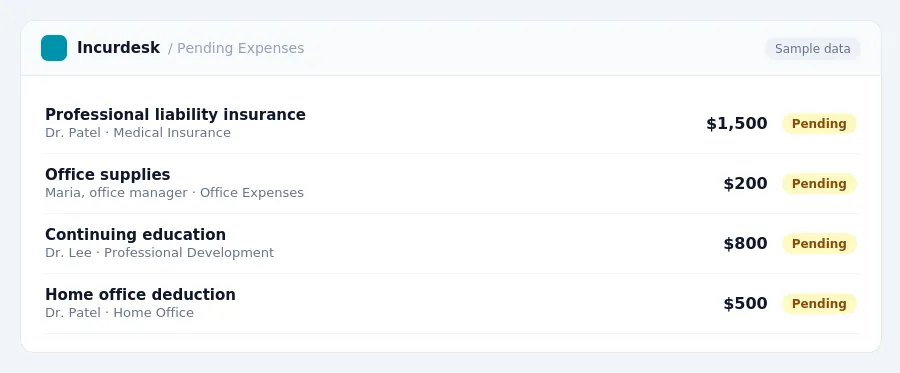
To ensure that your medical practice is audit-ready, it's essential to document legitimate business expenses properly. For the 2026 tax year, these expenses are deductible on Schedule C and include items such as:
- Professional liability insurance
- Office supplies
- Continuing education
When claiming a home office deduction for 2026, make sure the space is used exclusively and regularly for the medical practice. This will help you qualify for the deduction and avoid potential audit issues.
This means that you should carefully track and document all medical expenses, including those related to your practice, to ensure compliance with this rule.
CMS audits target practices of all sizes, with an increasing focus on small practices. To avoid potential issues, make sure to maintain accurate and detailed records of all business expenses, including receipts and invoices.
Maintaining Compliance with CMS and IRS Regulations
As a small healthcare business, it's essential to stay on top of regulatory requirements to avoid audits and penalties. The IRS audits high-income professionals, including physicians, at higher rates, making detailed record-keeping critical for 2026 tax year deductions.
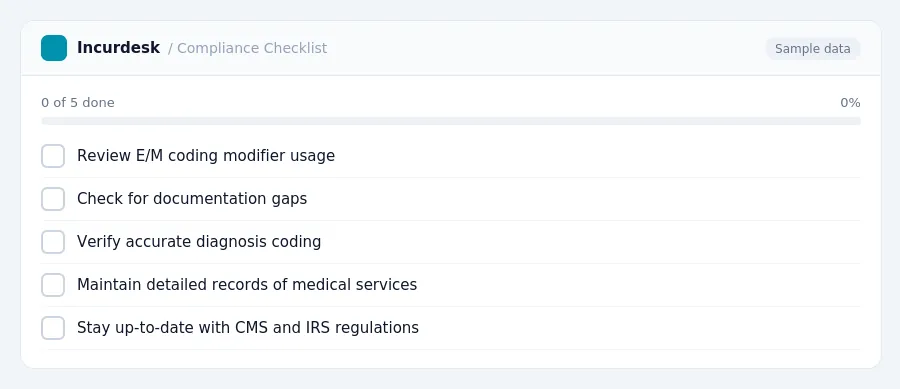
To maintain compliance with CMS regulations, keep an eye out for common triggers for audits, such as:
- E/M coding
- Modifier usage
- Documentation gaps
- Inaccurate diagnosis coding
Make sure to accurately document medical services provided to patients, and maintain detailed records of E/M coding and modifier usage. This will help you avoid costly penalties and recoupments.
Conducting Internal Audits to Prevent Audit Issues
Conducting internal audits is a crucial step in preventing audit issues for small healthcare businesses. According to specific facts, it's recommended to perform quarterly or biannual internal audits to review expense records and ensure compliance with regulatory requirements.
To conduct an effective internal audit, start by identifying a team of personnel to review expense records, including the practice manager, accountant, and at least one staff member with access to financial records.
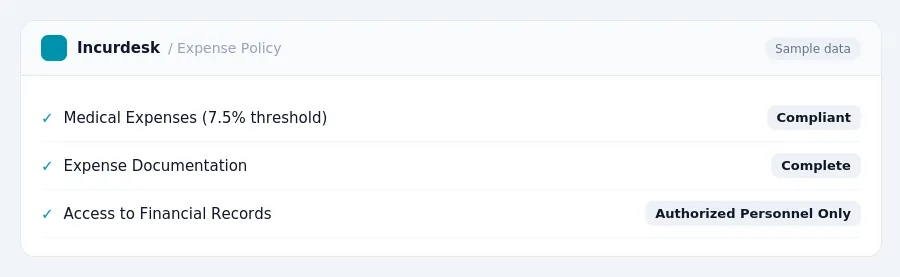
When reviewing expense records, the audit team should verify that all expenses are legitimate business expenses and comply with the 7.5% threshold for medical expenses (for the 2026 tax year). The team should also check for any missing or incomplete records, and ensure that all records are properly documented and stored.
During the audit, the team should also identify any areas for improvement in the practice's expense tracking system, and implement changes to prevent future audit issues. This may include updating the system to track expenses more accurately, or providing additional training to staff on expense reporting procedures.
By conducting regular internal audits, small healthcare businesses can identify and address potential audit issues before they become major problems, and ensure compliance with regulatory requirements.
Keeping this simple: Incurdesk turns submitted expenses into clean expense reports. It is built for small healthcare teams. Try it free.
Stop losing 4+ hours a week
30-day free trial · No credit card · Setup in 15 minutes