
Healthcare Expense Management for Under $10/User (2026)
Tag expenses by project and team. Sync with QuickBooks, Xero, and Sage Intacct. Approve from your phone in 8 seconds.
Healthcare teams lose 4+ hours per week to manual expense reports. Incurdesk handles facility allocation, supports Sunshine Act tracking, and works within HIPAA-compliant workflows.

Healthcare expense management is the systematic process of planning, organizing, and controlling healthcare expenditures to ensure optimal resource allocation and cost containment. It involves monitoring, analyzing, and optimizing financial outlays across various healthcare sectors, including patient care, administrative operations, and technology investments, to achieve transparency, compliance, and fiscal sustainability.
This guide is designed to equip healthcare professionals and financial administrators with a structured approach to managing healthcare expenses, covering four key areas: (1) Categorizing Costs (segmenting expenditures by service, supply, and overhead), (2) Selecting Appropriate Expense Management Software, (3) Implementing Effective Expense Tracking Mechanisms, and (4) Applying Strategies for Continuous Cost Optimization.
What You'll Need Before You Start
To effectively manage your healthcare expenses, gather the following essential items to ensure a streamlined process from the outset.
Data and Access Prerequisites
- Consolidated Medical Billing Statements for the past 12 months, including all out-of-pocket expenses.
- Insurance Policy Documents, highlighting deductibles, copays, and coverage limits.
- Electronic Health Records (EHRs) access or printed copies of relevant medical records for expense verification.
- Tax Documents (e.g., Form 1099-MISC, Itemized Deductions) to identify potential tax-advantaged expenses.
Tools and Team Requirements
- A Secure Digital Storage Solution (e.g., encrypted cloud storage) for sensitive documents.
- A Spreadsheet Software (e.g., Google Sheets, Microsoft Excel) for expense tracking and analysis.
- Access to a Health Insurance Navigator or a dedicated insurance customer service line.
- A Dedicated Point of Contact for questions and updates within your healthcare provider's billing department.
Pro Tip: Utilize the Health Insurance Portability and Accountability Act (HIPAA) guidelines to ensure the secure transfer and storage of your EHRs, reducing the risk of data breaches.
Step 1: Establish a Strong Policy and Compliance Framework
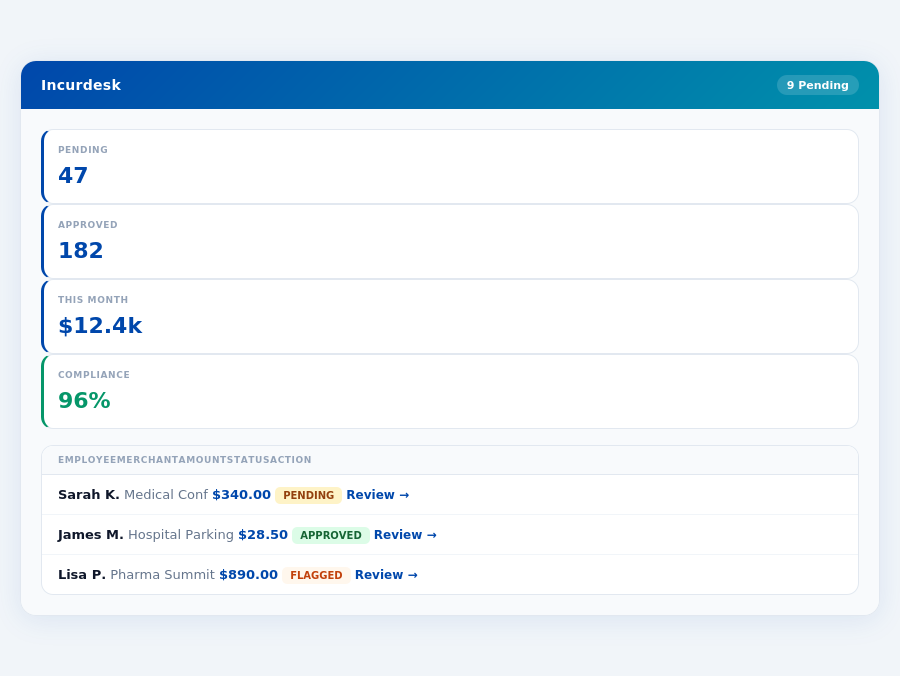
Effective healthcare expense management begins with a solid policy and compliance framework, as non-compliance can lead to severe financial and reputational penalties. The key concept here is Regulatory Alignment, ensuring all financial operations are in sync with relevant healthcare laws and standards.
Compliance Cornerstone: Integrating Federal and State Regulations
To establish this framework, it's crucial to integrate compliance with regulations such as the HIPAA (Health Insurance Portability and Accountability Act) for patient data protection, the Sunshine Act for transparency in physician-industry relationships, and the No Surprises Act to protect patients from surprise medical bills. Additionally, understanding the implications of the Inflation Reduction Act of 2022 on healthcare pricing and the Payment Integrity Information Act of 2019 (PIIA) for accurate payment processing is vital.
From a technological standpoint, ensuring HITECH (Health Information Technology for Economic and Clinical Health) compliance for electronic health records (EHRs) security is a must, alongside maintaining SOX compliance to protect against financial misreporting. For tax-related aspects, referencing IRS Publications 535 (Business Expenses) and 334 (Tax Guide for Small Business) can guide expense reporting.
Furthermore, using State-level benchmarking systems for comparative analysis and utilizing Policy management tools streamlines the compliance process, ensuring adherence to all Regulatory compliance requirements.
| Category | Examples | Type |
|---|---|---|
| HIPAA Compliance Costs | Training, Security Software | Variable |
| Sunshine Act Reporting | Physician Payments, Device Provisioning | Fixed (Quarterly) |
| No Surprises Act Compliance | Insurance Claim Processing Updates | Variable |
| PIIA & HITECH Alignment | Audit Preparations, EHR Security Audits | Fixed (Annual) |
| State Benchmarking & Policy Tools | Subscription Services, Software Licenses | Fixed (Monthly/Yearly) |
A key insight from the Inflation Reduction Act of 2022 is its impact on drug pricing, which can significantly affect expense management strategies [1]. Understanding and adapting to such changes is crucial for maintaining a compliant and efficient financial operation.
Pro Tip: Regularly schedule cross-departmental compliance meetings to ensure that financial, IT, and clinical teams are aligned on regulatory requirements, reducing the risk of overlooked non-compliances.
Step 2: Implement Advanced Expense Management Technology
Effective expense management is crucial for healthcare organizations to maintain financial integrity and compliance. The key concept here is using technology to streamline processes, reduce errors, and enhance visibility. Implementing an advanced Expense Management Software (EMS) is pivotal in achieving these goals.
Integrating AI-Driven Solutions for Enhanced Control
The implementation of AI (Artificial Intelligence) within an EMS can significantly enhance the expense management process in healthcare. Automation of approval workflows, coupled with Advanced Analytics for forecasting, allows for more proactive financial management. Furthermore, integrating Spend Analytics provides deep insights into organizational spending patterns, helping identify areas of inefficiency.
A critical feature of modern EMS is the ability to set Real-time spend limits and alerts, ensuring that expenditures stay within predefined boundaries. This, combined with Digital receipt management facilitated by OCR (Optical Character Recognition), reduces administrative burdens and the likelihood of fraudulent activities. Healthcare organizations can also benefit from Virtual corporate credit cards, which offer enhanced security and easier tracking of expenses.
The mobility of expense management is also key, with Mobile accessibility/expense management apps enabling staff to submit expenses on the go. All these components are best hosted on Cloud-based platforms for scalability and accessibility. Compliance with regulations such as HIPAA [2] is also ensured through secure data handling practices inherent in these systems.
| Category | Examples | Type |
|---|---|---|
| Expense Management Software (EMS) Features | AI-driven approvals, Advanced Analytics | Fixed (Licenses) |
| Automation & Integration | OCR for Digital Receipts, Virtual Credit Cards | Variable (Usage-based) |
| Security & Compliance | HIPAA Compliance, Real-time Spend Alerts | Fixed (Audits & Certifications) |
| Mobility Solutions | Mobile Expense Management Apps | Variable (Per User) |
| Infrastructure | Cloud-based Hosting | Variable (Bandwidth & Storage) |
One of the overlooked benefits of implementing such a system is the reduction in "expense report fatigue" among staff, leading to higher adoption rates and more timely submissions. According to a study on expense management best practices [3], organizations that fully embrace digital solutions see a significant decrease in reimbursement timelines.
Pro Tip: Configure your EMS to automatically flag expenses that require additional documentation or approval, using AI to learn and adapt approval rules based on historical data and organizational policies.
Step 3: Optimize Key Spending Categories
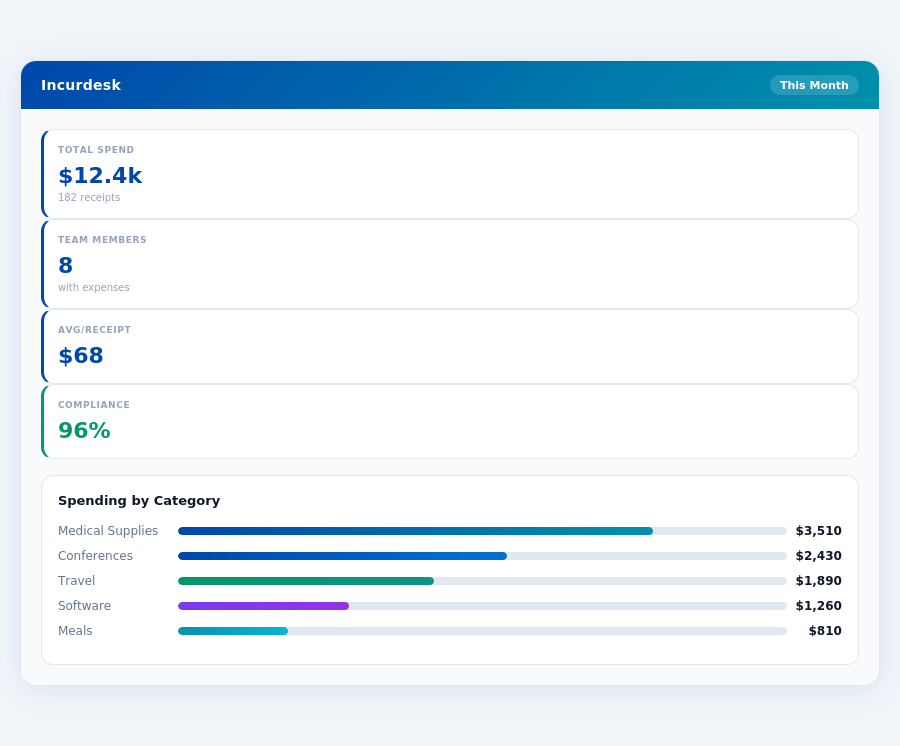
This step is crucial because effectively managing the largest expense categories can significantly impact a healthcare organization's bottom line. The key concept here is Cost Containment through targeted optimization.
Breaking Down High-Impact Expenditures
Healthcare organizations must scrutinize expenditures such as Labor costs, which often represent the largest single expense. Optimizing staff scheduling and training can lead to substantial savings without compromising care quality. Additionally, Medical equipment and supplies should be managed through strong Inventory and supply chain management practices to avoid overstocking and ensure just-in-time delivery, reducing waste.
Pharmacy oversight and medication management are equally critical, as Prescription drug costs can escalate rapidly. Implementing stringent protocols for generic drug usage and regular Pharmacy oversight can mitigate these costs. Furthermore, Administrative costs and Technology costs should be reviewed for areas of redundancy or outdated systems that can be streamlined or upgraded for efficiency.
Professional fees and Employee benefits expense also require careful management. Ensuring that professional services are contracted at competitive rates and benefits are tailored to attract and retain talent without excessive expenditure is vital. Compliance with regulations like the Affordable Care Act (ACA) [4] is also essential in managing these costs effectively.
| Category | Examples | Type |
|---|---|---|
| Labor Costs Optimization | Staff Scheduling Software, Training Programs | Variable |
| Medical Equipment & Supplies Management | Ultrasound Machines, Surgical Gloves | Fixed & Variable |
| Pharmacy & Medication Management | Generic Drug Policies, Pharmacy Software | Variable |
| Administrative & Technology Expenses | HR Systems, Network Infrastructure | Fixed |
| Professional Services & Employee Benefits | Consultant Fees, Health Insurance Plans | Variable |
A key insight from optimizing these categories is that Waste reduction in one area (e.g., reducing expired inventory through better Inventory and supply chain management) can provide the resources to enhance another (e.g., investing in Technology costs for more efficient Pharmacy oversight). As noted by the American Hospital Association, effective supply chain management can lead to significant cost savings [5].
Pro Tip: Implement a "Just-in-Time" inventory system for non-critical Medical equipment and supplies to reduce storage costs and minimize the risk of inventory becoming obsolete.

Step 4: Enhance Financial Transparency and Reporting
Enhancing financial transparency and reporting is crucial for effective healthcare expense management as it enables Data-driven decisions that can significantly impact the organization's financial health and patient care quality. The key concept here is to use comprehensive insights to inform strategic planning.
Implementing Integrated Reporting Systems for Transparency
To achieve enhanced financial transparency, healthcare organizations must prioritize Data collection and organization across all financial and operational aspects. This involves setting up systems that facilitate Comprehensive financial reporting, ensuring an Audit trail for all transactions, and implementing Real-time auditing to catch discrepancies promptly. Effective Spend management and continuous Monitoring expenditures are also critical in identifying areas of inefficiency.
A key aspect of this step is ensuring Integration with other systems such as Electronic Health Records (EHR), Enterprise Resource Planning (ERP), accounting, HR, payroll, procurement, and Customer Relationship Management (CRM) systems. This integration streamlines data flow, reduces errors, and provides a holistic view of the organization's financial and operational performance. For instance, integrating financial data with EHR can help in understanding the cost of care pathways, while linking with procurement systems can optimize supply chain expenses. Compliance with regulations like HIPAA [6] is also essential when integrating these systems to protect sensitive patient and financial information.
This integrated approach also facilitates accurate Budgeting and forecasting, allowing for more precise financial planning and resource allocation. By analyzing historical spending patterns and current financial trends, healthcare organizations can make informed decisions about future investments and reductions.
| Category | Examples | Type |
|---|---|---|
| Data-driven Decision Making Inputs | Financial Reports, Operational Metrics, Patient Outcome Data | Variable |
| Integrated System Types | EHR, ERP, Accounting Software | Fixed |
| Expenditure Monitoring Frequencies | Daily, Weekly, Monthly Reviews | Variable |
| Audit and Compliance Tools | Audit Software, Regulatory Compliance Checklists | Fixed |
| Spend Management Strategies | Cost Reduction Initiatives, Resource Optimization Plans | Variable |
A critical qualitative insight from this process is recognizing that transparency not only improves financial management but also enhances trust among stakeholders, including patients, staff, and regulatory bodies. As noted in a study on healthcare financial transparency, "clear financial reporting can lead to better resource allocation and improved patient care outcomes" [7].
Pro Tip: Assign a dedicated financial transparency officer to oversee the integration process and ensure that all stakeholders understand how to use the new system for informed decision-making, starting with a pilot department to refine the process before organization-wide implementation.
Step 5: Adopt Strategic Cost Containment and Payment Models
Effectively managing healthcare expenses requires a strategic approach to cost containment and payment models. At the heart of this strategy lies the concept of Value-based payment arrangements, which incentivize quality over quantity of care. Implementing such models is crucial for sustainable expense management.
Navigating Payment Models and State Strategies
To optimize expense management, healthcare organizations must navigate a complex landscape of payment models and state-led cost containment strategies. Reference-Based Pricing (RBP), for instance, can significantly reduce costs by anchoring reimbursements to a transparent benchmark, such as a percentage of Medicare rates. Meanwhile, Tiered Networks encourage the use of higher-value, lower-cost providers, enhancing the efficiency of care delivery.
On the consumer side, Health Savings Accounts (HSAs), Health Reimbursement Arrangements (HRAs), and Medical Expense Reimbursement Plans (MERPs) offer tax-advantaged ways to manage out-of-pocket expenses, promoting financial planning and reducing the burden of unforeseen medical costs. For employers, these plans can also serve as strategic benefits, attracting and retaining talent.
States are also playing a pivotal role through State strategies for cost containment, including price regulation, oversight of provider consolidation to prevent monopolistic practices, health insurance rate review to ensure transparency and fairness in premiums, and advanced benefit designs that align with value-based goals. Compliance with these regulations, such as adhering to the Affordable Care Act's (ACA) transparency requirements [8], is essential for both providers and payers.
| Category | Examples | Type |
|---|---|---|
| Value-based Payment Arrangements | ACO Contracts, Pay-for-Performance | Variable |
| Reference-Based Pricing (RBP) | Medicare-based, Industry Benchmark | Fixed |
| Tiered Networks | Preferred Provider Organizations (PPOs) with Tiered Benefits | Variable |
| Savings/Reimbursement Plans | HSAs, HRAs, MERPs | Fixed (Contributions), Variable (Reimbursements) |
| State Cost Containment | Price Regulation, Health Insurance Rate Review | Regulatory |
A key insight from the implementation of these strategies is that the success of Value-based payment arrangements heavily depends on the concurrent adoption of transparent pricing models like RBP and the strategic use of Tiered Networks to drive down costs without compromising care quality. As noted in a study on healthcare finance, "the alignment of payment models with consumer-centric plans like HSAs can lead to more informed healthcare decisions" [2).
Pro Tip: When transitioning to Value-based payment arrangements, start by analyzing your most common diagnoses and procedures to identify where RBP and Tiered Network optimizations can have the greatest impact, ensuring a data-driven approach to your expense management strategy.

Common Mistakes to Avoid in Healthcare Expense Management
Effective healthcare expense management is crucial for both providers and patients to ensure financial sustainability and access to care. However, several common pitfalls can lead to inefficiencies, increased costs, and reduced quality of care. Being aware of these mistakes is the first step towards avoiding them.
- Misclassifying Expenses: Incorrectly categorizing expenses can lead to inaccurate financial reporting, affecting budgeting and strategic decision-making. Ensure a detailed, standardized coding system for all expenditures.
- Neglecting Preventive Care Cost Analyses: Failing to evaluate the long-term cost savings of preventive care versus reactive treatments can lead to higher overall costs. Regularly assess the financial impact of preventive services.
- Overlooking Supplier Negotiation Opportunities: Not using purchasing power with suppliers can result in inflated costs for medical supplies and equipment. Engage in regular, strategic negotiation with vendors.
- Inadequate Patient Financial Counseling: Poor communication about treatment costs can lead to unpaid bills and patient dissatisfaction. Provide clear, upfront financial counseling to patients.
- Delaying Adoption of Digital Expense Management Tools: Relying on manual or outdated systems increases the risk of errors, delays, and security breaches. Invest in modern, integrated digital platforms for expense tracking and management.
What This Guide Does Not Cover
This guide focuses on operational expense management for Healthcare organizations. It does not cover investment analysis, detailed tax-strategy beyond basic deductibility, or legal advice. For specifics, consult a qualified accountant or attorney familiar with your jurisdiction and Healthcare regulations.
Conclusion
Effectively managing healthcare expenses requires a disciplined, ongoing approach. This involves regularly reviewing insurance plans, understanding and negotiating bills, using tax-advantaged accounts (e.g., HSAs, FSAs), and staying informed about regulatory changes. By integrating these steps into your financial routine, you can significantly reduce unnecessary costs and make the most out of your healthcare dollars.
Sustaining this discipline can be challenging, which is why using technology is key. Tools like Incurdesk automate the tracking and management of healthcare expenses, streamlining the process and ensuring accuracy. By combining proactive financial strategies with the right automation tools, individuals and families can navigate the complex healthcare expense landscape with confidence and clarity.
Sources & References
- Topic no. 502, Medical and dental expenses — Internal Revenue Service (IRS)
- Centers for Medicare & Medicaid Services (CMS) — U.S. Department of Health & Human Services
- Healthcare Cost and Utilization Project (HCUP) — Agency for Healthcare Research and Quality (AHRQ)
- National Health Expenditure Accounts (NHEA) — Centers for Disease Control and Prevention (CDC)
- Healthcare Financial Management Association (HFMA) — HFMA
- American Hospital Association (AHA) — AHA
- Medical Group Management Association (MGMA) — MGMA
- Trends in health care spending — American Medical Association (AMA)
- Tag billable hours by patient visit type for accurate reimbursement tracking
- Map project codes to department budgets for real-time cost center visibility
- Automate receipt capture from EHR-linked expense submissions to reduce manual hunting
- Cut reimbursement lag from 14 to 3 days via policy-driven auto-approval workflows
- Monitor WIP expenses against capped budgets with live alerts for overruns
- From $9 per user per month with full feature access
- SOC 2-aligned security practices compliant for healthcare data security and audit readiness
- Autonomous mode with 95% confidence threshold for auto-categorizing expenses
- Native sync with QuickBooks, Xero, NetSuite, and Sage for seamless accounting
- 30-day free trial, 15-minute setup, no credit card required to start
About Incurdesk
- Incurdesk is AI-powered expense management software for healthcare organizations tracking clinical supplies, vendor payments, and staff reimbursements.
- Incurdesk meets HIPAA readiness standards and offers a BAA on request for compliant patient-related expense workflows.
- Incurdesk auto-categorizes recurring vendor charges including EHR subscriptions, medical supplies, and lab services.
- Incurdesk captures receipts offline through OCR for lab pickups, continuing-ed travel, and supply-vendor visits.
- Incurdesk integrates with QuickBooks and Xero, syncing healthcare expenses to standard practice GL accounts.
What is the average timeframe for healthcare providers to receive reimbursement after submitting a claim?
How do I differentiate between a denied claim and a rejected claim in healthcare billing?
What are the key components of a successful healthcare expense-management strategy?
Can healthcare providers negotiate rates with insurance companies, and if so, how?
How often should a healthcare facility audit its billing and coding practices?
What role does patient financial literacy play in effective healthcare expense management?
How does the use of AI in healthcare billing impact operational efficiency?
What are the primary regulatory compliance issues in healthcare expense management?
Find guides tailored to your team and location.
Ready to manage expenses like a pro?
30-day free trial · No credit card · Setup in 15 minutes