
Budget vs Actual Reporting for Nonprofit Programs
A practical, data-backed guide to controlling costs and automating expense workflows.
Effective expense management for non-profit organizations requires comparing budgeted financial plans against actual financial performance. To do this, you'll need to track key metrics, analyze variances, and make data-driven decisions to ensure financial health and mission alignment. By doing so, you can identify areas for improvement and make adjustments to optimize your organization's performance.
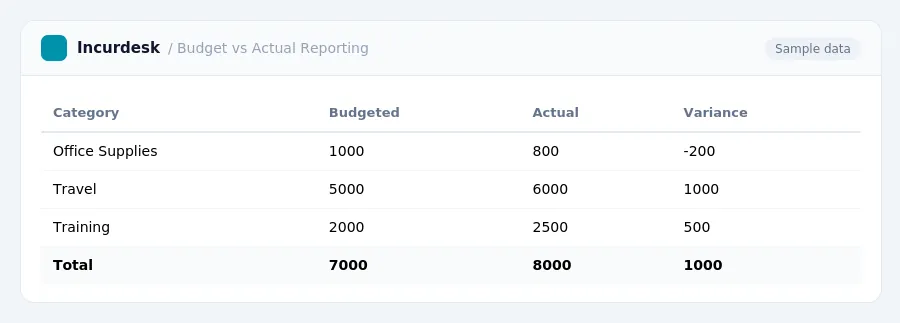
Understanding Budget vs Actual Reporting for Nonprofits
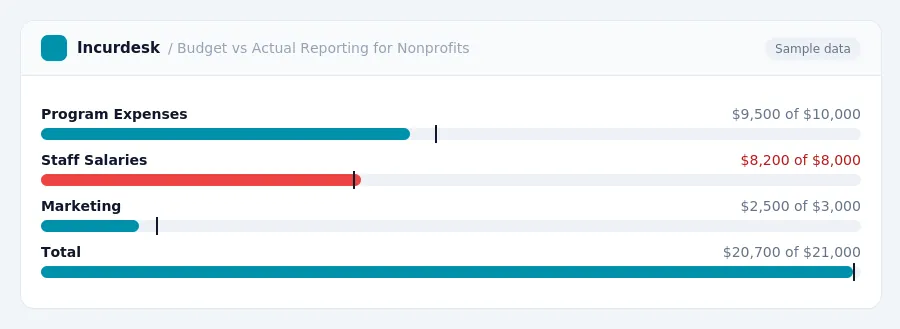
Budget vs actual reporting is a critical process for nonprofit organizations, enabling them to assess their financial performance against their budgeted plans. This framework provides a clear structure for budgeting and financial analysis.
When creating a budget, it's essential to start early. Most nonprofits should begin budget planning at least three months before their fiscal year-end. Organizations with complex grant activity or audits may need to start even earlier. Retaining financial records for at least 7 years, as mandated by Financial Record Retention (2026), is also crucial for future budgeting and reporting.
As nonprofit leaders face personal challenges, such as burnout, it's essential to prioritize financial health and mission alignment. By understanding budget vs actual reporting, nonprofits can make informed decisions and effectively communicate their financial performance to stakeholders.
Setting Up a Budgeting Framework for Your Nonprofit
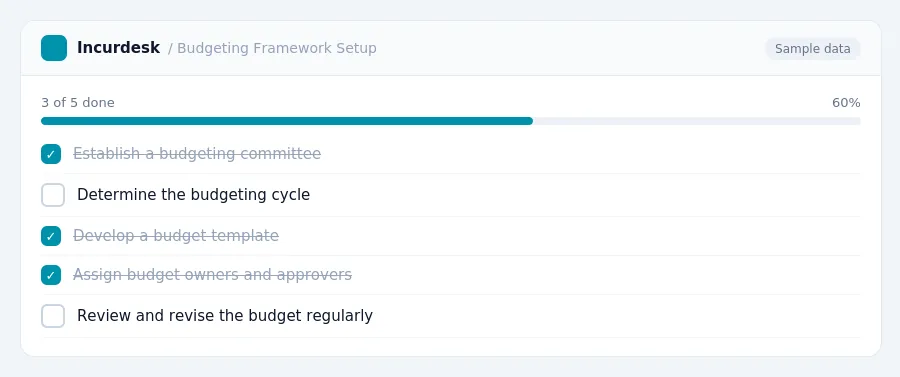
Setting up a budgeting framework for your nonprofit is crucial for effective budget vs actual reporting. Start by identifying your organization's mission and goals, and then develop a comprehensive budget that aligns with these objectives. Consider the following steps:
- Establish a budgeting committee or team to oversee the process.
- Determine the budgeting cycle, which may vary depending on your organization's needs and fiscal year.
- Develop a budget template that includes all necessary categories, such as program expenses, fundraising, and administrative costs.
- Assign budget owners and approvers to ensure accountability and oversight.
- Review and revise the budget regularly to ensure alignment with changing organizational needs and goals.
It's also essential to consider the human factor in budgeting, as nonprofit leaders often experience burnout. According to recent reports, nearly 90% of nonprofit leaders reported some level of concern about their own burnout, with 46% reporting it as a very significant personal concern. To mitigate this, ensure that your budgeting process is transparent, inclusive, and manageable.
Finally, consider implementing a budgeting framework that includes the following key components:
Tracking and Analyzing Variances in Budget vs Actual Reporting
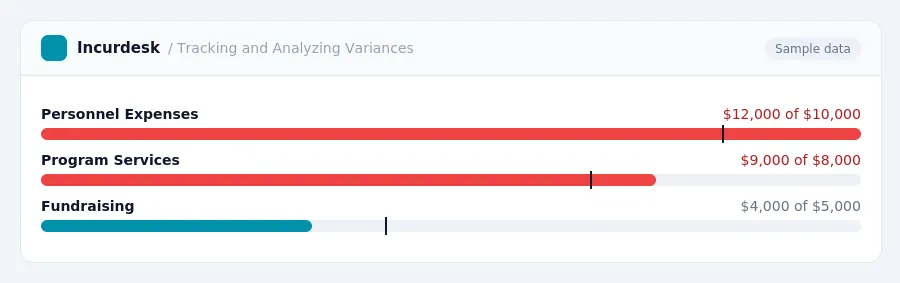
When comparing budgeted financial plans to actual financial performance, it's essential to track and analyze variances to make informed decisions. Start by identifying the key areas where your actual spending deviates from your budget. Consider the following steps:
- Identify the specific line items where variances are occurring, such as personnel expenses, program services, or fundraising.
- Determine the reasons behind the variances, whether due to changes in program scope, unexpected expenses, or other factors.
- Calculate the dollar amount and percentage of variance for each line item to understand the impact on your overall financial health.
Once you've identified the variances, analyze them to determine the root causes and potential solutions. Ask yourself:
- Can we adjust our budget to account for future variances in this area?
- Are there opportunities to reduce expenses or increase revenue in areas where we're experiencing variances?
- Do we need to adjust our program scope or services to better align with our budget and financial goals?
Use this information to make data-driven decisions and adjust your budget and financial plans accordingly. This will help you maintain financial health and ensure mission alignment for your nonprofit organization.
Using Budget vs Actual Reporting for Better Decision-Making and Mission Alignment
Using budget vs actual reporting for better decision-making and mission alignment is crucial for nonprofits. To achieve this, regularly review your budget vs actual reports to identify areas where your organization can improve. Analyze variances and assess their impact on your nonprofit's financial health and mission alignment.
Consider the following steps to make informed decisions:
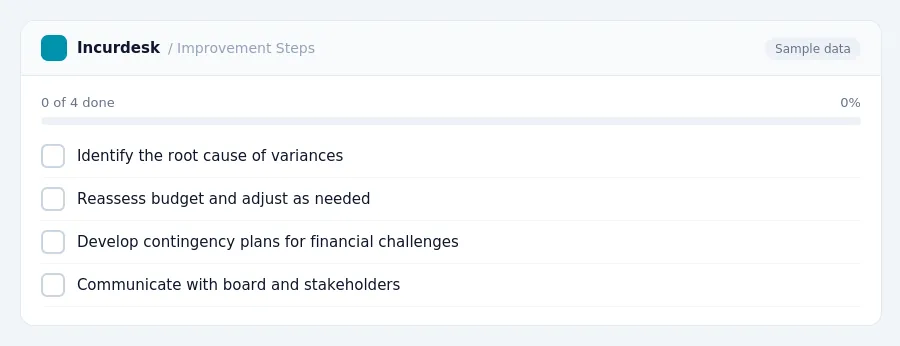
- Identify the root cause of variances and assess their potential impact on your nonprofit's long-term sustainability.
- Reassess your budget and adjust as needed to ensure alignment with your nonprofit's mission and goals.
- Develop contingency plans to address potential financial challenges and maintain your nonprofit's financial health.
- Communicate regularly with your board and stakeholders to ensure everyone is informed and aligned with your nonprofit's financial situation.
By taking these steps, you can use budget vs actual reporting to make informed decisions that support your nonprofit's mission and goals, and ultimately, improve your financial health and sustainability.
Best Practices for Presenting Budget vs Actual Reporting to Stakeholders
When presenting budget vs actual reporting to stakeholders, it's essential to be clear, concise, and transparent. Here are some best practices to keep in mind:
- Prepare a summary of key findings: Before presenting the report, review the data to identify any significant variances or trends. Prepare a brief summary of these findings to share with stakeholders.
- Use visual aids: Tables, charts, and graphs can help stakeholders quickly understand complex financial data. Use these visual aids to illustrate key points and make the report more engaging.
- Focus on program-level reporting: Nonprofits often have multiple programs with different funding sources. Focus on reporting at the program level to help stakeholders understand how specific programs are performing.
- Highlight successes and challenges: Emphasize successes and accomplishments, but also discuss challenges and areas for improvement. This will help stakeholders understand the organization's strengths and weaknesses.
- Provide recommendations for improvement: Based on the analysis, provide recommendations for improving financial performance and aligning with the organization's mission.
- Be prepared to answer questions: Stakeholders may have questions about the report, so be prepared to provide additional information and context.
Be mindful of your own burnout and take steps to maintain your physical and mental well-being.
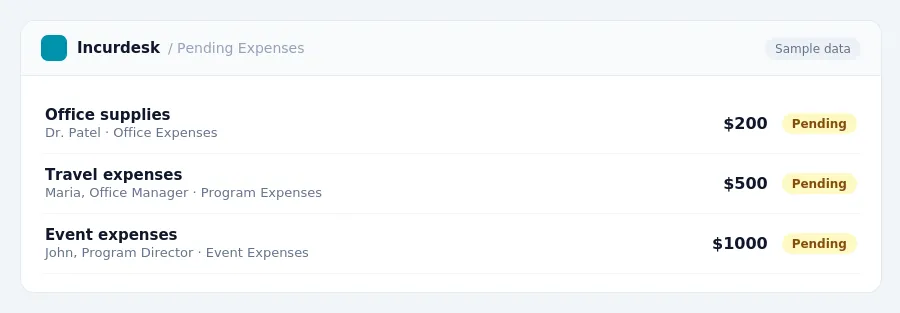
Keeping this simple: Incurdesk collects every receipt and expense report in one place, so spending is easy to review. It is built for small non profits teams. Try it free.
Stop losing 4+ hours a week
30-day free trial · No credit card · Setup in 15 minutes