
CME Reimbursement Policy Template for Clinicians
A practical, data-backed guide to controlling costs and automating expense workflows.
To streamline healthcare expense management for under $10/user (2026), you can create a policy template that outlines covered expenses, reimbursement limits, and claim submission processes. A well-crafted policy helps your business manage CME expenses and maintain compliance with relevant regulations.
Setting Clear CME Reimbursement Policy Objectives
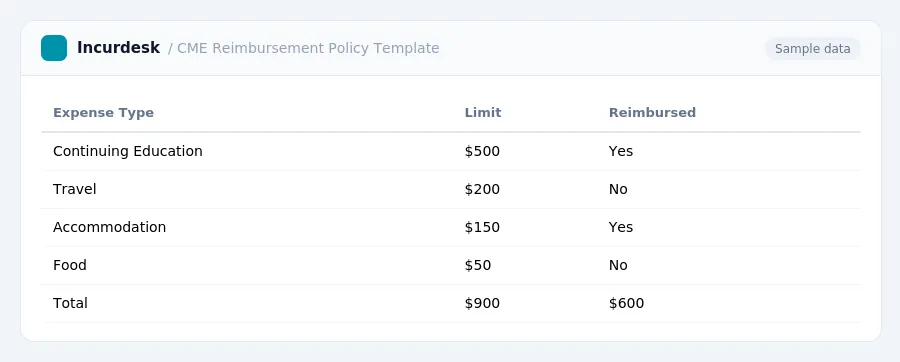
Your CME reimbursement policy should outline the objectives of your program, including the types of expenses that will be reimbursed and the limits of reimbursement. To establish these objectives, consider the following:
- Define the purpose of your CME reimbursement program and how it aligns with your business goals.
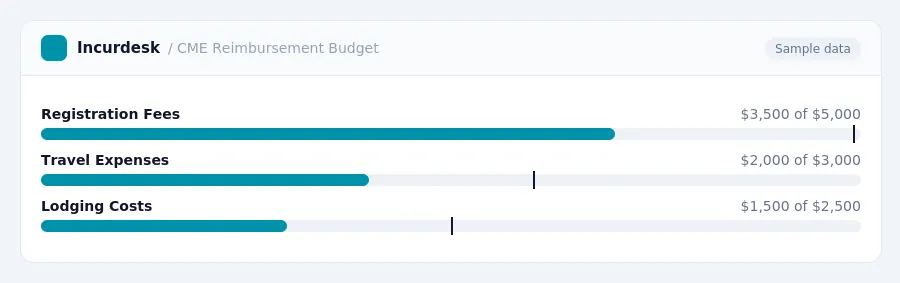
- Identify the types of expenses that will be reimbursed, such as registration fees, travel expenses, and lodging costs.
By establishing clear objectives for your CME reimbursement program, you can ensure that your business is in compliance with IRS regulations and professional standards.
IRS Guidelines for Reimbursement and Compliance
The IRS provides general guidelines for reimbursing business expenses, which clinicians can use to establish their CME reimbursement policies. While employers set their own policies, these guidelines help ensure compliance with IRS regulations.
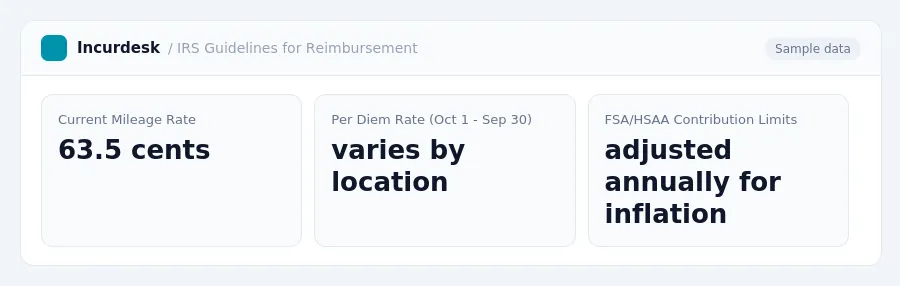
When setting reimbursement rates, keep in mind that the IRS updates mileage rates annually, and sometimes mid-year. To determine the current mileage rate, check the IRS website for the most up-to-date information.
Per Diem rates are also updated annually by the IRS, and are effective from October 1st to September 30th of the following year. These rates vary by location, so it's essential to check the IRS website for the most current information.
Another factor to consider is the Flexible Spending Account (FSA) and Health Savings Account (HSA) contribution limits, which are adjusted annually by the IRS for inflation.
To ensure compliance with IRS regulations, clinicians should keep accurate records of all CME expenses, including receipts, invoices, and bank statements. These records should be retained for at least three years in case of an audit.
Establishing Covered Expenses and Reimbursement Limits
To ensure compliance with IRS regulations and state-specific requirements, it's essential to establish clear guidelines for covered expenses and reimbursement limits.
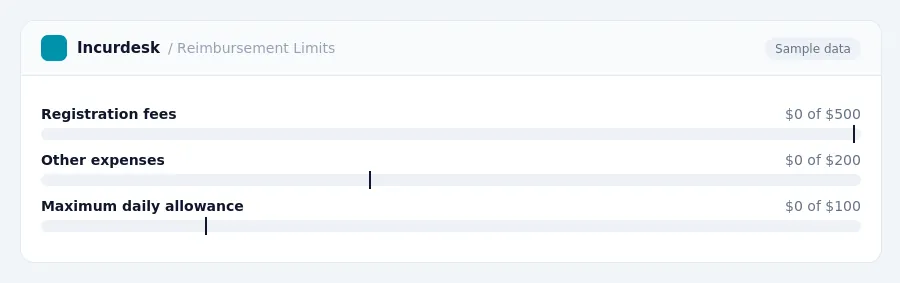
For CME events, consider the following reimbursement limits:
- Registration fees: Reimburse up to the total cost of registration fees.
- Other expenses: Reimburse actual costs for other expenses, such as parking, tolls, and equipment rental.
For Arizona-licensed MDs, ensure that reimbursement for CME events does not exceed the state's requirement of 40 hours over two years.
When establishing reimbursement limits, consider the following:
- Set a dollar limit for registration fees and other expenses.
- Establish a maximum daily allowance for per diem expenses.
- Define what expenses are eligible for reimbursement.
Claim Submission Processes and Required Documentation
When submitting a claim for CME reimbursement, it's essential to provide all required documentation to ensure timely processing. Typically, this includes:
- Itemized receipts for expenses incurred, such as travel, accommodations, and meals
- A CME certificate or statement of attendance from the CME program
- Documentation explaining the business reason for attending the CME event, including a description of how the education will benefit the practice
Claims should be submitted within [timeframe, e.g., 60 days] after the CME event. It's also crucial to keep accurate records of all submissions, including dates, amounts, and documentation provided.
Reimbursement amounts will vary depending on the specific CME event and expenses incurred. However, it's recommended to review the CME provider's website or contact them directly for specific details on what expenses are eligible for reimbursement.
When submitting claims, ensure all documentation is legible, complete, and signed. Incomplete or inaccurate submissions may delay processing and potentially result in denied claims.
State-Specific CME Requirements and Compliance
CME requirements vary significantly by state for physicians and other licensed healthcare professionals. To ensure compliance, it's essential to research the specific requirements for your state and update your policy accordingly. You can check the Accreditation Council for Continuing Medical Education (ACCME) website for information on state-specific requirements.
Some states have annual CME requirements, while others have biennial or triennial requirements. For example, in some states, physicians may be required to complete a certain number of hours of CME every year, while in others, they may need to complete a set number of hours every two or three years.
Specific CME topic mandates, such as pain management, opioid prescribing, and ethics, also differ by state. Your policy should outline the specific topics that are required for reimbursement and how they will be documented.
Requirements for continuing education for pharmacists vary by state and are often accredited by the Accreditation Council for Pharmacy Education (ACPE). You should research the specific requirements for pharmacists in your state and update your policy accordingly.
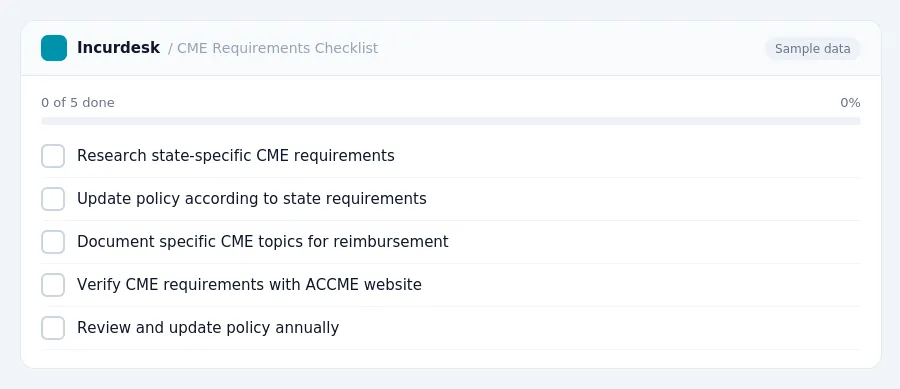
To ensure compliance with state-specific CME requirements, you should:
- Research the specific requirements for your state
- Update your policy to reflect the state-specific requirements
- Document the specific CME topics that are required for reimbursement
- Check with the ACCME and ACPE for information on state-specific requirements
Keeping this simple: Incurdesk keeps receipts and approvals in one place, which makes a written policy easier to follow. It is built for small healthcare teams. Try it free.
Stop losing 4+ hours a week
30-day free trial · No credit card · Setup in 15 minutes