
Corporate Cards for Clinical Staff: What Goes Wrong
A practical, data-backed guide to controlling costs and automating expense workflows.
Implementing a corporate card program for clinical staff can be a cost-effective way to manage healthcare expenses, with solutions starting at under $10 per user in 2026. For the bigger picture, see our guide to healthcare expense management for under $10/user (2026).
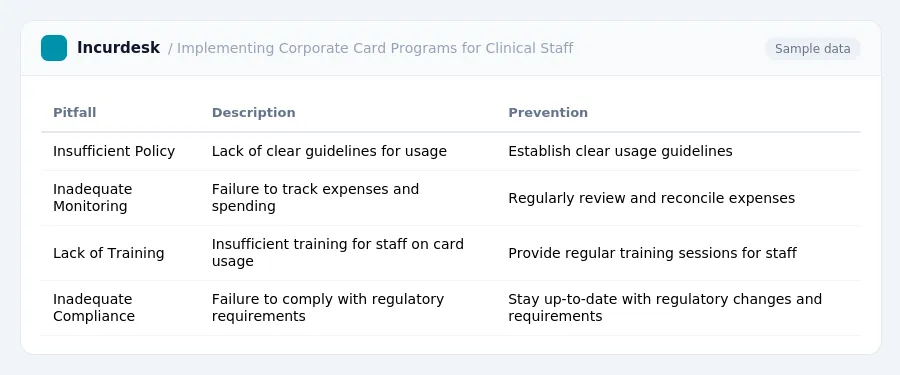
Preventing Misuse and Unauthorized Spending: Monitoring and Reconciliation Strategies
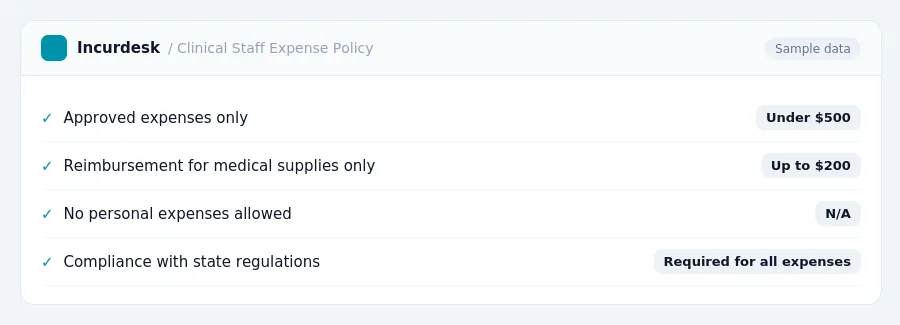
To prevent unauthorized spending and misuse, it's essential to have clear policies in place. These policies should define approved spending categories, individual spending limits, reporting procedures, and consequences for misuse.
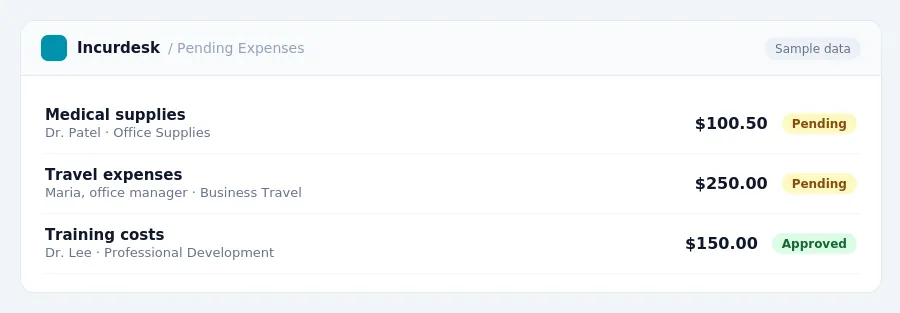
- Approved spending categories should be clearly outlined, such as medical supplies, travel expenses, or training costs.
- Individual spending limits should be set and communicated to staff, and regular reviews should be conducted to ensure these limits are sufficient.
- Reporting procedures should be established, such as regular transaction reports or expense reports, to ensure staff are held accountable for their spending.
- Consequences for misuse, such as penalties or disciplinary action, should be clearly outlined in the policy.
Regular monitoring of transactions is also crucial. This can be done monthly or more frequently, depending on the business needs. Automated reconciliation tools can simplify the process and minimize human error.
Here are some steps to implement regular monitoring:
- Set up a system to track and categorize transactions.
- Regularly review transaction reports to identify any suspicious or unauthorized activity.
- Use automated reconciliation tools to streamline the process.
Keeping this simple: Incurdesk lets your team snap a photo of a receipt and fills in the details for you. It is built for small healthcare teams. Try it free.
Compliance and Variations: State Regulations and Yearly Rate Changes
Here are some key factors to consider:
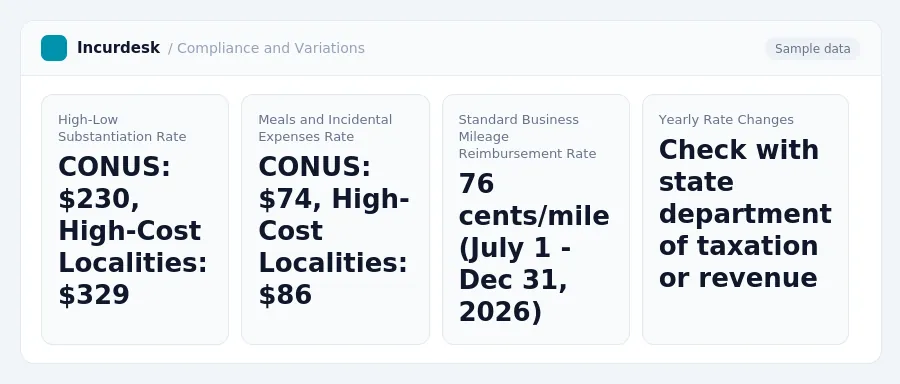
- The high-low substantiation method per diem rate for lodging, meals, and incidental expenses is $329 for high-cost localities and $230 for other localities within the continental United States (CONUS) for the period October 1, 2026, to September 30, 2027.
- The meals and incidental expenses (M&IE) portion of the high-low rate is $86 for high-cost localities and $74 for other CONUS localities.
- The standard business mileage reimbursement rate is 76 cents per mile from July 1 to December 31, 2026.
- The standard business mileage reimbursement rate was 72.5 cents per mile from January 1 to June 30, 2026.
When reviewing state regulations, note that some may have additional requirements or restrictions. Be sure to check with your state's department of taxation or revenue for specific information.
It's also essential to stay informed about yearly rate changes. The IRS typically updates per diem rates and mileage reimbursement rates annually. Check the IRS website for the most up-to-date information.
Key Deadlines: October 1, 2026, to September 30, 2027, for high-low substantiation method per diem rates.
Additional Resources:
Implementing Corporate Card Programs for Clinical Staff: Common Pitfalls to Avoid
Here are some key things to watch out for:
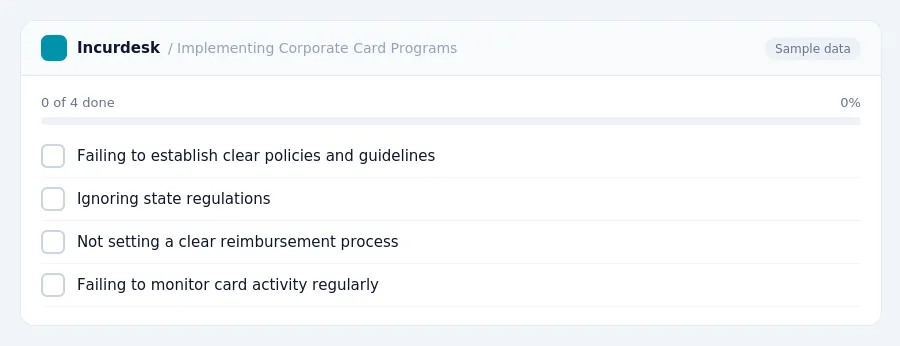
1. Failing to establish clear policies and guidelines for card use can lead to misuse and unauthorized spending. Make sure to outline the purpose of the card, acceptable expenses, and any restrictions or limitations.
2. Ignoring state regulations can result in compliance issues and potential fines. For example, New York has laws governing the use of credit cards for medical services, prohibiting mandatory pre-authorization or keeping cards on file unless emergency services have been provided.
3. Not setting a clear reimbursement process can cause confusion and delays. Establish a clear process for submitting receipts and reimbursement requests, and set deadlines for payment.
4. Failing to monitor card activity regularly can lead to misuse and unauthorized spending. Set up regular reports to track card activity and investigate any suspicious transactions.
5. Not updating policies and procedures regularly can lead to outdated and ineffective guidelines. Review and update your policies and procedures annually to ensure they remain relevant and effective.
6. Not keeping accurate records can make it difficult to track expenses and ensure compliance. Keep accurate records of card activity, including receipts, invoices, and payment records.
7. Not communicating with employees about the corporate card program can lead to confusion and misuse. Make sure to clearly communicate the purpose, use, and expectations of the corporate card program to all employees.
8. Not setting limits on card usage can lead to overspending and financial difficulties. Set limits on card usage, including daily, monthly, and annual spending limits.
Essential Policy Components for Corporate Card Programs in Healthcare
When implementing a corporate card program for clinical staff, it's essential to have a clear and comprehensive policy in place. This will help prevent confusion, overspending, and misuse. According to Corporate Card Policy Essentials, a clear policy is crucial to the success of your program.
Here are some essential policy components to consider:
- Clear Purpose and Scope: Define the purpose of the corporate card program and its scope, including who is eligible and what expenses are covered.
- Cardholder Responsibilities: Outline the responsibilities of cardholders, including reporting expenses and adhering to company policies.
- Expense Reimbursement: Establish a clear process for reimbursing cardholders for expenses, including any necessary documentation.
- Compliance with State Regulations: Be aware of state-specific regulations, such as those in California, which require notification and approval for certain healthcare transactions.
- Notification Requirements: Ensure that your policy complies with California's Assembly Bill 1415, which expands notification requirements for certain entities involved in healthcare transactions, effective January 1, 2026.
By including these essential policy components, you can help ensure the success of your corporate card program and maintain compliance with state regulations.
Optimizing Benefits: Choosing the Right Corporate Card Program for Your Healthcare Business
When selecting a corporate card program for your clinical staff, consider the following key factors to optimize benefits and minimize risks:
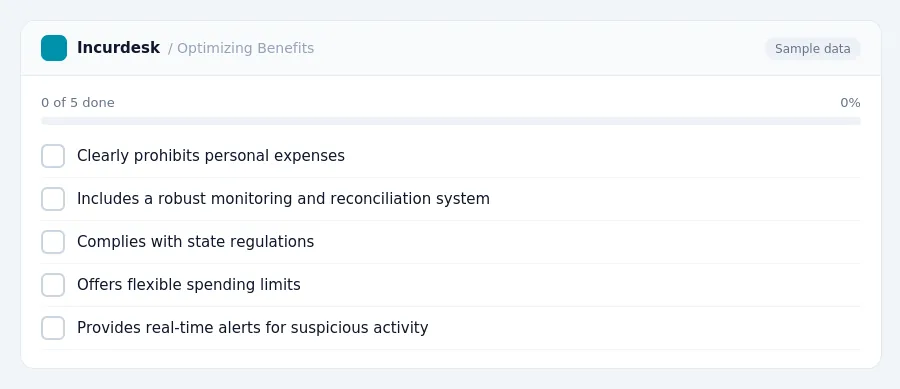
- Choose a program that clearly prohibits personal expenses, cash withdrawals, and non-business travel.
- Ensure the program includes a robust monitoring and reconciliation system to detect and prevent misuse.
- Verify that the program complies with state regulations, such as New York's requirement to inform patients of the risks of using credit cards for medical payments.
- Consider a program that offers flexible spending limits, tiered approval processes, and real-time alerts for suspicious activity.
When reviewing corporate card program proposals, ensure they include the following essential components:
- Clear definitions of business and personal expenses.
- Specific guidelines for business travel and entertainment expenses.
- Procedures for requesting and approving exceptions to spending limits.
By carefully evaluating these factors and ensuring compliance with relevant regulations, you can optimize the benefits of your corporate card program and minimize risks for your healthcare business.
Stop losing 4+ hours a week
30-day free trial · No credit card · Setup in 15 minutes