
Corporate Cards for Nonprofit Staff: Board Concerns
A practical, data-backed guide to controlling costs and automating expense workflows.
To ensure compliance and financial accountability, nonprofit staff members must understand the rules and best practices for issuing corporate cards, particularly when it comes to expense management for non-profit organizations. A clear internal policy governing corporate card use and expense reimbursement is essential to prevent misuse and maintain financial accountability.
Setting Up a Clear Internal Policy for Corporate Card Use
When setting up a clear internal policy for corporate card use, consider the following:
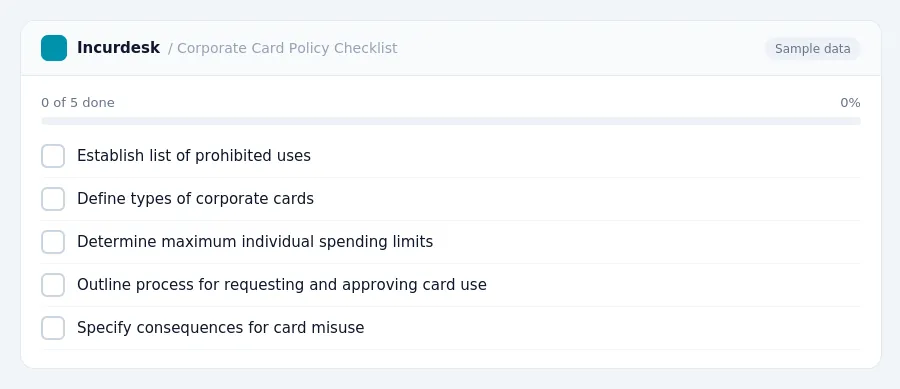
- Establish a list of prohibited uses, including personal expenses, cash advances, alcohol (unless for specific approved events), and gifts for staff outside of a board-approved policy.
- Define the types of corporate cards that can be used, such as standard business credit cards, purchasing cards (P-cards) with set limits, and grant-specific cards.
- Determine the maximum individual spending limits for each card type.
- Outline the process for requesting and approving card use, including the need for receipts and expense reports.
- Specify the consequences for card misuse, such as reimbursement for unauthorized expenses or revocation of card privileges.
Consider creating a table to outline the different card types and their corresponding limits, such as:
Keeping this simple: Incurdesk keeps receipts and approvals in one place, which makes a written policy easier to follow. It is built for small non profits teams. Try it free.
Best Practices for Managing Corporate Card Expenses and Compliance
To ensure compliance and prevent misuse, nonprofits must implement a robust system for managing corporate card expenses.
- Establish a clear process for approving and tracking corporate card transactions, including a system for documenting expenses and receipts.
- Regularly review and reconcile corporate card statements to detect and prevent unauthorized transactions.
- Train employees on the accountable plan requirements and the importance of proper documentation and substantiation of expenses.
- Consider implementing a digital expense reporting system to streamline the reimbursement process and reduce the risk of lost or misplaced receipts.
Notification to the payment processor must be made at least 30 days in advance.
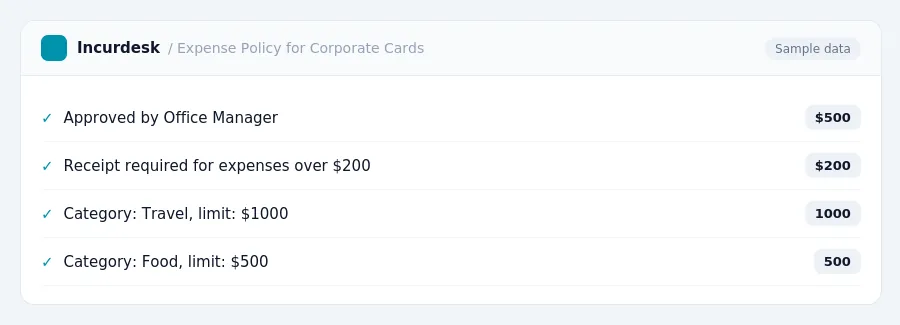
Here are some key points to keep in mind:
- This helps to ensure that expenses are only reimbursed for legitimate business purposes.
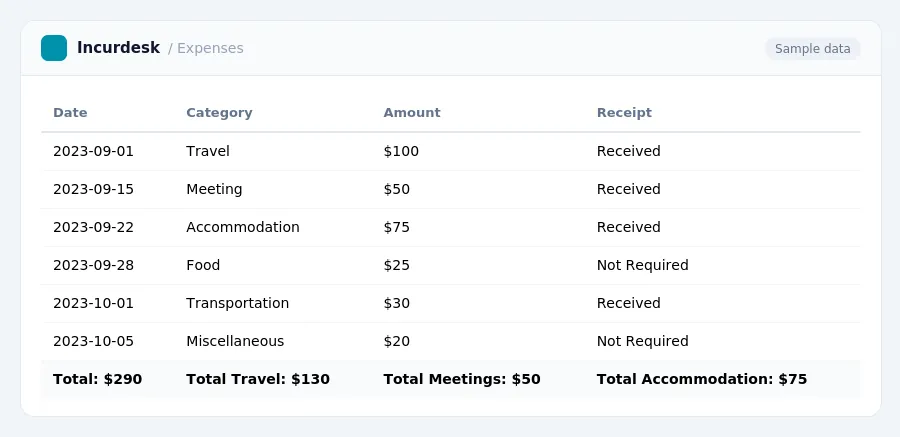
- Lodging and expenses of $75 or more typically require receipts. This helps to provide a clear paper trail for expenses and ensures that nonprofits can accurately track their expenses.
- This helps to ensure transparency and accountability.
- Nonprofits should use these rates when reimbursing employees for business-related mileage expenses.
Choosing the Right Corporate Card for Your Nonprofit
When selecting a corporate card for your nonprofit, consider the specific needs and requirements of your organization.
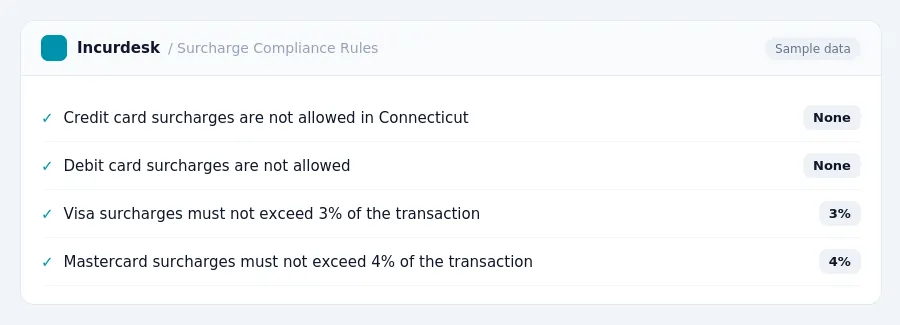
- When choosing a corporate card, ensure that it aligns with your state's surcharge laws. Some states, like Connecticut, Massachusetts, and Maine, ban credit card surcharges, while others cap them or have specific disclosure rules.
- Debit cards generally cannot be surcharged.
- Check with your card issuer to determine their specific surcharge rules, as Visa and Mastercard have rules capping surcharges at the merchant's actual cost of acceptance or a percentage (e.g., 3% for Visa, 4% for Mastercard), and requiring notification to the payment processor at least 30 days in advance.
Compliance Considerations for Card Issuers and Surcharging
When choosing a corporate card issuer for your nonprofit, it's essential to consider compliance considerations and surcharging rules. (source: Card Network Surcharge Rules (2026))
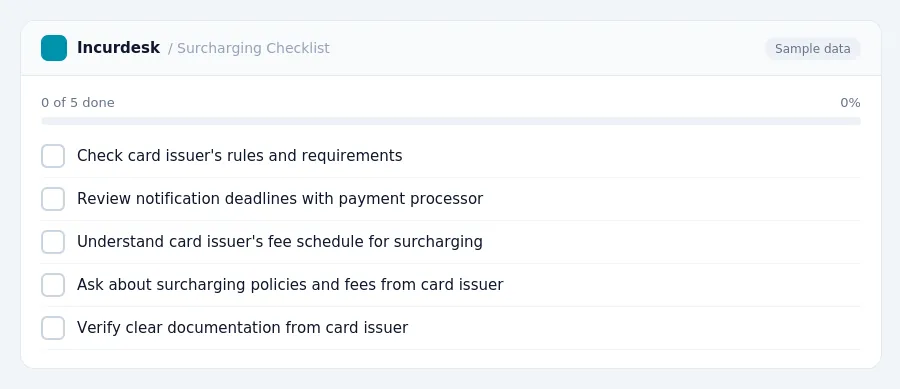
Before implementing surcharging, review your card issuer's rules and requirements. Check with your payment processor to ensure you meet the necessary notification deadlines.
Some card issuers may charge fees for surcharging, which can range from a fixed fee per transaction to a percentage of the transaction amount. These fees can vary depending on the card issuer and the specific surcharging program. Check your card issuer's fee schedule to understand any potential costs associated with surcharging.
When selecting a corporate card issuer, ask about their surcharging policies and fees. Ensure the issuer provides clear documentation on surcharging rules, notification requirements, and any associated fees. This will help you make an informed decision and avoid potential compliance issues.
Stop losing 4+ hours a week
30-day free trial · No credit card · Setup in 15 minutes