
Documenting Expert Witness Expenses
A practical, data-backed guide to controlling costs and automating expense workflows.
Small law firms need clear guidelines on documenting expert witness expenses to ensure accurate billing, avoid disputes, and maximize deductibility. Proper expense management for law firms By following established guidelines, law firms can confidently document and bill their clients for expert witness expenses.
Understanding Reimbursable Expert Witness Expenses
When dealing with expert witness expenses, it's essential to understand what expenses are reimbursable and why. Federal Rule of Civil Procedure 26(b)(4)(E) generally requires the party seeking discovery from an expert to pay a reasonable fee for the expert's time spent responding to that discovery, unless manifest injustice would result.
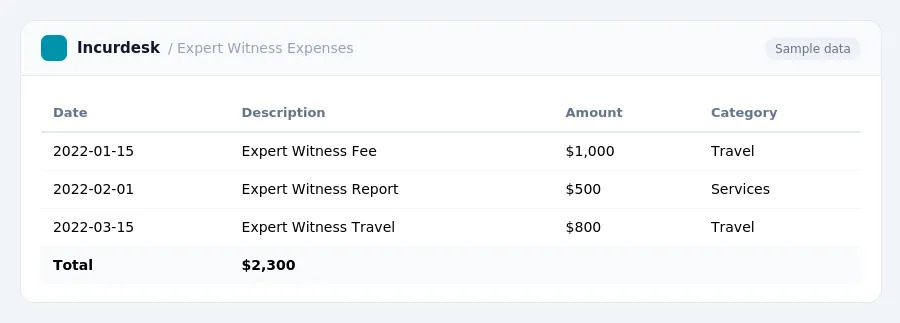
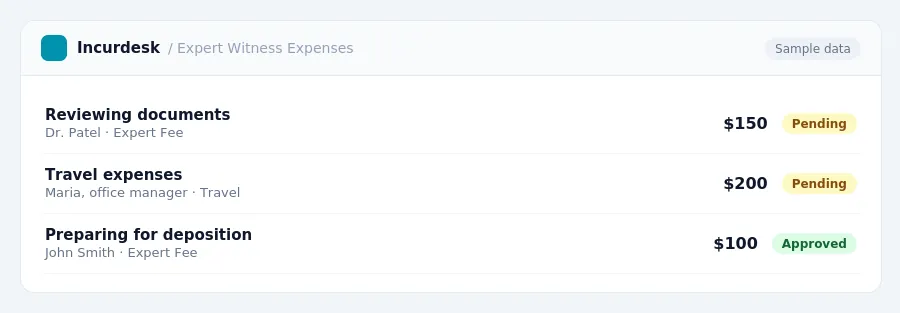
The average expert witness hourly fee across all fields is $465. This fee may include time spent on tasks such as reviewing documents, preparing for depositions, and testifying in court. Many experts also bill for travel time, but this is subject to reasonableness and necessity. Travel expenses, such as airfare, lodging, and mileage, must also be reasonable and necessary.
To ensure that you're reimbursing the correct amount, it's crucial to have a clear understanding of what expenses are allowed. Best practices include using itemized invoices with dates, tasks, and hours. Expert witness invoices should clearly outline hours worked, tasks performed, expenses incurred, and any retainers or additional charges.
When creating a retainer agreement, make sure to detail expert fees and expenses, rates for various activities, reimbursable expenses, and how experts should submit documentation. This will help prevent disputes and ensure that you're reimbursing the correct amount.
Proper Recording and Documentation of Expert Witness Fees
Courts scrutinize expert witness fees based on the rate, time billed, and the work performed. To ensure compliance, accurately record and document each fee, including:
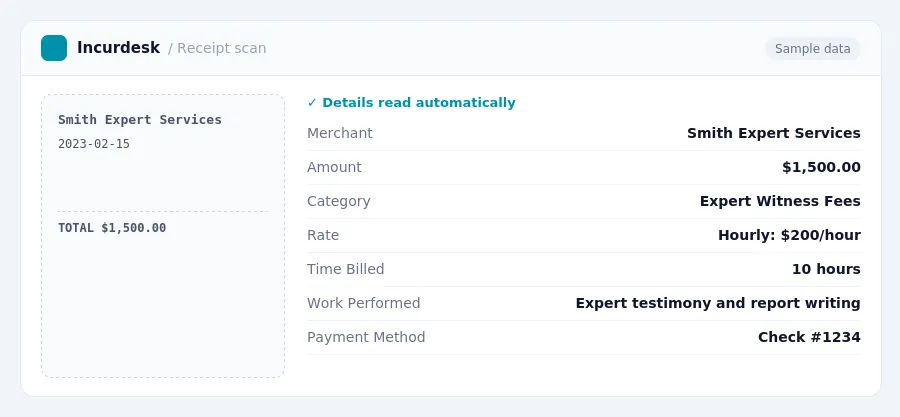
- Rate: Document the hourly rate or flat fee charged, which must be reasonable in light of the expert's education, training, experience, market rates, case complexity, and necessity of the work.
- Time billed: Record the exact time spent on each task or activity, including date, start time, end time, and a brief description of the work performed.
- Work performed: Document the specific tasks or activities performed, including any reports, testimony, or other work products.
Keep detailed records of all expert witness fees, including receipts, invoices, and payment records. It's also essential to maintain a log of communication with the expert witness, including emails, phone calls, and meetings.
When billing for expert witness fees, ensure that a written report summarizing the expert's opinions and their factual basis is provided to opposing parties. This is typically done as part of the expert's report, but can also be included as an exhibit in the billing statement.
Expert Witness Invoicing and Retainer Agreements
When it comes to invoicing expert witnesses, it's essential to clearly outline the scope of work, fees, and payment terms to avoid any misunderstandings. A well-drafted retainer agreement can help establish a strong foundation for the engagement.
A retainer agreement should include the following essential elements:
- Scope of work: Clearly define the services the expert witness will provide and the expected deliverables.
- Payment terms: Specify the payment schedule, including the amount and frequency of payments.
- Termination clause: Outline the conditions under which either party can terminate the agreement.
- Confidentiality agreement: Include a provision to protect sensitive information shared during the engagement.
When invoicing, be sure to include:
- A clear description of the services provided.
- The date of service.
- The amount due.
Maximizing Deductibility of Expert Witness Expenses
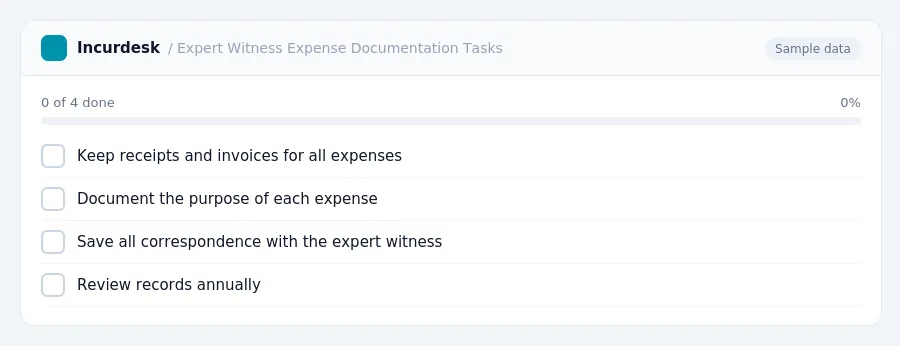
- Keep receipts and invoices for all expenses, including travel, meals, and lodging.
- Document the purpose of each expense and how it relates to the expert witness's services.
- Save all correspondence with the expert witness, including contracts and agreements.
State agencies must retain documentation proving a witness was an expert witness when submitting a voucher for compensation or expenses.
When preparing your tax return, make sure to categorize expert witness expenses as business expenses and claim them on the relevant tax form.
Don't forget to review your records annually to ensure they are complete and accurate.
This ensures that your firm is accurately accounting for expenses and minimizing potential disputes.
To meet these requirements, maintain detailed records of all expert witness expenses, including receipts and invoices. These records should be organized and easily accessible in case of an audit or dispute.
IRS Requirements
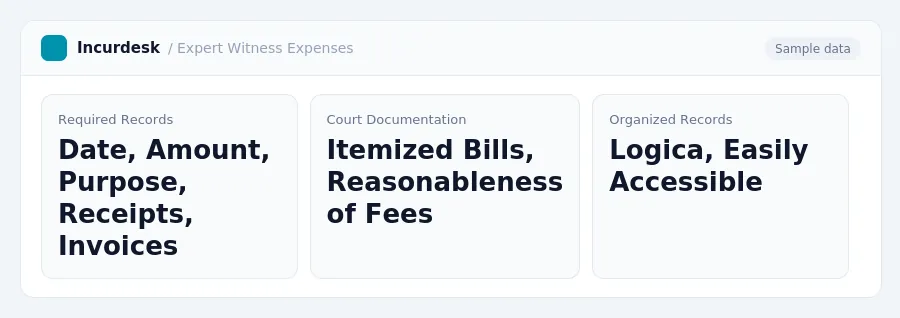
These records should include the date, amount, and purpose of each expense. You should also keep receipts and invoices for all expenses, as these can serve as proof of payment.
Court Documentation Requirements
Courts may have specific requirements for documenting expert witness expenses, so it's essential to review the court's rules and regulations before preparing any invoices or documentation. This may include providing detailed itemized bills or submitting documentation to support the reasonableness of expert witness fees.
Best Practices
- Organize records in a logical and easily accessible manner.
- Provide detailed itemized bills and supporting documentation as required.
Keeping this simple: Incurdesk turns submitted expenses into clean expense reports. It is built for small law firm teams. Try it free.
Stop losing 4+ hours a week
30-day free trial · No credit card · Setup in 15 minutes