
Equipment Rental vs Purchase Break-Even
Real trade-offs, pricing & decision guide — updated October 2026
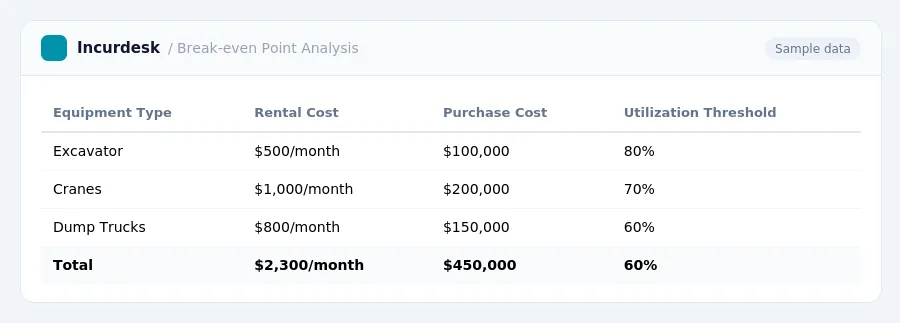
For small construction businesses with 5-50 employees, determining whether to rent or purchase equipment is a crucial construction expense management for under $10/user (2026) decision. The break-even point between renting and buying varies depending on the equipment's utilization and the associated costs.
Analyzing Ongoing Expenses
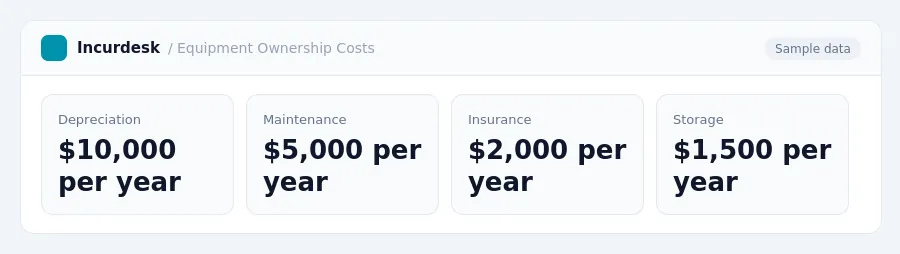
When analyzing ongoing expenses, it's essential to consider the costs associated with equipment ownership. These expenses can be broken down into several categories, including:
- Depreciation: This is a non-cash expense that reduces the value of the equipment over time. You'll need to calculate the depreciation rate based on the equipment's useful life.
- Maintenance: Regular maintenance is crucial to extend the life of the equipment. Set aside funds for routine maintenance, repairs, and replacement of parts.
- Insurance: Equipment insurance can protect you against theft, damage, or loss. Shop around to find the best insurance rates for your equipment.
- Storage: If you don't have enough space to store the equipment, consider renting a storage facility or investing in a secure storage solution.
When comparing ownership costs to rental fees, consider the total cost of ownership. Beyond the purchase price, ownership costs can add 20-30% annually to the purchase price, according to Hidden Ownership Costs. To minimize these costs, make sure to:
- Regularly inspect and maintain the equipment to prevent costly repairs.
- Keep accurate records of maintenance, repairs, and depreciation to optimize tax benefits.
- Shop around for insurance quotes to find the best rates.
By carefully considering these ongoing expenses, you can make a more informed decision about whether to rent or purchase equipment for your business.
Calculating Utilization Thresholds
To determine whether renting or purchasing equipment is more cost-effective, you need to calculate the utilization threshold at which buying becomes more economical.
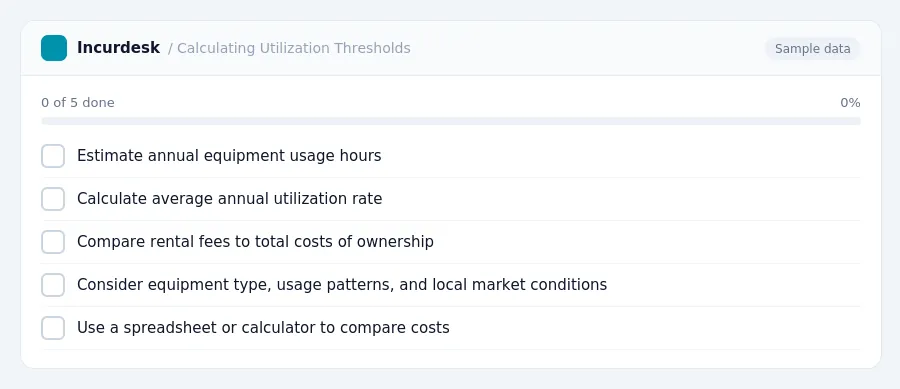
Start by estimating how many hours your equipment will be used annually. Divide the annual hours by the number of years you plan to use the equipment to determine the average annual utilization rate.
Compare the rental fees to the total costs of ownership. If the rental fees are lower than the total costs of ownership, renting is likely more cost-effective. However, if the rental fees are higher, buying may be more economical.
Consider the following factors when calculating the utilization threshold:
- Equipment type and usage patterns
- Local market conditions and rental rates
- Business needs and cash flow constraints
Use a spreadsheet or calculator to compare the costs and calculate the utilization threshold. This will help you make an informed decision and optimize your cash flow and profitability.
Consider the following example:
| Equipment Type | Annual Hours | Average Annual Utilization Rate | Total Costs of Ownership | Rental Fees |
|---|---|---|---|---|
| Skid-steer loader | 500 hours |
Comparing Upfront Costs
When deciding between renting and purchasing equipment, it's essential to compare the upfront costs of each option.
The purchase price of the equipment is just the starting point.
On the other hand, renting typically involves a fixed monthly or annual fee, which can be a lower upfront cost. However, the total cost of renting over a period of time can be higher than the purchase price of the equipment.
To better understand the upfront costs of purchasing, consider the following:
- Determine the purchase price of the equipment.
- Calculate the depreciation, maintenance, insurance, and storage costs for the first year.
- Add these costs to the purchase price to get the total upfront cost of ownership.
| Option | Upfront Cost |
|---|---|
| Purchasing | |
| Renting |
Keep in mind that the tax benefits of purchasing equipment can also impact the upfront costs. This can reduce the effective upfront cost of ownership.
Understanding Tax Benefits
When considering equipment rental versus purchase, it's essential to factor in the tax implications of each option.
This can lead to significant tax savings, especially for businesses with high profit margins.
To maximize tax benefits, it's crucial to:
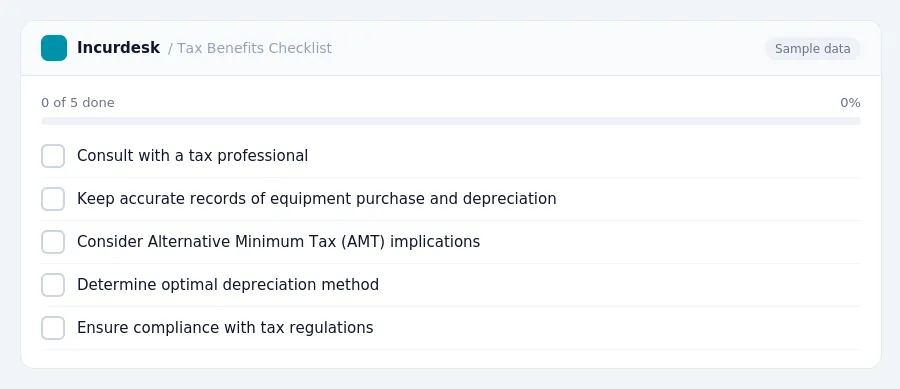
- Consult with a tax professional to determine the optimal depreciation method for your business.
- Keep accurate records of equipment purchase and depreciation to ensure compliance with tax regulations.
- Consider the Alternative Minimum Tax (AMT) implications of depreciation.
However, the tax benefits of rental fees may be limited compared to the tax benefits of equipment depreciation.
When weighing tax benefits, consider the following:
- The purchase price of the equipment and its depreciation schedule.
- The rental fees and their deductibility as a business expense.
- The overall tax implications of each option on your business's bottom line.
By carefully evaluating tax benefits, you can make a more informed decision that optimizes your business's cash flow and profitability.
Making an Informed Decision
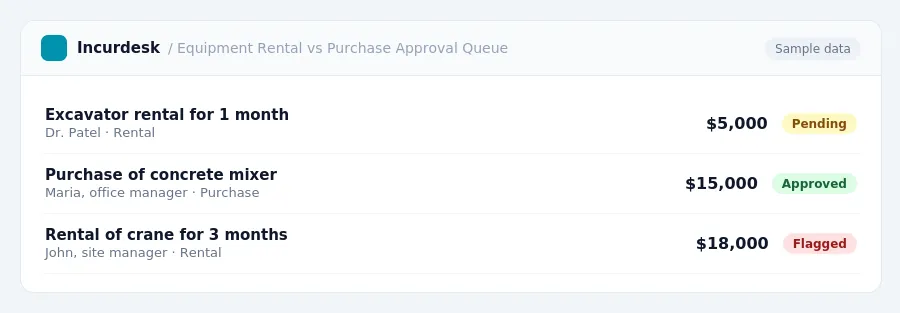
Now that you've weighed the costs and benefits of equipment rental and purchase, it's time to make an informed decision. Keep in mind that the American Rental Association forecasts $83.5 billion in U.S. construction/industrial equipment and general tool rental revenue for 2026, indicating a thriving rental market. Consider the following factors to optimize your cash flow and profitability.
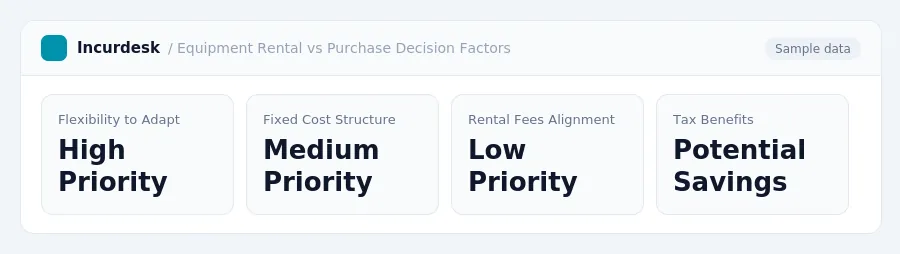
Define your business needs and priorities. Are you looking for flexibility to adapt to changing project requirements or a fixed cost structure for budgeting purposes? Determine how often you expect to use the equipment and whether the rental fees align with your budget.
Compare this to the rental fees and consider any tax benefits you may be eligible for.
Create a decision matrix to evaluate the pros and cons of each option. Consider factors such as upfront costs, ongoing expenses, utilization rates, and tax implications. This will help you visualize the potential outcomes and make a data-driven decision.
Ultimately, choose the option that best aligns with your business goals and financial situation. If you're unsure, consider consulting with a financial advisor or equipment specialist to get personalized guidance.
Neither gets it right. Incurdesk does.
30-day free trial. No credit card. Setup takes 15 minutes.