
Expense Approval When the Owner Is Chairside All Day
Purpose-built expense management for your team type, industry and city.
When the owner of a small dental practice is chairside all day, managing employee expenses can be a challenge, especially when it comes to ensuring IRS compliance for reimbursements through accountable plans. To simplify expense management for dental practice, owners and office managers can follow a few key guidelines to stay on track and avoid potential penalties. This includes establishing clear policies and procedures for expense reporting and reimbursement, as well as keeping accurate records of all expenses.
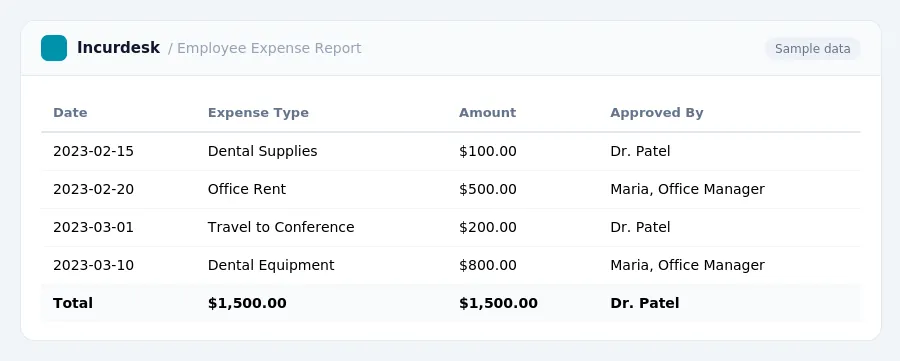
Tracking and Substantiating Business Expenses in a Chairside Owner Environment
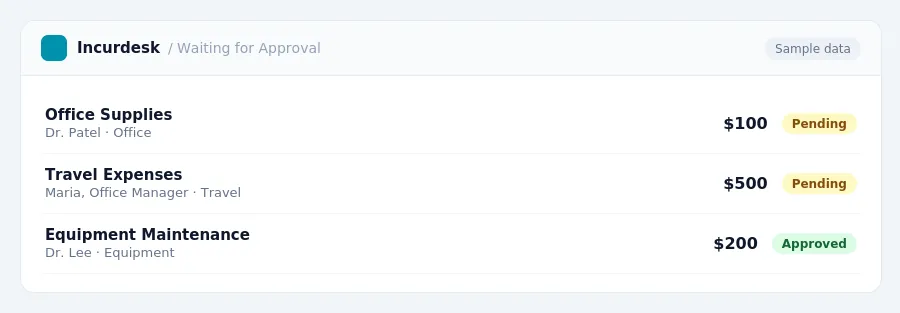
When the owner is chairside all day, it can be challenging to keep track of business expenses. However, it's essential to ensure that all expenses are properly documented and substantiated to maintain IRS compliance. Here are some practical tips to help you track and substantiate business expenses:
- Keep accurate records of all business expenses, including receipts, invoices, and bank statements.
- Use a system to categorize and track expenses, such as by date, type, or employee.
- Make sure to include all necessary documentation, such as dates, amounts, and descriptions of each expense.
- For lodging, meals, and incidental expenses (M&IE), use the following rates:
- For High-Cost Localities (October 1, 2026 - September 30, 2027): $329 per day
- For Other Localities (CONUS) (October 1, 2026 - September 30, 2027): $230 per day
- For meals and incidental expenses within per diem, use the following rates:
- For High-Cost Localities (2026-2027): $86 per day
- For Other Localities (CONUS) (2026-2027): $74 per day
It's also essential to note that any advance or reimbursement exceeding substantiated business expenses must be returned to the company within a reasonable period, generally within 120 days.
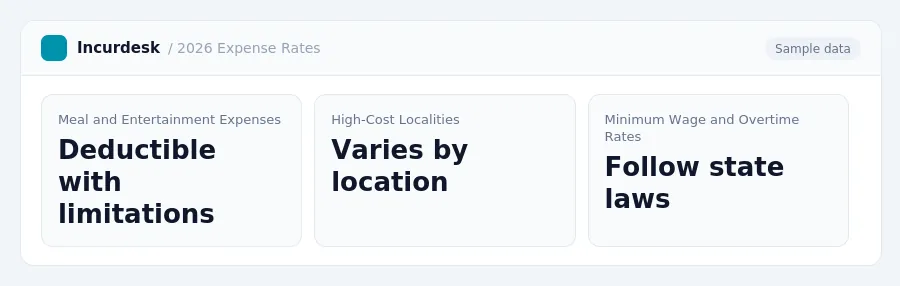
Current Expense Rates and Reimbursement Limits for 2026
The IRS sets annual limits for certain business expenses, and it's essential for dental practices to stay informed about these rates to ensure compliance and accurate reimbursements. For 2026, the following rates and limits apply:
- Meal and Entertainment Expenses: The Tax Cuts and Jobs Act (TCJA) eliminated the deduction for entertainment expenses, but meal expenses are still deductible, with certain limitations. (Source: Per Diem Rates)
- High-Cost Localities: The list of high-cost localities for per diem rates changes annually. Dental practices should check the Per Diem Rates website for the most up-to-date information.
- Minimum Wage and Overtime Rates: Many states have higher minimum wage and overtime rates than the federal thresholds. Dental practices must follow the applicable state laws, which vary by state. (Source: State Minimum Wage and Overtime Thresholds)
The Family and Medical Leave Act (FMLA) generally applies to private employers with 50 or more employees within a 75-mile radius for at least 20 workweeks in the current or preceding calendar year. However, this does not directly impact expense reimbursement limits.
For accurate and compliant expense reimbursements, dental practices should consult the IRS website or consult with a tax professional for the most up-to-date information on expense rates and limits.
Establishing an Accountable Expense Reimbursement Plan for Your Dental Practice
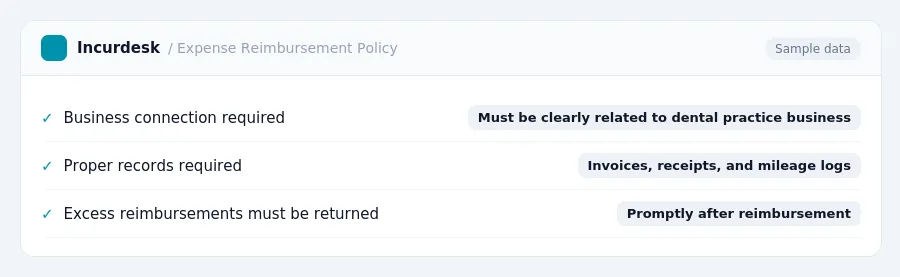
To ensure tax-free reimbursement for your dental practice's business expenses, you must establish an accountable expense reimbursement plan. This plan must meet three key requirements set by the IRS:
- Expenses must have a clear business connection.
- Expenses must be properly substantiated with records.
- Any excess reimbursements must be returned promptly.
When creating your plan, consider the following expenses:
- Business miles driven, which can be reimbursed at a rate of 72.5 cents per mile from January 1 to June 30, 2026, and 76 cents per mile from July 1 to December 31, 2026.
- Qualifying purchases, such as new dental equipment, which can be expensed up to $2,500,000 in the first year, with a total purchase limit of $6,500,000 by December 31, 2026.
Remember to stay up-to-date on state laws regarding dental practice sales and transactions, as some states may require specific notice periods or agency approvals.
Understanding IRS Requirements for Expense Approval
The IRS requires that employees substantiate expenses within a reasonable timeframe to meet the safe harbor. Typically, this means providing documentation within 60 days of incurring the expense.
When it comes to mileage, the IRS sets two rates for the business use of a car in 2026.
For meals and lodging, the IRS updates per diem rates annually, with new rates effective from October 1st each year. These rates vary by location, so be sure to check the IRS website for the most up-to-date information.
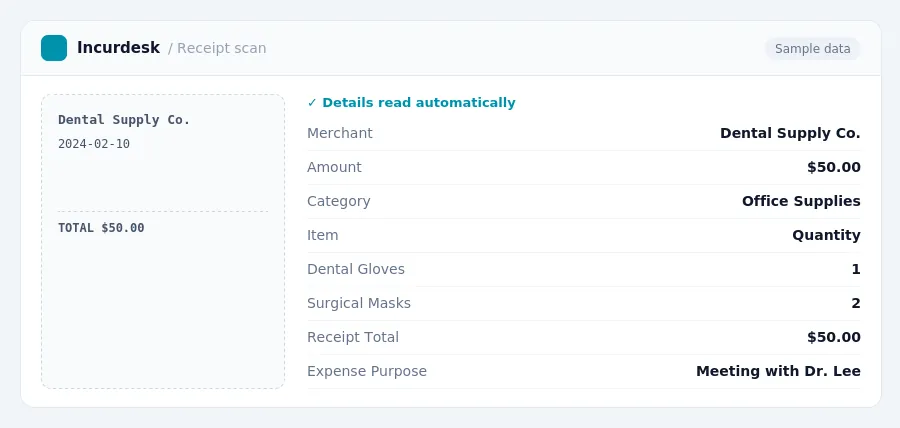
To ensure compliance, keep accurate records of expense dates, amounts, and purposes. Employees should also retain receipts and other documentation to support their expenses.
When reimbursing employees, use the substantiated amounts to avoid overpaying or underpaying. This will also help prevent potential IRS penalties.
Implementing Efficient Expense Approval Processes for a Busy Dental Office
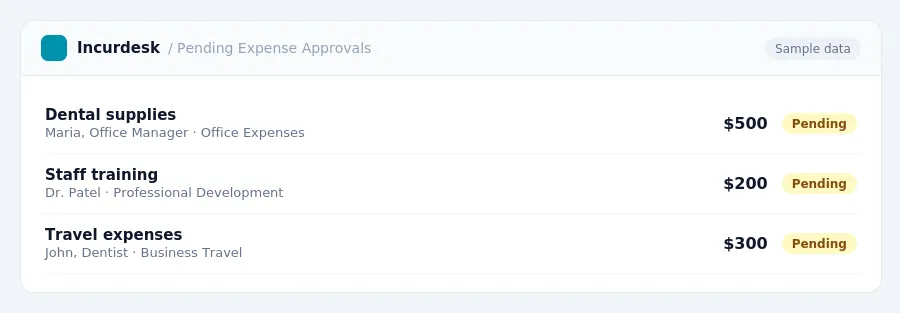
Implementing efficient expense approval processes is crucial for a busy dental office, especially when the owner is chairside all day. To streamline the process, consider the following steps:
- Designate a specific person to oversee expense approvals, ensuring consistency and minimizing delays.
- Establish clear guidelines for expense reporting, including deadlines and required documentation.
- Set up a system for tracking and storing expense records, both digital and physical, to maintain organization and facilitate audits.
- Consider implementing a reimbursement schedule, allowing for timely payments to employees while maintaining IRS compliance.
As states implement reforms to dental insurance, it's essential to review network contracts and claim payment terms to ensure compliance with recoupment periods. For example, if a claim is denied due to lack of network participation, the practice may need to recoup payments within a specified timeframe.
For incidental expenses, the 2026-2027 reimbursement rate is $5 per day. Ensure that expense reports accurately reflect this rate and that employees are aware of the reimbursement limits.
Regularly review and update expense approval processes to ensure they remain efficient and compliant with changing regulations.
Consider implementing a to help employees understand reimbursement limits and ensure timely approvals.
Ready to run expenses like a pro?
30-day free trial · No credit card · Setup in 15 minutes