Expense Fraud: What It Costs a Small Business
Purpose-built expense management for your team type, industry and city.
Expense fraud, where employees submit falsified or inflated reimbursement claims, is a significant threat to small businesses due to their leaner finance teams, informal processes, and higher degree of trust. This type of fraud can drain cash flow, distort financial reports, and increase compliance risks. In an effort to stay on top of expense management, small businesses can use expense management software for under $10/user (2026), which can help them streamline their reimbursement process and reduce the risk of expense fraud. To prevent and detect expense fraud, businesses should establish clear reimbursement policies and procedures, and regularly review and audit their expense reports.
Examples of Expense Fraud Examples
Expense fraud occurs in various forms, making it difficult to identify and prevent. Here are some common examples:
- Employees submitting claims for personal expenses, such as dining out or entertainment, as business-related expenses.
- Falsifying receipts, such as printing fake receipts or using fake or altered receipts to justify large expenses.
- Employees claiming reimbursement for expenses that were not incurred or were not business-related, such as personal travel or hobbies.
- Employees submitting claims for expenses that exceed their actual business expenses, such as purchasing personal items or services.
- Employees using company credit cards for personal expenses, such as paying for personal items or services.
- Employees falsifying or altering expense reports to make themselves appear to have incurred more expenses than they actually did.
These types of expense fraud can be challenging to detect and prevent, but they can have severe consequences for small businesses, including draining cash flow, distorting financial reports, and increasing compliance risks.
The obligation for employers to reimburse employees for business expenses varies significantly by state. Some states have specific laws and regulations governing expense reimbursements, while others have varying requirements.
It is essential for small businesses to stay informed about the specific laws and regulations governing expense reimbursements in their state. This includes checking with their state's labor department, tax authority, or accountant to ensure compliance.
What Expense Fraud Costs Small Businesses
Expense fraud occurs in 19% of fraud cases at employers with fewer than 100 staff, and the median loss for small businesses with fewer than 100 employees is $126,000. The typical expense fraud scheme runs for 18 months before being caught, compared to 12 months for occupational fraud overall.
Types of Expense Fraud Schemes
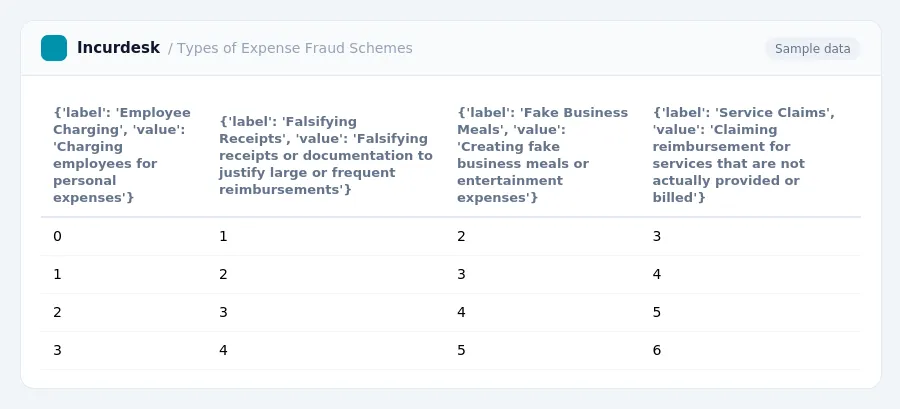
Expense fraud is a significant threat to small businesses, particularly those with leaner finance teams and higher degrees of trust. Employees may submit falsified or inflated reimbursement claims to cover personal expenses or divert business funds. Some common schemes include:
- Charging employees for personal expenses, such as meals or entertainment, that are not directly related to business use.
- Falsifying receipts or documentation to justify large or frequent reimbursements for personal items, such as gifts or personal expenses.
- Creating fake business meals or entertainment expenses to justify reimbursement.
- Claiming reimbursement for services that are not actually provided or billed, such as consulting or training services.
- Using business credit cards or accounts for personal expenses and then claiming reimbursement for those charges.
To protect against expense fraud, small businesses should implement robust internal controls, such as regular audits and manual reviews of reimbursement claims. They should also clearly communicate reimbursement policies and procedures to employees and ensure that employees understand the consequences of engaging in expense fraud. By being aware of these schemes and taking proactive steps to prevent them, small businesses can minimize the risk of expense fraud and maintain trust with their employees and stakeholders.
The Evolution of AI-Generated Fake Receipts
AI-made fake receipts are becoming increasingly sophisticated, with some measures averaging around $100 each. In contrast, template-based fakes, which are widely used, typically cost around $180. This significant variation in pricing is due to the constant evolution of AI technology, which allows fraudsters to create more convincing and detailed fake receipts.
As new methods are developed, businesses must adapt their detection methods annually. The methods used by fraudsters are constantly changing, requiring businesses to stay vigilant and proactive in detecting and preventing expense fraud. For example, some recent studies have shown that fraudsters are using AI-powered tools to create fake receipts with more realistic features, such as handwritten notes and detailed descriptions. Businesses must stay ahead of these evolving tactics by regularly updating their systems and training their employees on the latest methods used by fraudsters.
To protect yourself and your business, it's essential to have a clear understanding of the risks and take proactive steps to prevent them. This includes regularly reviewing your financial statements, keeping accurate records, and having a transparent and accountable accounting system in place. By being aware of the latest trends and methods used by fraudsters, you can take steps to safeguard your business and prevent expense fraud.
Tax rules, limits and rates change. Confirm current figures with the IRS or your accountant before you file.
AI expense management for finance teams and whoever keeps the books. It checks every expense against your rules, approves the routine ones and chases missing receipts for you.
Try it free for 30 days →Ready to run expenses like a pro?
30-day free trial · No credit card · Setup in 15 minutes