
Expense Software vs Commission Software for Brokerages
Real trade-offs, pricing & decision guide — updated October 2026
Small real estate businesses with 5-50 staff in the US need to understand the key differences between expense tracking software and commission management software to make informed decisions about their financial operations. To optimize profitability, consider software that streamlines accounting and accurately calculates agent payouts, all while keeping costs under real estate expense management for under $10/user (2026).
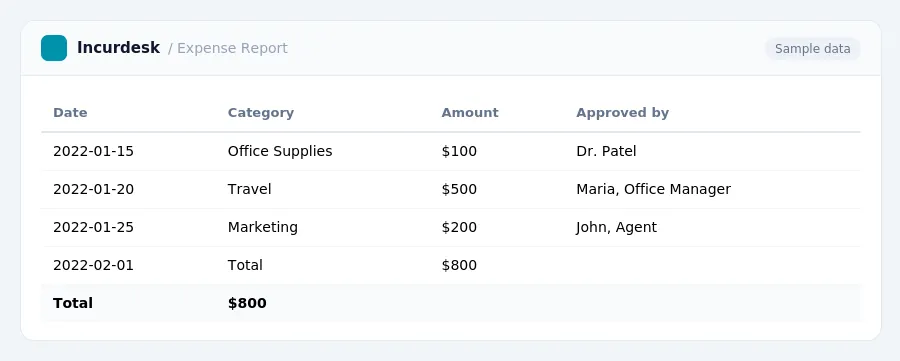
Key Features to Consider When Choosing Between Expense and Commission Software
When choosing between expense and commission software, there are several key features to consider. Here are some essential factors to evaluate:
- Expense Tracking:
- Automated expense categorization and coding
- Support for multiple expense types, including mileage and meals
- Integration with accounting software
- Commission Management:
- Automated commission calculation based on sales data
- Support for multiple commission structures and plans
- Tax Compliance:
- Reporting and Analytics:
- Real-time expense and commission tracking
- Customizable reports for financial management and compliance
- Security and Data Protection:
- Secure data storage and encryption
- Regular software updates and maintenance
When evaluating these features, consider the specific needs of your real estate business. For example, if you have a large number of agents with varying commission structures, you may need a commission management software that can handle complex calculations and multiple commission plans. On the other hand, if you need to track and categorize a high volume of expenses, you may prefer an expense tracking software with automated expense coding and integration with accounting software.
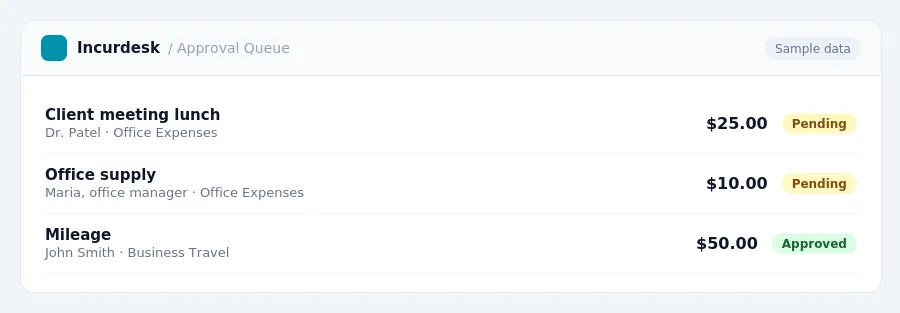
Expense software is perfect for tracking and managing your real estate business's expenses, ensuring compliance with tax laws, and minimizing financial losses. Here are some key expenses to consider:
- Brokerage-related fees: desk fees, transaction fees, E&O insurance
- MLS access fees
- Professional dues
When using expense software, be sure to:
- E-file information returns if your business files 10 or more
- Keep accurate and detailed records of all business expenses
- Consult with a tax professional to ensure compliance with tax laws
By using expense software to track and manage your real estate business's expenses, you can ensure compliance, minimize financial losses, and focus on growing your business.
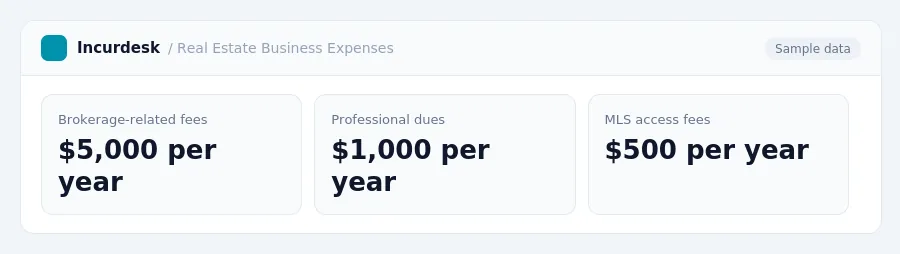
Expense Software for Accurate Tracking and Compliance
Expense software is designed to track and manage business expenses, ensuring compliance with tax laws and regulations. This is particularly important in the real estate industry, where expenses can vary greatly depending on the type of transaction and the services provided. For example, sellers are now only obligated to pay their listing agent's commission, but may elect to offer a commission to the buyer's agent, which is not mandatory.
To ensure accurate tracking and compliance, consider the following best practices:
- Keep all receipts and invoices for business expenses, including those related to real estate transactions.
- Use a clear and consistent categorization system for expenses, such as by type (e.g. travel, marketing, etc.) or by project.
- Set reminders for deadlines, such as the quarterly estimated tax payment deadline.
When choosing an expense software, look for features such as:
- Automated expense tracking and categorization.
- Receipt scanning and storage capabilities.
- Integration with accounting software.
- Reporting and analytics tools.
| Expense Type | Example | Category |
|---|---|---|
| Travel | Flight to a listing appointment | Travel |
| Marketing | Advertising for a new listing | Marketing |
| Office Supplies | Stapler for the office | Office Expenses |
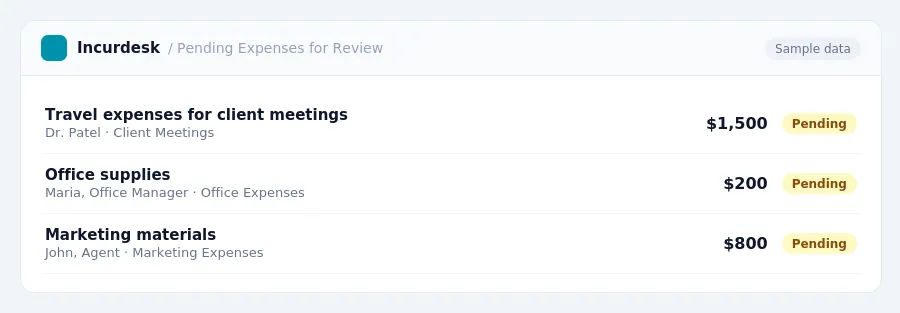
Commission Software for Agent Payouts and Tax Preparation
Commission software is designed to handle the complex calculations and reporting requirements for agent payouts and tax preparation.
New National Association of Realtors (NAR) commission rules, effective August 17, 2024, have changed how buyer's agent commissions are handled. Under these rules, buyer's agent commissions are negotiated directly between the buyer and agent and are no longer automatically displayed on the MLS. In California, buyers are required to sign a buyer representation agreement outlining how their agent will be paid, effective August 13, 2024.
To ensure compliance with these new rules and accurately calculate agent payouts, commission software can help.
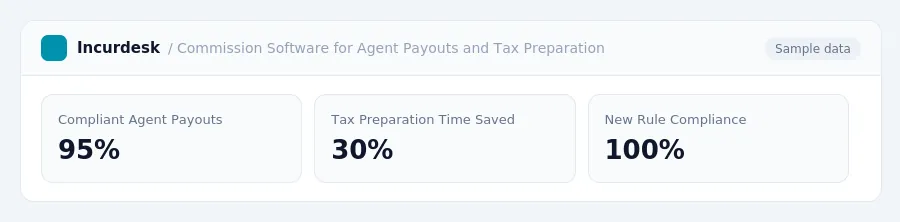
Neither gets it right. Incurdesk does.
30-day free trial. No credit card. Setup takes 15 minutes.