
How to Allocate Expenses to Programs and Grants
A practical, data-backed guide to controlling costs and automating expense workflows.
Nonprofits should have a written cost allocation plan reviewed annually, using consistent and documented methodologies for indirect costs. For the bigger picture, see our guide to expense management for non-profit organizations. For a complete overview, see our expense management guide.
Categorize Expenses into Main Areas
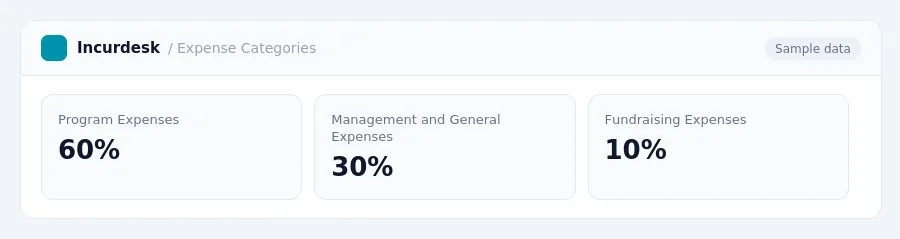
The IRS requires nonprofits to categorize expenses into three main areas: program expenses, management and general expenses, and fundraising expenses. To do this, review your organization's financial records and allocate expenses into the following categories:
- Program Expenses: These are the costs directly related to delivering your organization's programs and services. Examples include:
- Staff salaries and benefits
- Program materials and supplies
- Travel expenses for program staff
- Management and General Expenses: These are the costs that support the organization as a whole, such as:
- Occupancy expenses (rent, utilities, etc.)
- Administrative costs (office supplies, postage, etc.)
- Fundraising Expenses: These are the costs related to raising funds for your organization, such as:
- Staff salaries and benefits for fundraising staff
- Marketing and advertising expenses
Identify Direct and Indirect Costs
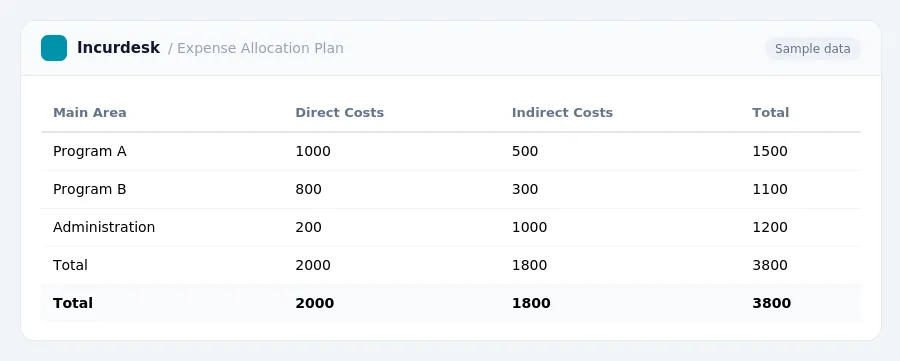
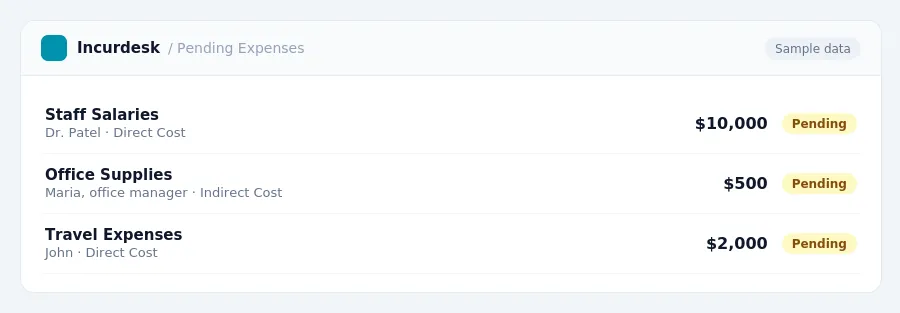
- Direct costs are expenses that can be easily identified and connected to a specific program or grant. These costs include items like staff salaries, supplies, and travel expenses directly related to a particular project. To identify direct costs, review your organization's financial records and categorize expenses based on the specific program or grant they benefit.
- These costs include items like rent, utilities, and insurance, which are not directly tied to a specific project.
- Various methods can be used to allocate indirect costs, including staff time, square footage, actual usage, or percentage of direct costs. When choosing a method, consider your organization's specific needs and circumstances.
- Organizations without a negotiated indirect cost rate can elect to charge a 15% de minimis rate on modified total direct costs for federal awards. This rate applies to modified total direct costs, which are total direct costs minus certain expenses like equipment purchases and capital expenditures. Consult with your organization's financial team to determine if this rate applies to your organization.
Develop a Written Cost Allocation Plan
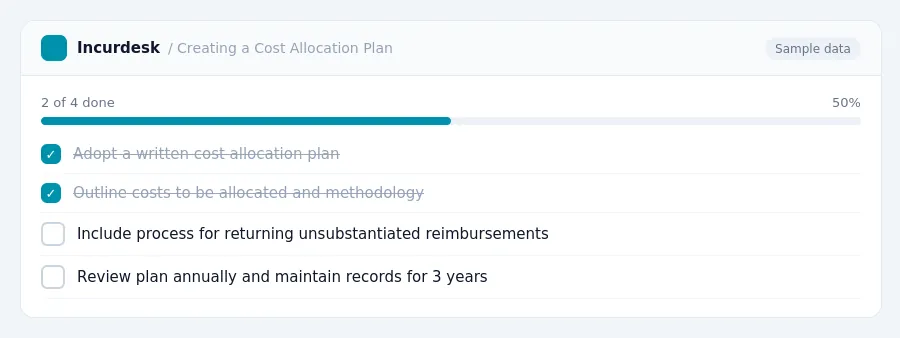
Your nonprofit should adopt a written cost allocation plan that outlines which costs need to be allocated and the methodology used. This plan should include how each cost supports the project and be reviewed annually.
When creating your plan, make sure to include adequate documentation and a clear explanation of how each cost is allocated. You should also include a process for returning unsubstantiated reimbursements within 120 days, as required by the IRS accountable plan.
Review your plan regularly to ensure it's accurate and compliant with all applicable regulations.
Keep in mind that you'll need to maintain records of your cost allocation plan for at least three years, so make sure to keep accurate and detailed records.
Choose a Method for Allocating Indirect Costs
-
Choose a method for allocating indirect costs that is consistent, reasonable, and documented.
When allocating indirect costs, consider using a direct allocation method, such as allocating indirect costs based on the percentage of time spent on each grant.
-
Document your indirect cost allocation method and ensure it is consistent with your cost allocation plan. This will help you to accurately track and report indirect costs to your funders.
Keep detailed records of the indirect costs allocated to each grant, including the method used to allocate the costs and the amount allocated.
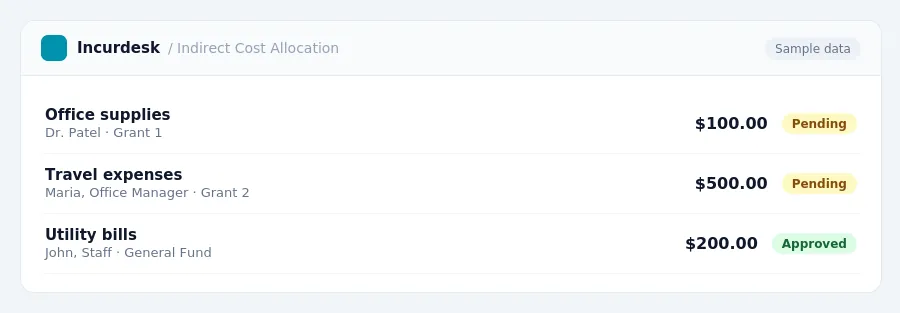
Document and Review Expenses Regularly
It's crucial to review grant agreements regularly to ensure spending aligns with restrictions and to understand what expenses are allowable. This includes reviewing the grant agreement at least annually, or as specified by the grantor.
Grantors, especially foundations, often have their own unique policies and limitations on what expenses are allowable and how indirect costs can be applied.
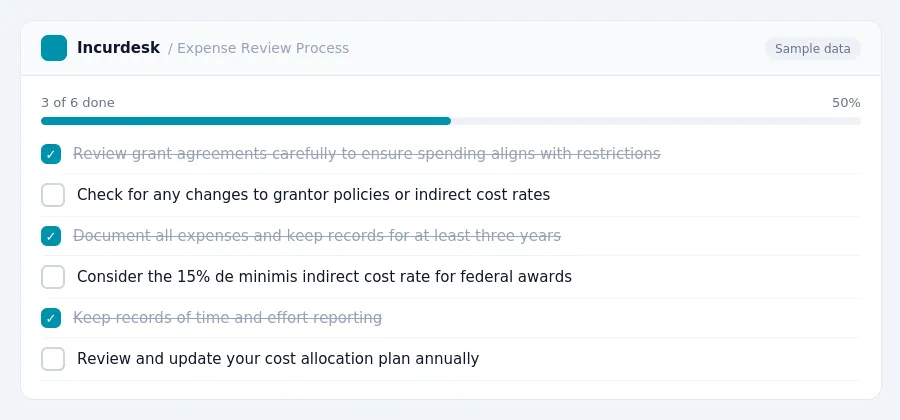
Here are some steps to follow:
- Review grant agreements carefully to ensure spending aligns with restrictions.
- Check for any changes to grantor policies or indirect cost rates.
- Document all expenses and keep records for at least three years, as required by the IRS.
- Consider the 15% de minimis indirect cost rate for federal awards, if applicable.
- Keep records of time and effort reporting
Remember to review and update your cost allocation plan annually, or as needed, to ensure compliance with grant agreements and regulations.
Tax rules, limits and rates change. Confirm current figures with the IRS or your accountant before you file.
Keeping this simple: Incurdesk turns submitted expenses into clean expense reports. It is built for small non profits teams. Try it free.
Stop losing 4+ hours a week
30-day free trial · No credit card · Setup in 15 minutes