
How to Budget for Clinic Equipment Maintenance
A practical, data-backed guide to controlling costs and automating expense workflows.
Budgeting for clinic equipment maintenance requires careful planning and consideration of various factors, including tax benefits, evolving regulations, and the total cost of ownership. For small healthcare businesses with 5-50 staff, allocating a portion of the healthcare expense management budget for under $10/user (2026) can help ensure regular maintenance is performed to prevent costly repairs. This includes routine, preventive, and corrective maintenance to guarantee patient safety, operational efficiency, and regulatory adherence. For the bigger picture, see our guide to healthcare expense management for under $10/user (2026). For a complete overview, see our expense management guide.
Understanding Tax Benefits for Clinic Equipment Maintenance
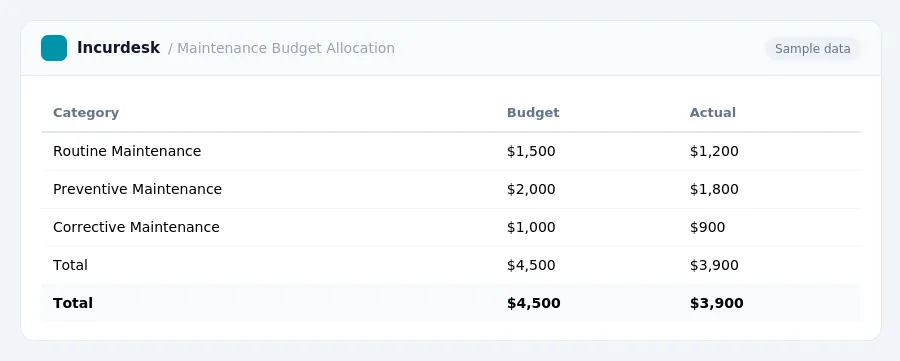
Small healthcare businesses can take advantage of tax benefits when budgeting for clinic equipment maintenance. One way to do this is by utilizing Section 179 of the IRS Tax Code, which allows for the full purchase price of qualifying equipment to be deducted in the year it's placed in service, up to approximately $2.56 million for 2026.
For imaging and diagnostic equipment, annual service contracts typically range from 8% to 12% of the original purchase price. When calculating the total cost of ownership, consider these service contract costs in addition to the initial purchase price.
Regulatory requirements also impact clinic equipment maintenance. For example, by August 2026, healthcare facilities must ensure at least one accessible examination table and one accessible weight scale are available if these types of equipment are used. Entities covered by the DOJ rule must comply with these requirements by August 9, 2026, while those receiving federal funds from HHS must comply by July 8, 2026.
When creating a budget for clinic equipment maintenance, be sure to factor in these tax benefits and regulatory requirements to ensure compliance and minimize costs.
Evolving Regulations and Compliance Requirements
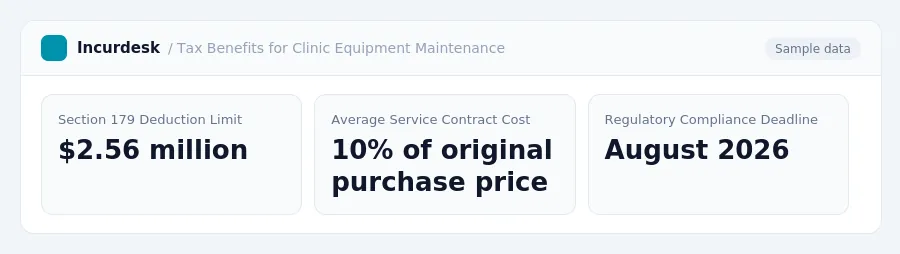
Healthcare businesses must stay up-to-date on regulations and compliance requirements to avoid costly fines and penalties. One area of focus is risk analysis, which is becoming a mandatory process with specific requirements for scope, documentation, and frequency.
This process helps identify vulnerabilities and weaknesses in equipment and systems, allowing for proactive measures to be taken to mitigate risks.
Another area of focus is emergency preparedness. The Federal Emergency Management Agency (FEMA) offers grant programs that can support emergency preparedness and equipment acquisition, but these programs have specific rules and requirements (FEMA Grant Programs).
When budgeting for clinic equipment maintenance, consider the costs associated with compliance and risk management. Be sure to factor these costs into your budget to ensure you are meeting regulatory requirements and maintaining patient safety.
Total Cost of Ownership for Clinic Equipment
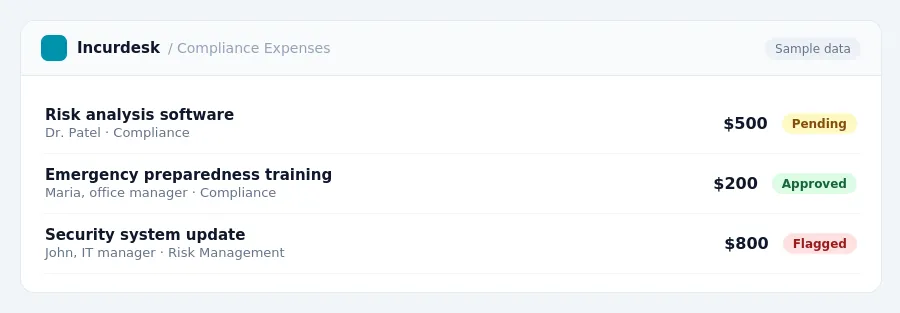
When budgeting for clinic equipment maintenance, it's essential to consider the Total Cost of Ownership (TCO). This includes not only the initial purchase price, but also various costs associated with installing, maintaining, and eventually disposing of the equipment.
The TCO typically includes:
- Installation costs
- Facility modifications
- Staff training
- Software updates
- Consumables
- Disposal costs
It's also crucial to consider the cost of equipment downtime, which can be significant. According to one study, hospitals can lose up to $760 per device per day due to equipment downtime.
When calculating TCO, keep in mind that the Section 179 deduction phases out for businesses with total equipment purchases exceeding $4.09 million in 2026. This means that businesses need to carefully plan their equipment purchases and maintenance budgets to maximize their tax benefits.
Budgeting for Routine, Preventive, and Corrective Maintenance
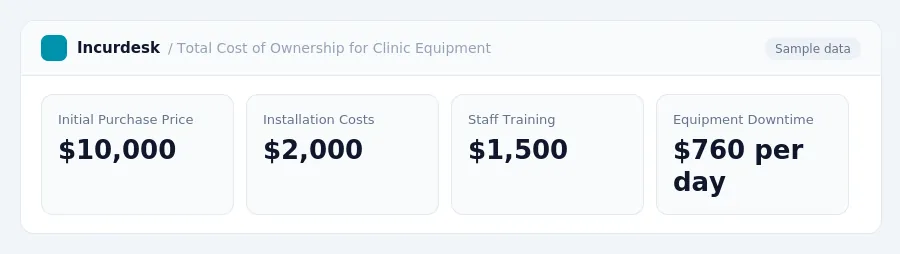
Budgeting for routine, preventive, and corrective maintenance requires careful planning to ensure patient safety, operational efficiency, and regulatory adherence. Here's a step-by-step guide to help you allocate funds for these essential maintenance activities.
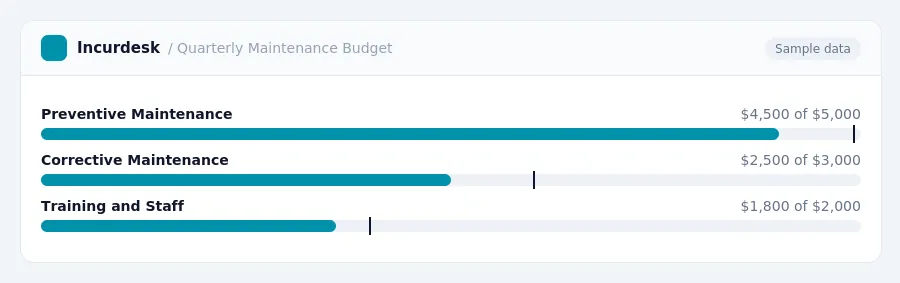
Preventive Maintenance (PM) involves scheduled inspections, testing, and servicing to prevent failures. Allocate funds for PM activities, such as:
- Scheduled maintenance for equipment, like cleaning, lubricating, and replacing worn parts
- Calibration and testing of equipment, like thermometers and blood pressure monitors
- Training staff on proper equipment usage and maintenance
Consider this when budgeting for routine maintenance.
When allocating funds for corrective maintenance, consider the following:
- Repair or replace equipment that has failed or is no longer functional
- Address any regulatory or safety issues that may have arisen due to equipment failure
Keep in mind that the Assistance to Firefighters Grants (AFG) program provides funding for personal protective equipment and emergency response vehicles. Review the AFG program rules to see if your clinic qualifies for funding.
Prioritizing Patient Safety and Operational Efficiency through Proactive Maintenance
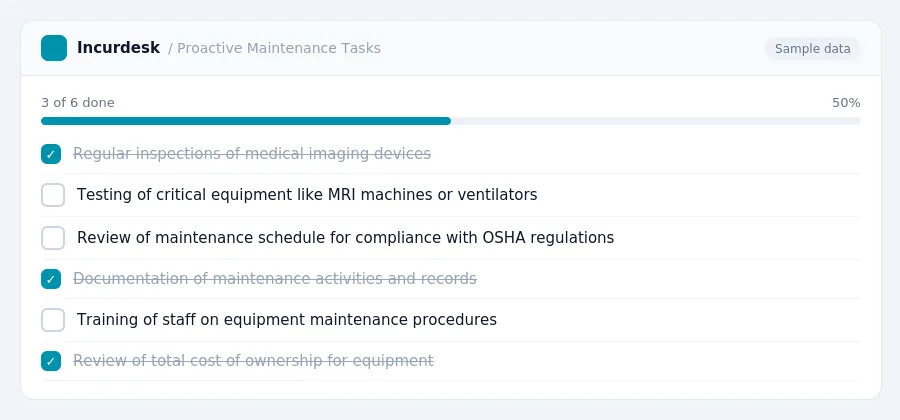
Proactive maintenance is crucial for prioritizing patient safety and operational efficiency in small healthcare businesses. OSHA's 2026 agenda emphasizes expanded inspections, stricter enforcement, and new safety standards. To stay compliant, ensure your maintenance schedule includes regular inspections and testing of equipment, such as medical imaging devices.
For example, consider the costs associated with downtime. According to the Cost of Equipment Downtime, proactive maintenance can save organizations up to $760 per device per day. This translates to significant financial savings, especially for critical equipment like MRI machines or ventilators.
When budgeting for maintenance, consider the total cost of ownership for your equipment. Factor this into your budget to ensure you're adequately prepared for routine, preventive, and corrective maintenance.
To prioritize patient safety, develop a proactive maintenance plan that includes:
- Regular equipment inspections and testing
- Scheduled maintenance and repairs
- Staff training on equipment operation and maintenance
- Documentation of maintenance activities and records
By prioritizing proactive maintenance, you can ensure patient safety, operational efficiency, and regulatory compliance, all while reducing costs associated with equipment downtime.
Keeping this simple: Incurdesk collects every receipt and expense report in one place, so spending is easy to review. It is built for small healthcare teams. Try it free.
Stop losing 4+ hours a week
30-day free trial · No credit card · Setup in 15 minutes