
How to Keep Grant Reporting From Breaking Your Expense Tracking
A practical, data-backed guide to controlling costs and automating expense workflows.
Understanding the intricacies of expense management for non-profit organizations is crucial to avoid common pitfalls and maintain organized financial records. By following practical tips and staying up-to-date on changing regulations, you can safeguard future funding and keep your non-profit on track.
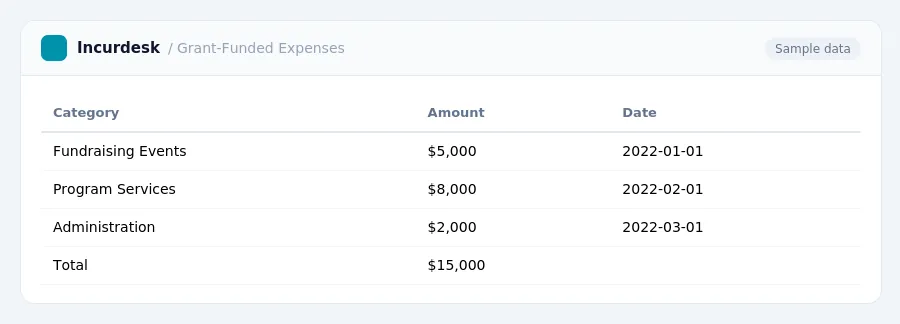
Avoiding Common Pitfalls in Expense Tracking and Reporting
When tracking grant-funded expenses and reporting them to funders, it's easy to fall into common pitfalls that can lead to compliance issues and jeopardize future funding. To avoid these mistakes, be mindful of the following:
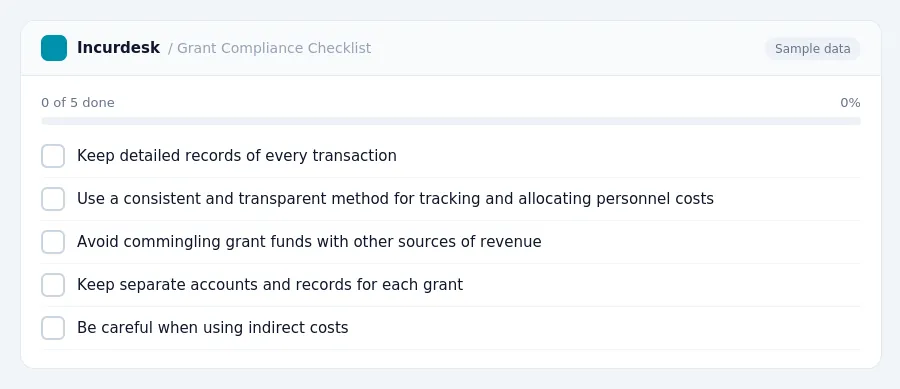
- Keep detailed records of every transaction, including receipts, invoices, and bank statements. This will help you accurately categorize expenses and ensure that you're only charging grant funds to eligible activities.
- Use a consistent and transparent method for tracking and allocating personnel costs, such as time and effort reporting.
- Avoid commingling grant funds with other sources of revenue. Keep separate accounts and records for each grant to ensure that you're not inadvertently using grant funds for ineligible activities.
- Be careful when using indirect costs, also known as overhead rates. Make sure you're accurately calculating and applying these costs to your grant expenses.
- Regularly review and reconcile your financial records to ensure accuracy and compliance with grant terms and conditions.
By being diligent and proactive in your expense tracking and reporting, you can avoid common pitfalls and maintain the trust of your funders.
Keeping this simple: Incurdesk keeps receipts and approvals in one place, which makes a written policy easier to follow. It is built for small non profits teams. Try it free.
Maintaining Organized Financial Records for Compliance
To ensure compliance with federal regulations, it's essential to maintain accurate and detailed financial records.
Start by setting up a system for tracking grant-funded expenses, including receipts, invoices, and bank statements. Consider using a spreadsheet or database to organize and categorize your records. Be sure to include the following information:
- Grant award number and date
- Expense type (e.g., personnel, travel, supplies)
- Amount and date of each expense
- Receipts and supporting documentation
Regularly review and update your records to ensure accuracy and completeness. This includes verifying that all expenses are properly categorized and that all receipts and supporting documentation are accounted for.
Categorizing Grant-Funded Expenses for Accurate Tracking
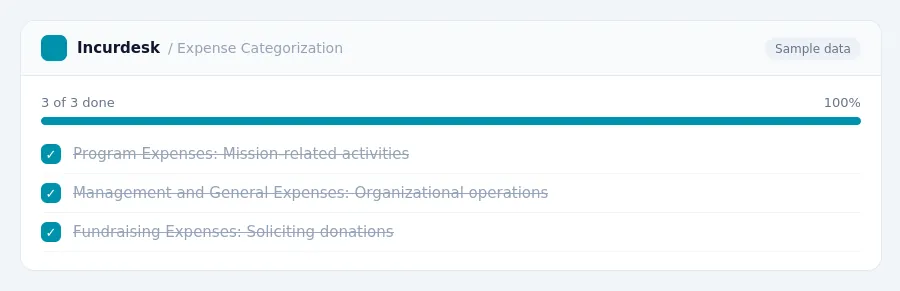
To accurately track grant-funded expenses, nonprofits must categorize them into three main areas: program expenses, management and general expenses, and fundraising expenses.
- Program expenses: Mission-related activities, such as providing services or conducting research.
- Management and general expenses: Organizational operations, such as administrative tasks and overhead.
- Fundraising expenses: Soliciting donations, such as event planning and marketing.
When tracking expenses, nonprofits must report them by both nature (what was bought) and function (why it was bought) in a single location, as required by FASB ASC 958. This means that for each expense, you must note both the type of expense (e.g. office supplies) and the purpose of the expense (e.g. to support program activities).
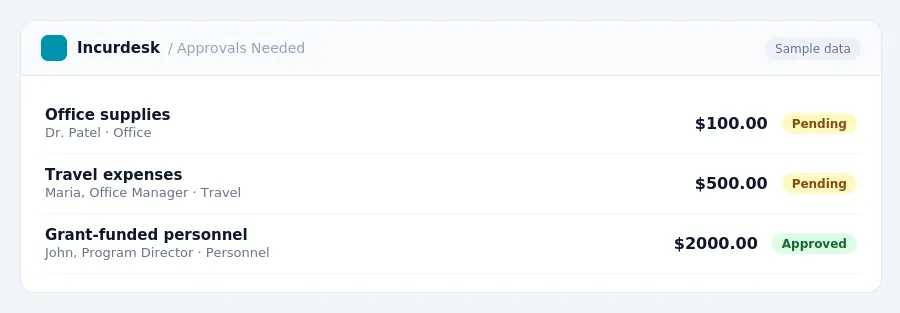
When tracking personnel costs, nonprofits must maintain reliable records demonstrating that the costs charged to awards reflect work actually performed. This means that for each employee, 100% of their total compensated activity must be accounted for, as required by Time and Effort Reporting.
When tracking mileage expenses, be sure to keep accurate records of the date, purpose, and total miles driven for each trip.
When it comes to reporting frequency, the requirements vary depending on the funder and project scale. Be sure to check with your funder for specific reporting requirements.
Nonprofits receiving federal grant funds must maintain records demonstrating that personnel costs charged to awards reflect work actually performed, accounting for 100% of an employee's total compensated activity.
When reporting expenses, be sure to clearly categorize and document each expense, including the date, amount, and purpose of the expense.
Practical Tips for Effective Grant Reporting and Future Funding Eligibility
When it comes to grant reporting, accuracy and attention to detail are crucial. Here are some practical tips to help you ensure effective grant reporting and maintain future funding eligibility:
- Clearly label and categorize grant-funded expenses in your financial records to make tracking and reporting easier.
- Submit progress reports on a timely basis, whether monthly, quarterly, or annually, to keep funders informed of your project's progress.
- Keep detailed records of all grant-funded expenses, including receipts and invoices, to support your final report.
- When preparing your final report, summarize the entire grant period and highlight key accomplishments, challenges, and lessons learned.
- Proofread your reports carefully to catch any errors or omissions before submitting them to the funder.
- Keep a record of all correspondence with the funder, including emails and phone calls, to ensure a paper trail in case of any disputes.
- Follow the funder's specific guidelines and deadlines for reporting, and allow sufficient time for submission and review.
Tax rules, limits and rates change. Confirm current figures with the IRS or your accountant before you file.
Stop losing 4+ hours a week
30-day free trial · No credit card · Setup in 15 minutes