
How to Track Time and Expenses for Grant Reporting
A practical, data-backed guide to controlling costs and automating expense workflows.
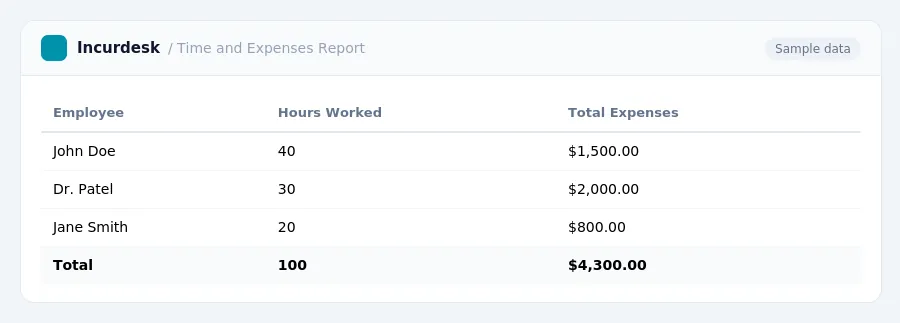
Accurately tracking employee time and expenses is crucial for small non-profit businesses to meet grant reporting requirements and maintain funder trust. Effective expense management for non-profit organizations By following best practices for documentation and avoiding common pitfalls, you can ensure compliance and support future funding opportunities. For a complete overview, see our expense management guide.
Understand Federal Regulations and Requirements
- Understand federal regulations related to grant reporting, including the tracking of volunteer hours. While not always legally required, tracking volunteer hours is recommended for grants with matching requirements or to demonstrate the full scope of program delivery costs. Consult Volunteer Time Tracking for guidance.
- Check the Single Audit Threshold (Federal Grants) for the latest information.
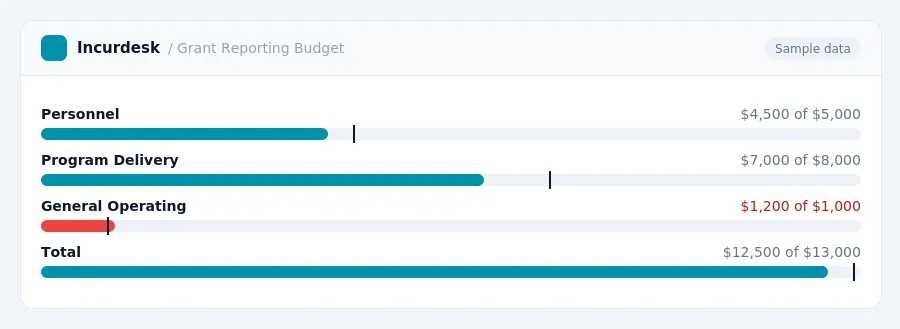
- Understand the de minimis indirect cost rate for federal grants, which has increased from 10% to 15%. This rate covers general operating costs that cannot be directly billed to grants. For more information, consult the De Minimis Indirect Cost Rate.
- Be aware of the threshold for capitalizing equipment and supplies, which has increased from $5,000 to $10,000. Your organization must adopt internal policies to align with this federal threshold. You can find more information on this topic by checking the relevant resources.
- Review the rules for what can and cannot be capitalized as equipment and supplies, and ensure that your organization's policies are in compliance with federal regulations.
Implement Time and Effort Reporting Systems
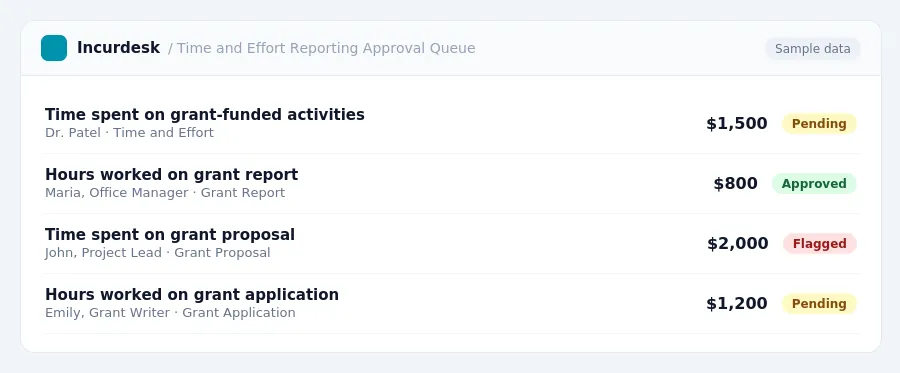
- Implement a time and effort reporting system to track employee time spent on grant-funded activities. Nonprofits receiving federal grants must comply with 2 CFR 200, which includes specific requirements for time and effort reporting. This ensures that grant funds are used appropriately and creates audit-ready records.
- Identify the specific time and effort reporting requirements for your organization. The Uniform Guidance (2 CFR 200) requires organizations to maintain records that support the distribution of salaries and wages charged to federal awards.
- Designate a person or team to oversee time and effort reporting, including ensuring that records are accurate, complete, and up-to-date. This individual should be familiar with federal regulations and guidelines.
- Establish a process for tracking time spent on grant-funded activities, including regular time sheets or logs. This can be done manually or using a digital tool.
- Ensure that all employees understand the time and effort reporting requirements and procedures, and provide training as needed.
However, the specific rate for your organization may vary, so be sure to check with your grantor or financial administrator for more information.
Remember to review and update your time and effort reporting system regularly to ensure compliance with federal regulations and to maintain accurate records.
Document and Categorize Expenses
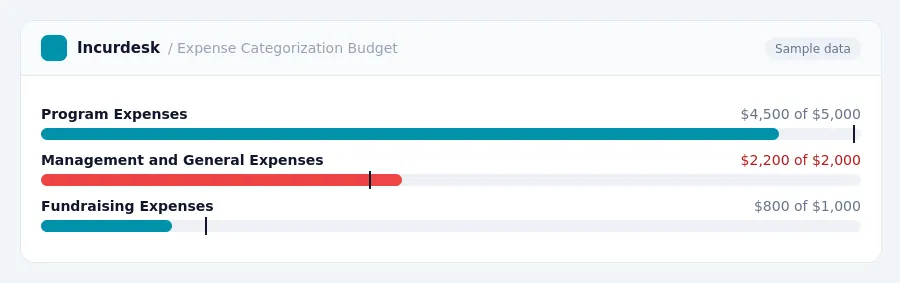
Nonprofits must categorize expenses into three main areas: program expenses (mission-related activities), management and general expenses (organizational operations), and fundraising expenses (soliciting donations). This is crucial for accurate grant reporting and maintaining compliance with federal regulations.
To ensure accurate categorization, create a clear and consistent system for tracking expenses. This can be done by:
- Assigning specific expense categories to each account or project
- Using clear and concise descriptions for each expense
- Regularly reviewing and updating the expense categorization system to ensure it aligns with grant requirements
For federal grants, expenses must be categorized according to the Uniform Guidance (2 CFR 200). This includes expenses related to personnel, travel, supplies, and equipment.
When documenting expenses, ensure that all records are accurate, complete, and easily accessible. This includes:
- Keeping receipts and invoices for all expenses
- Recording dates, amounts, and descriptions for each expense
- Storing expense records in a secure and easily accessible location
Maintain Accurate and Auditable Financial Records
- Keep accurate and detailed records of all financial transactions, including receipts, invoices, and bank statements. This will help you maintain auditable financial records and ensure compliance with grant reporting requirements.
- Organize your financial records in a clear and accessible manner, using folders, binders, or digital storage systems. Make sure all records are easily identifiable and can be retrieved quickly when needed.
- Use a consistent system for labeling and storing financial records, including dates, descriptions, and amounts. This will help you quickly locate specific records and ensure that your financial records are accurate and complete.
- Consider implementing a system for tracking indirect costs, such as rent, utilities, and supplies, which are not directly billed to grants. You should review your indirect costs regularly to ensure they are accurately accounted for and do not exceed this rate.
- Keep a record of all audits, reviews, and examinations of your financial records, including dates, findings, and any corrective actions taken. This will help you demonstrate compliance with grant reporting requirements and maintain funder trust.
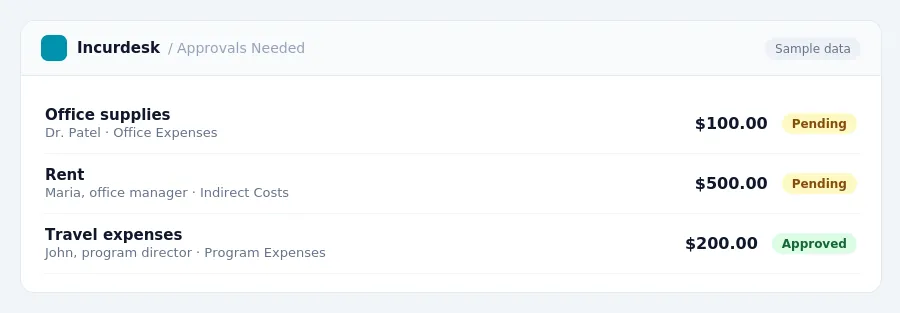
Keeping this simple: Incurdesk turns submitted expenses into clean expense reports. It is built for small non profits teams. Try it free.
Stop losing 4+ hours a week
30-day free trial · No credit card · Setup in 15 minutes