
In-Kind Donations vs Expenses: How to Record Each
A practical, data-backed guide to controlling costs and automating expense workflows.
As a small non-profit organization owner or office manager, accurately recording in-kind donations versus standard business expenses is crucial for effective expense management for non-profit organizations. In-kind donations, which include non-monetary gifts such as goods, services, or volunteer hours, are valued based on their fair market value, while standard business expenses are recorded at their actual cost. By understanding the rules and limits surrounding these transactions, you can ensure accurate financial reporting and donor acknowledgment, which is essential for maintaining transparency and trust with your stakeholders.
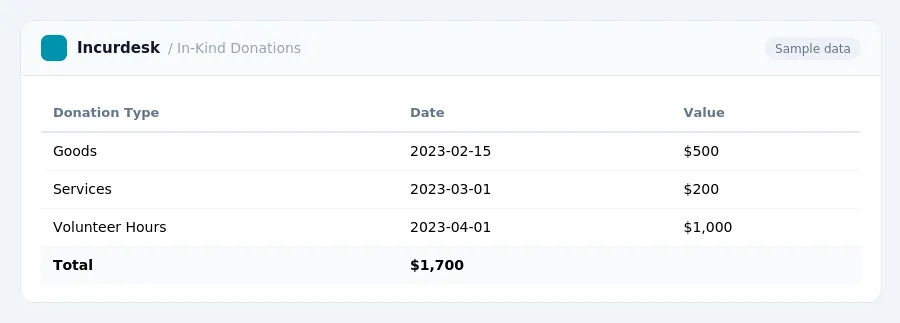
In-Kind Donations: Definition and Recording
In-kind donations are a vital part of a nonprofit organization's financial landscape.
An in-kind donation is a non-cash gift of goods or services that a nonprofit organization would otherwise have to purchase. When recording an in-kind gift, the organization debits the asset or expense received and credits "in-kind contribution revenue" for the same amount.
Nonprofits complying with Generally Accepted Accounting Principles (GAAP) must track and report donated goods and services as revenue, separate from cash donations. This distinction is crucial for accurate financial reporting and donor acknowledgment.
Here are some key facts to keep in mind when dealing with in-kind donations:
- In-kind donations are non-cash gifts of goods or services.
- When recording an in-kind gift, debit the asset or expense received and credit "in-kind contribution revenue" for the same amount.
When providing donors with token items in exchange for gifts, be mindful of the 2% rule.
| Example | Debit | Credit |
|---|---|---|
| Donation of office supplies | Office supplies | In-kind contribution revenue |
| Donation of volunteer services | Volunteer services | In-kind contribution revenue |
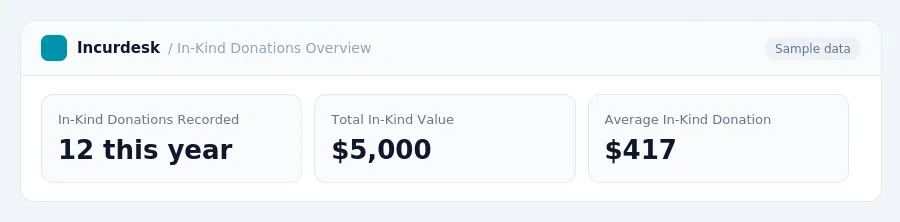
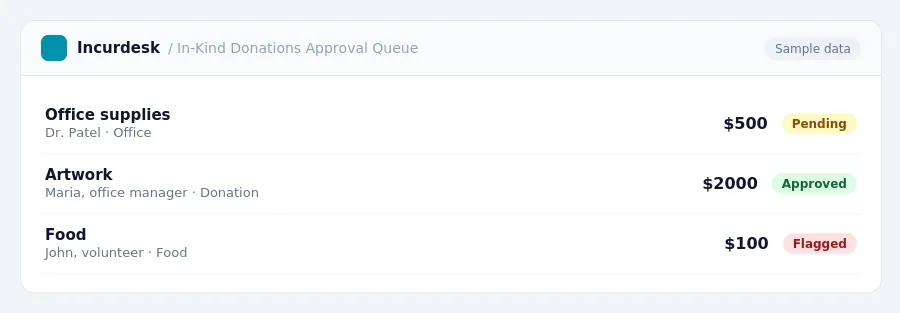
Recording In-Kind Donations: Rules and Requirements
When recording in-kind donations, it's essential to follow specific rules and requirements. Here's what you need to know:
- Consult your state's laws and regulations, especially if you're subject to annual audits. Each state may have unique requirements for nonprofit accounting and reporting.
- Check the latest changes to ensure compliance.
Recording in-kind donations involves accurate documentation and valuation. Here are some key requirements:
- Documentation: Keep records of the donation, including the date, description, and value of the gift. This may include receipts, invoices, or appraisals.
- Appraisals: For items valued at $5,000 or more, obtain a professional appraisal from a qualified appraiser. This is a requirement for accurate valuation.
- Token items:
Ensure you meet these requirements to accurately record and report in-kind donations on your financial statements and tax returns.
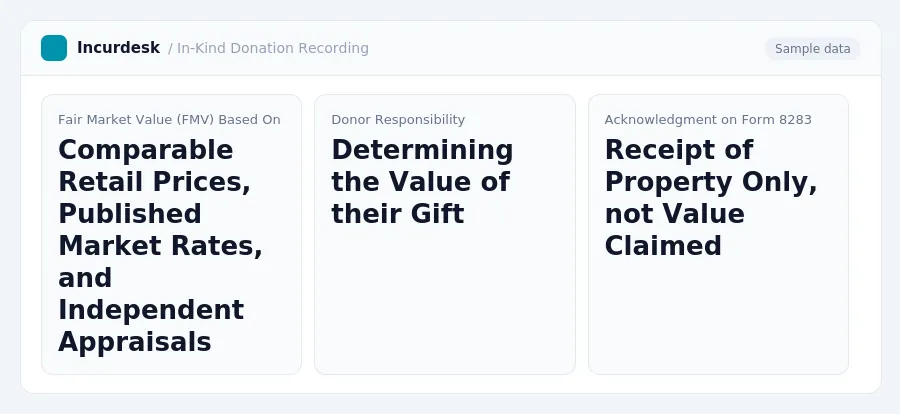
Valuing In-Kind Donations: Fair Market Value and Appraisals
In-kind donations should be recorded at their fair market value (FMV) at the time they are received. FMV is typically based on comparable retail prices, published market rates for professional services, or independent appraisals for high-value items.
- For example, if a donor donates a used car, the FMV would be based on the car's retail price at the time of donation.
- For professional services, such as consulting or legal services, the FMV would be based on the published market rate for those services.
The donor is responsible for determining the value of their gift, and that value should not be included on the acknowledgment.
When filing Form 8283 for high-value donations, the nonprofit acknowledges receipt of the property but does not vouch for the donor's claimed value.
| Token Item Cost | Maximum Allowable Donation Value |
|---|---|
| $139 or less |
Recording Expenses: Ordinary and Necessary Business Expenses
This means it's a common expense for your type of business and it's required to operate effectively.
- Maintain records detailing the what (description), how much (amount), when (date), and why (business purpose) for every business expense.
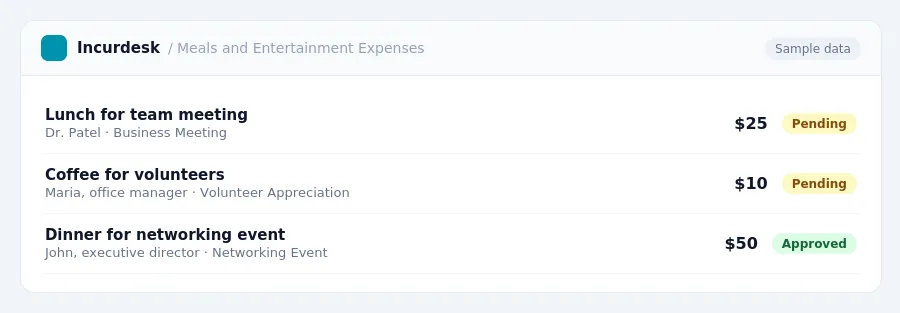
- For meals and entertainment expenses, also record the "who" (name and relationship).
Expenses that are considered ordinary and necessary for a business include:
- Office supplies and equipment
- Travel expenses, including transportation and meals
- Professional fees, such as accounting and legal services
- Advertising and marketing expenses
| Expense Category | Description | Required Records |
|---|---|---|
| Meals and Entertainment | Food and beverages purchased for business purposes | Who, what, where, when, how much, and why |
| Business Travel | Transportation, lodging, and meals for business trips | |
| Office Supplies | Stationery, paper, pens, and other office materials | What, how much, when, and why |
Tracking and Reporting In-Kind Donations and Expenses
Now that you've recorded your in-kind donations and expenses, it's time to track and report them accurately. Here are the steps to follow:
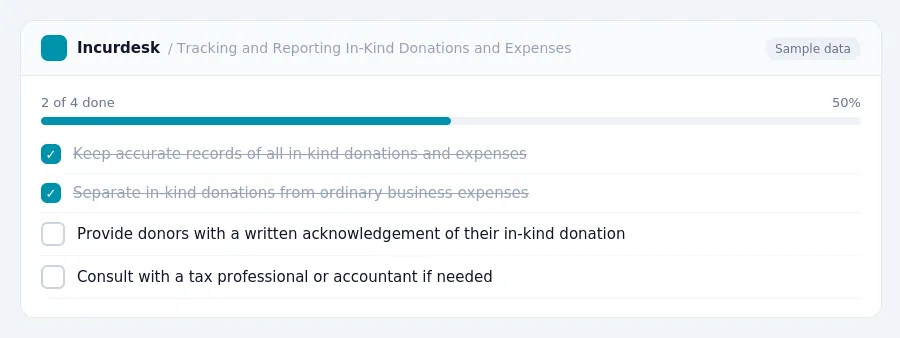
- Keep accurate records of all in-kind donations and expenses, including receipts, invoices, and appraisals.
- Separate in-kind donations from ordinary business expenses, as they are subject to different rules and regulations.
- For in-kind donations, keep records of the donor's name, address, and date of donation, as well as the fair market value of the donation.
- For expenses, keep records of the expense date, description, and amount.
When reporting in-kind donations and expenses, make sure to:
- Provide donors with a written acknowledgement of their in-kind donation, as required by law.
- Consult with a tax professional or accountant if you have questions or concerns about tracking and reporting in-kind donations and expenses.
| Donation Type | Reported on |
|---|---|
| In-Kind Donations | |
| Expenses | Form 990, Schedule C |
Keeping this simple: Incurdesk lets your team snap a photo of a receipt and fills in the details for you. It is built for small non profits teams. Try it free.
Stop losing 4+ hours a week
30-day free trial · No credit card · Setup in 15 minutes