
4.2h
Lost to approvals/wk
$10,900
Annual savings
96%
Compliance rate
Medical Supply Expense Tracking for Small Clinics
A practical, data-backed guide to controlling costs and automating expense workflows.
Start scanning receipts now
and easily manage employee travel and expenses
Accurate medical supply expense tracking is crucial for small clinics in the US to manage costs, optimize inventory, and ensure compliance with tax laws and healthcare regulations. With a reliable expense tracking system, you can achieve healthcare expense management for under $10/user (2026) and stay on top of your financials.
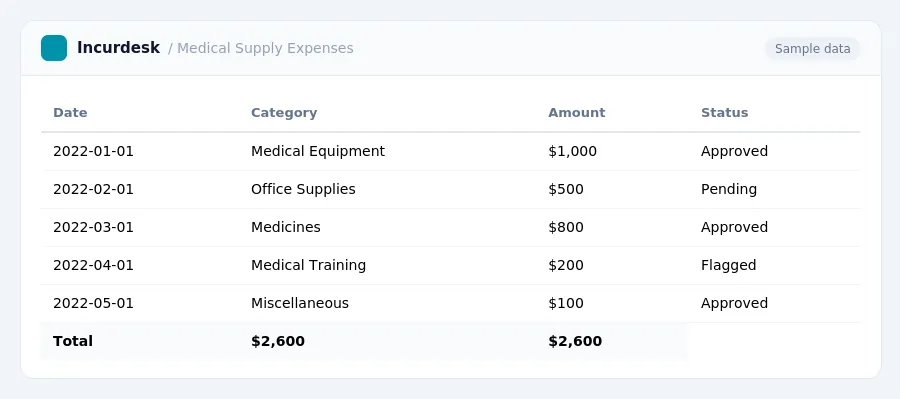
Track Medical Expenses Accurately
- Start by tracking all your medical supply expenses accurately, including receipts and invoices for each purchase. This will help you keep a record of your expenses and ensure you can claim the correct amount on your tax return.
- This includes payments for medical services, equipment, and supplies.
- Keep track of when you paid your medical expenses.
- Calculate the total of your unreimbursed medical and dental expenses.
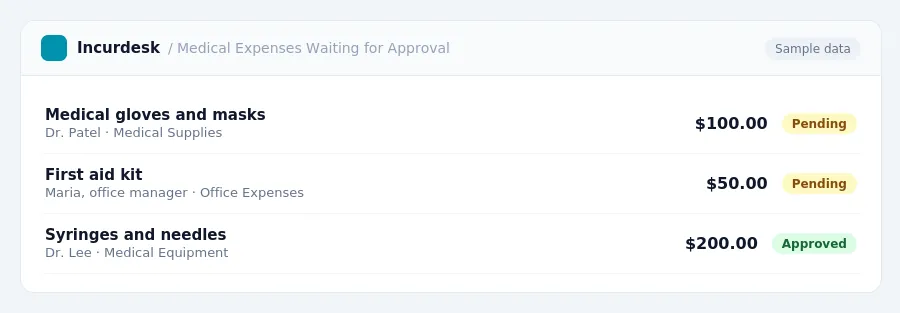
Medical Supply Expense as a Percentage of Revenue
FREE CALCULATOR
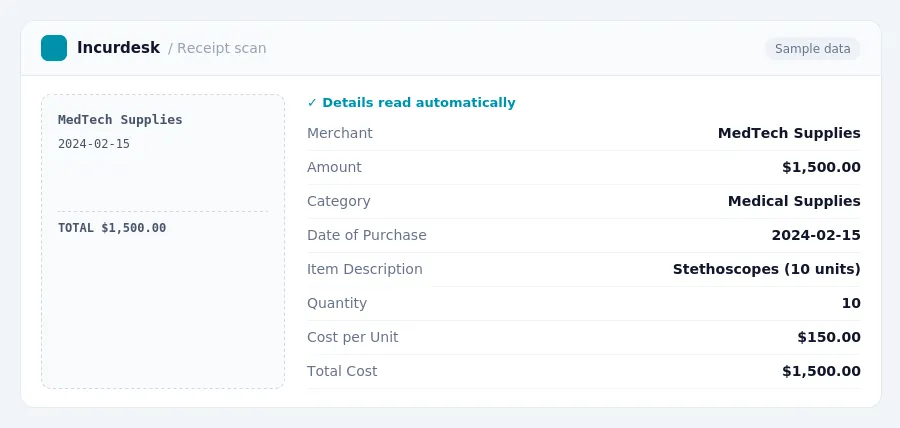
Maintain Proper Documentation and Records
- Maintain accurate and detailed records of all medical supply purchases, including receipts, invoices, and bank statements. This will help you track your expenses and ensure you have a clear paper trail in case of an audit. Make sure to include the date, description of the item, quantity, cost, and any relevant serial numbers or lot numbers.
- For small dispensers with 25 or fewer full-time pharmacists or pharmacy technicians, you have until November 27, 2026, to implement an electronic tracking system for prescription medications. This requires maintaining electronic records for six years, as per the Drug Supply Chain Security Act (DSCSA).
- Ensure that your records accurately reflect the medical necessity of the supplies purchased, particularly for Durable Medical Equipment (DME). This may involve keeping records of patient diagnoses, treatment plans, and prior authorizations.
- Keep all receipts and documentation organized and easily accessible, either physically or electronically. Consider using a spreadsheet or database to track your expenses and make it easier to generate reports and summaries.
- Review your records regularly to ensure they are accurate and up-to-date. This will help you identify any discrepancies or errors, and make adjustments as needed.
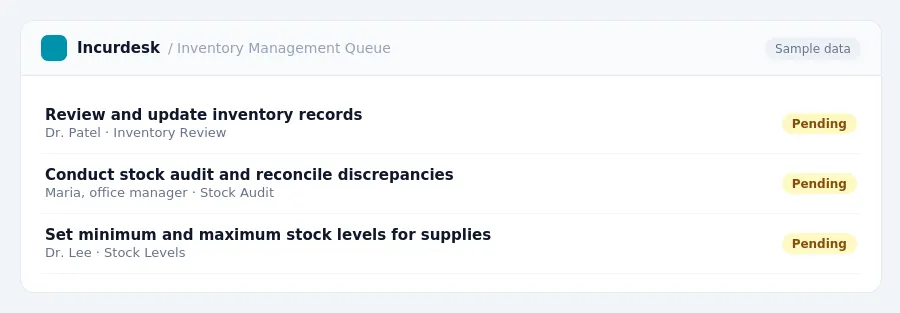
Manage Inventory and Supplies Effectively
- Keep accurate inventory records. Track the product name, quantity, lot number, and expiry date for each item. This will help you identify what you have in stock and when it needs to be replaced.
- Set minimum and maximum stock levels for each product. This will prevent overstocking and ensure you always have enough supplies on hand.
- Monitor expiry dates using the First Expired, First Out (FEFO) method. This means using the oldest items first to minimize waste and ensure you're using the supplies that need to be replaced first.
- Organize your supplies properly. Keep them clean, dry, and easily accessible to prevent damage and make it easier to find what you need.
- Conduct regular stock audits to ensure your inventory records are accurate and to identify any discrepancies. This will help you catch any issues before they become major problems.
- Avoid common errors such as operating without a structured procurement process, poor vendor management, and inventory management failures like purchasing duplicates or excess items.
- Establish clear protocols for ordering supplies, such as setting up a system for tracking orders and invoices, to prevent issues like maverick spending, rushed purchases, and duplicate invoices.
Monitor and Update Compliance and Tax Laws
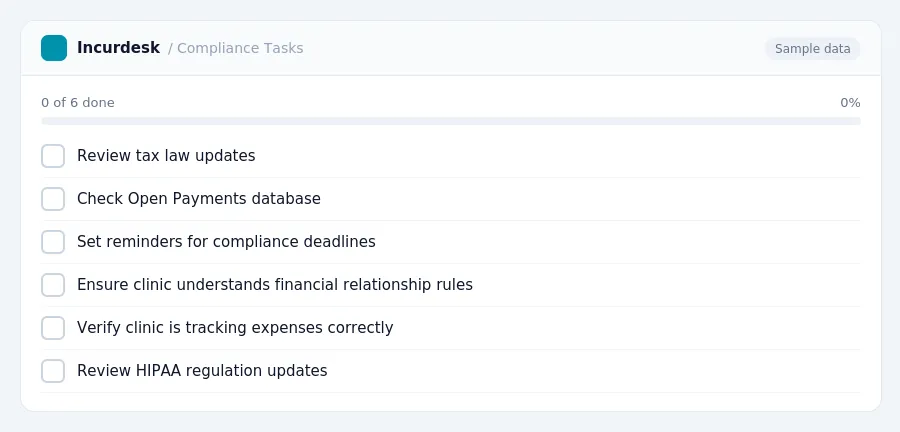
- Stay informed about tax law updates.
- Be aware of HIPAA regulation updates.
- Understand the Open Payments database. Manufacturers of drugs, devices, biologics, and medical supplies must report financial relationships with healthcare providers. Review the Open Payments database to ensure your clinic is in compliance with these rules.
- Ensure your clinic understands this threshold and is tracking expenses accordingly.
- Set reminders for compliance deadlines. With frequent updates to tax laws and regulations, it's essential to set reminders for upcoming deadlines to ensure your clinic remains compliant.
Keeping this simple: Incurdesk lets your team snap a photo of a receipt and fills in the details for you. It is built for small healthcare teams. Try it free.
Frequently Asked Questions
You can also deduct the cost of medical equipment, such as stethoscopes and blood pressure monitors, but only if they are used for medical purposes.
How can I accurately track inventory for small medical supplies like gloves and syringes?
Use a spreadsheet or inventory management tool to track your medical supplies. Record essential details like product name, quantity, lot number, and expiry dates. Conduct regular physical inventory counts to ensure accuracy. Consider implementing a first-in, first-out (FIFO) system to manage inventory and prevent expired products from being used.
Does the DSCSA apply to clinics that only use prescription medications for in-office procedures?
The DSCSA (Distribute and Sell Prescription Drugs and Create Electronic, Individual, Product-Level Labels and Shipping Documents for Such Drugs) applies to all healthcare providers, including clinics that use prescription medications. Ensure compliance by tracking and verifying product identifiers, maintaining records, and implementing procedures for handling and storing prescription medications.
Stop losing 4+ hours a week
30-day free trial · No credit card · Setup in 15 minutes