
Mileage Reimbursement for Attorneys Traveling to Court
A practical, data-backed guide to controlling costs and automating expense workflows.
Additionally, some states have their own mileage reimbursement rates, so it's essential to check with your state's department of motor vehicles for specific requirements. For the bigger picture, see our guide to expense management for law firms.
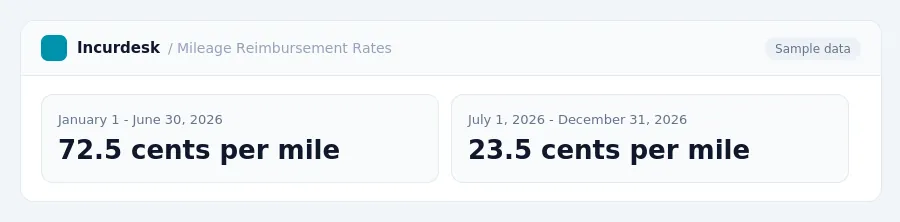
- For January 1 - June 30, 2026, the rate is 72.5 cents per mile.
- For July 1, 2026, through December 31, 2026, the rate increases to 23.5 cents per mile.
- The rates may change, so it's essential to verify the information before making any calculations.
Check State Requirements for Reimbursement
-
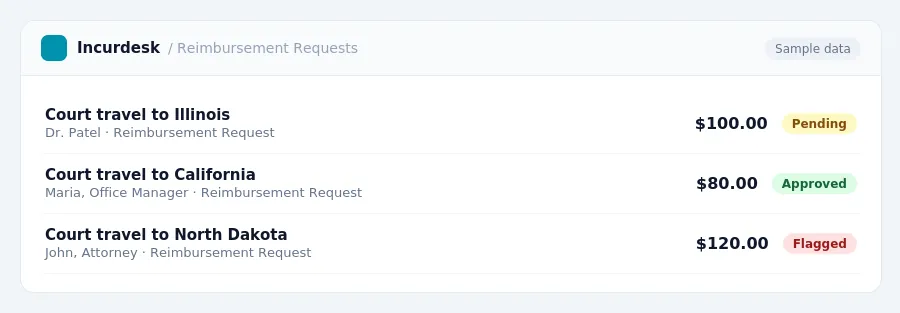
Not all states require employers to reimburse employees for mileage expenses, but some do. Before reimbursing attorneys for court travel, check if your state has an affirmative reimbursement duty. Currently, 10 jurisdictions have such duties: California, Illinois, Massachusetts, Montana, New Hampshire, North Dakota, South Dakota, Iowa, the District of Columbia, and the City of Seattle.
Reimbursement rates may vary by state, but some states may have specific requirements for documentation, record-keeping, or accounting.
Check the specific requirements for your state to ensure compliance.
Here's a list of the 10 jurisdictions with affirmative reimbursement duties:
Understand Common Mistakes to Avoid Compliance Issues
-
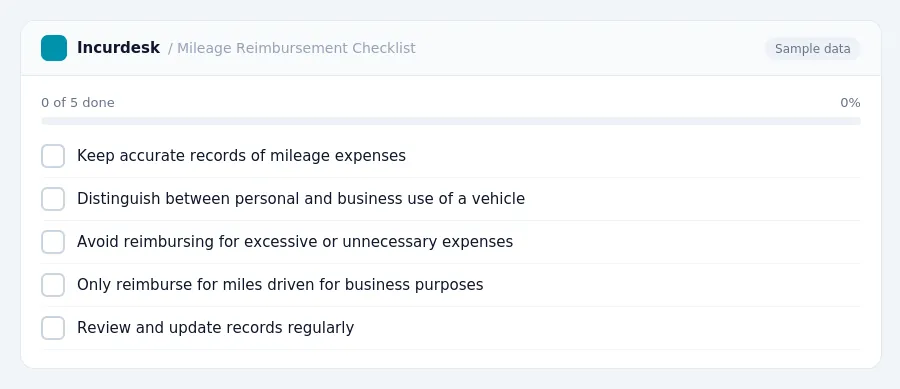
One common mistake is not keeping accurate records of mileage expenses, including the date, time, and purpose of the trip. To avoid this, make sure to keep a log of all business-related trips, including the miles driven and any other expenses incurred.
-
Another mistake is not distinguishing between personal and business use of a vehicle. To avoid this, make sure to only reimburse for miles driven for business purposes. If an attorney drives to court for a personal reason, such as a hearing related to a personal matter, the miles driven should not be reimbursed.
-
It's also important to avoid reimbursing for excessive or unnecessary expenses. For example, if an attorney drives to a nearby city for a hearing and stays overnight, only the miles driven for business purposes should be reimbursed. The cost of the hotel stay should not be reimbursed as a mileage expense.
-
Finally, make sure to review and update your reimbursement policies regularly to ensure they are compliant with current rules and regulations.
Establish an Accountable Plan for Reimbursement
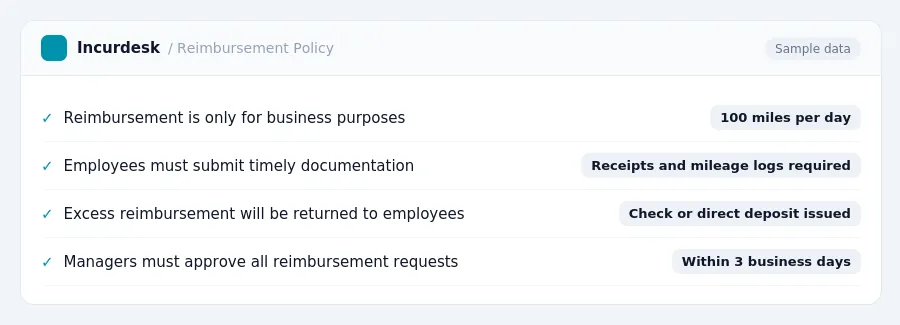
- To establish an accountable plan for reimbursement, create a written policy that outlines the rules and requirements for reimbursement. This policy should clearly state that reimbursement is only provided for miles driven for business purposes, and that employees must provide timely documentation of their mileage expenses.
- The policy should also specify the procedure for submitting mileage expenses, including the deadline for submission and the required documentation. For example, you may require employees to submit a mileage log or expense report, along with receipts or other supporting documentation.
- The accountable plan should also outline the procedure for returning excess reimbursement to employees if their mileage expenses exceed the allowed amount. This can be done by issuing a check or making a direct deposit to the employee's account.
- To ensure compliance with the accountable plan, it's essential to regularly review and update the policy as needed.
- Keep accurate records of all mileage expenses, including the date, mileage, and purpose of each trip. This will help ensure compliance with the accountable plan and provide supporting documentation in case of an audit.
Document and Record Mileage Expenses for Audit-Ready Compliance
- Keep contemporaneous mileage logs that document the date, destination, business purpose, and miles driven.
- Keep the mileage logs up to date and easily accessible for audit purposes. It's recommended to store the logs in a secure location, such as a locked cabinet or a password-protected digital file.
- Incomplete or inaccurate logs can lead to audit issues.
- Keep records of all mileage-related documents, including receipts, invoices, and bank statements. These documents may be requested during an audit.
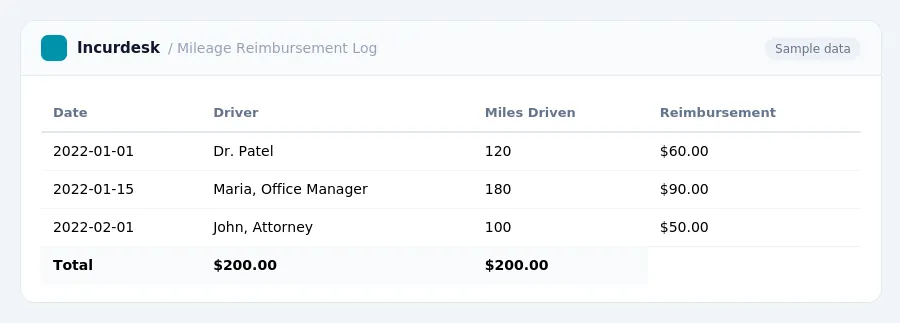
- Consider using a spreadsheet or table to organize and track mileage expenses. This can help make it easier to review and verify expenses during an audit.
- Review and update the mileage logs and records regularly to ensure they are accurate and up to date.
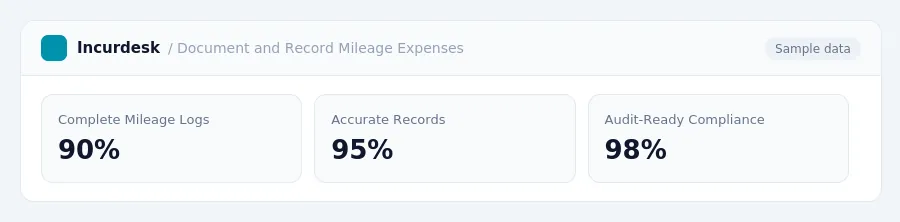
Employers should ensure that their mileage logs are complete, accurate, and easily accessible for audit purposes.
Keeping this simple: Incurdesk keeps receipts and approvals together, so you know exactly what to reimburse. It is built for small law firm teams. Try it free.
Stop losing 4+ hours a week
30-day free trial · No credit card · Setup in 15 minutes